


Phys.org and The Conversation (France) report findings from research into how street lighting affects wildlife and what happens when lights are switched off during late-night hours. As some local authorities adopt part-night lighting—turning off streetlights in the middle of the night—multiple studies focusing on different species (including robins, toads, and bats) find that simply switching off lights for a few hours often does not fully restore natural night conditions. The sources emphasize that biodiversity impacts depend on more than whether lights are on or off. Instead, they point to the importance of timing and location: authorities need to consider when lights are turned off and where reductions in lighting occur to better support wildlife activity and behavior. Together, the articles frame the policy challenge as moving beyond blanket shutdowns toward more targeted approaches that account for species needs and local ecological conditions. Overall, the reports suggest that effective mitigation requires careful planning rather than short, uniform light reductions.
Studies examine effects of turning off streetlights on wildlife and night recovery
Phys.org and The Conversation (France) report findings from research into how street lighting affects wildlife and what happens when lights are switched off during late-night hours. As some local auth...
- Some local authorities use part-night lighting by turning off streetlights mid-night.
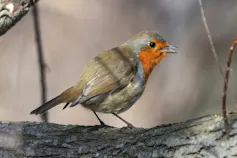
- Research on species including robins, toads, and bats finds that turning lights off for only a few hours often does not restore natural night fully.
- Biodiversity impacts depend not just on switching lights off, but on when and where lights are reduced.
- The challenge is to design targeted lighting schedules and locations that better support wildlife.
- Policy guidance focuses on timing and spatial decisions to improve ecological outcomes.
As part-night lighting (i.e., turning off streetlights in the middle of the night) becomes more widespread among local authorities, three studies focusing, respectively, on robins, toads and bats show that, often, turning off the lights for a few hours is not enough to restore natural night. In terms of biodiversity, the challenge is not just about switching off the lights, but knowing when and where to do so.
3 months agoFor biodiversity, it’s not just about switching off street lighting, it’s about knowing when and where to turn the lights off.
3 months ago
Trump signs order creating U.S. Space Academy for military and civilian space workforce
President Donald Trump signs an executive order to create a U.S. Space Academy, described as a new space-focused institu...

Elizabeth Quigley resigns from BBC Scotland on health grounds, citing long-term illness
Journalist Elizabeth Quigley, the wife of Scottish Deputy First Minister John Swinney, resigns from BBC Scotland on heal...

Trump administration reportedly seeks to transfer Yosemite parcel to private developer
The Trump administration is reportedly seeking to transfer a small parcel of land within Yosemite National Park to a pri...