


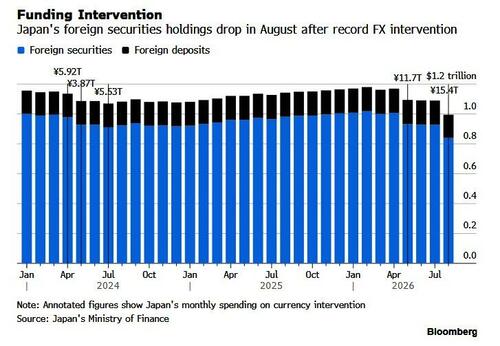
Japan’s authorities mount a record yen support operation and, in the aftermath, their foreign-reserve position falls by an amount that analysts associate with the intervention’s funding. Finance Ministry reserve data released in early September show Tokyo’s holdings of foreign securities drop by $87.8 billion at the end of August versus a month earlier, broadly matching the scale of the intervention reported over late July and August.
Outlets report that the data do not give a detailed breakdown by security type or maturity, but analysts say the most likely source was sales of U.S. Treasury securities, possibly concentrated in shorter maturities due to their relative liquidity and the estimated maturity preferences of reserve managers. One report notes the U.S. also participates in a coordinated move to support the yen at the end of July, adding to the sense that both sides remain aligned for now.
Different outlets emphasize different implications. Bloomberg frames the action as likely Treasury liquidation to finance the intervention. The Japan Times and ZeroHedge highlight the close match between reserve declines and intervention size, and also cite concerns that selling Treasuries—even if focused on the short end—could draw attention from U.S. officials monitoring Treasury-market stability. The reserve figures also show Japan still has substantial remaining resources, including foreign currency deposits, while officials discuss potential use of a pandemic-era repo facility if needed.


