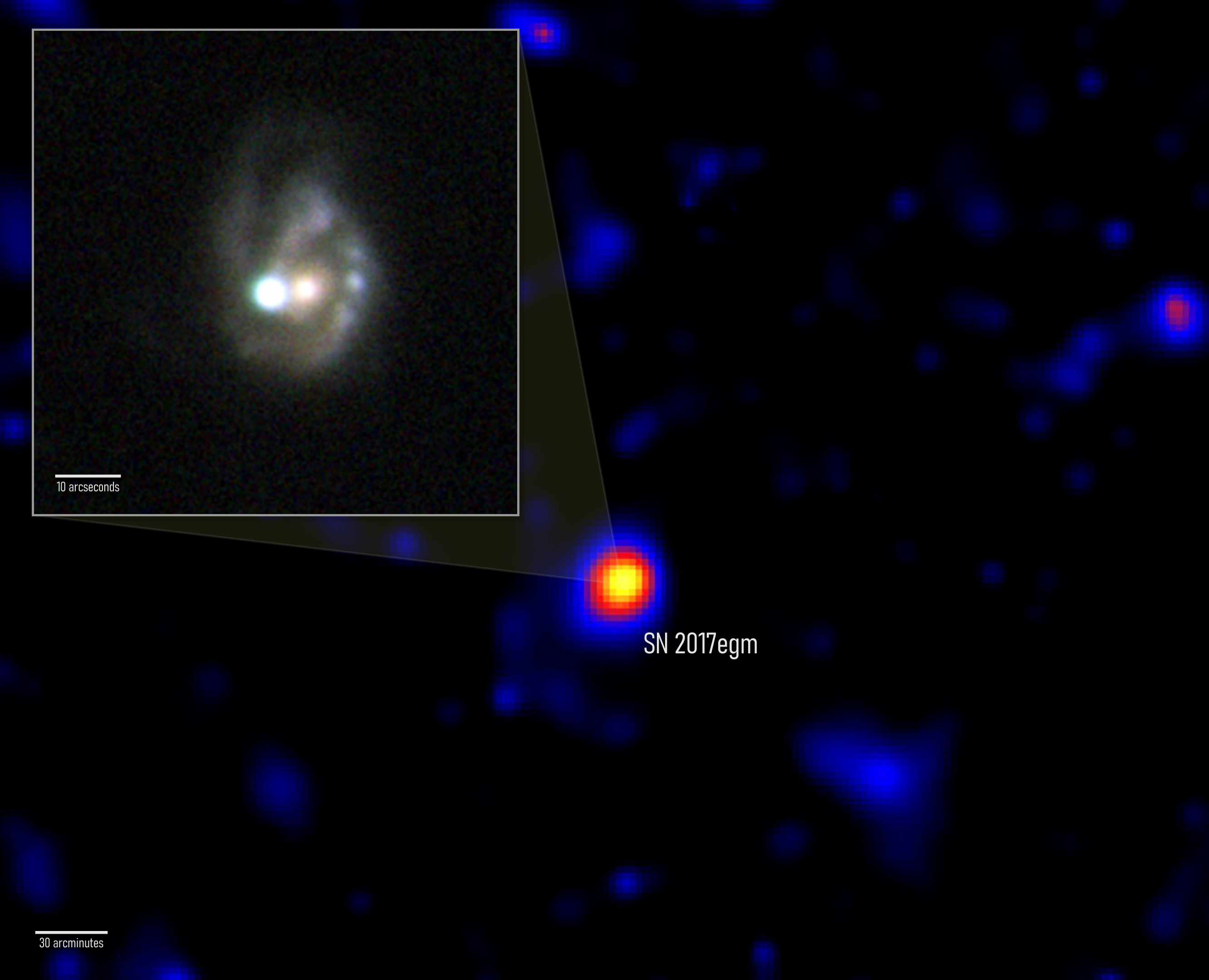
NASA’s Fermi Gamma-ray Space Telescope data are used by an international team to study a rare, unusually luminous supernova. Researchers report a likely clear detection of gamma rays associated with a superluminous supernova, based on observations from Fermi. The findings are presented as a breakthrough for understanding how the most extreme stellar explosions generate energy.
The team concludes the supernova’s “power-up” is most likely supplied by a newly formed, highly magnetized neutron star—often referred to as a magnetar—created during the star’s collapse. In this scenario, a supermagnetized neutron star transfers energy to the expanding explosion, producing the superluminous brightness observed in the event.
The research effort includes contributions from LSU researchers and combines the interpretation of the gamma-ray signal with the broader context of superluminous supernova physics. The result is described as one of the first clear detections of gamma rays from this class of supernovae, offering new insight into the mechanisms that can drive some of the brightest explosions in the universe.