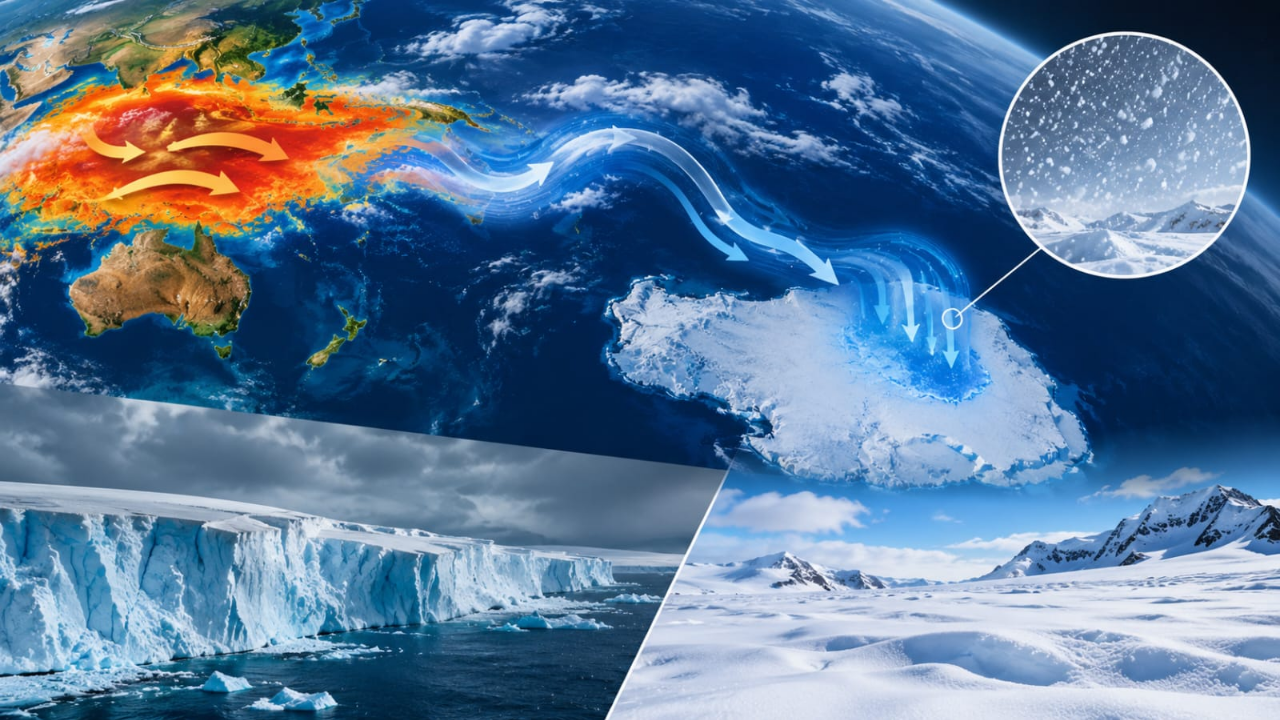
Antarctica records a net gain of ice after decades of overall loss, with researchers reporting that East Antarctica adds about 695 billion tons of ice between 2021 and 2023. The increase is described as the largest such gain in the period studied, and it comes from unusually heavy snowfall rather than a reversal of ice flow.
Scientists say the unusual weather is tied to changes occurring far outside the continent. Multiple outlets attribute the snowfall anomaly to warmer conditions in the tropical ocean, which alter atmospheric circulation. This circulation change shifts how moisture moves through the atmosphere and directs more water vapor toward Antarctica, producing exceptional precipitation in the East.
While the extra ice temporarily slows Antarctica’s long-term decline, sources stress that it does not mean the overall trend has reversed. The gain is presented as a short-term fluctuation superimposed on continuing losses in other parts of Antarctica, with the long-term outlook remaining one of declining ice mass.