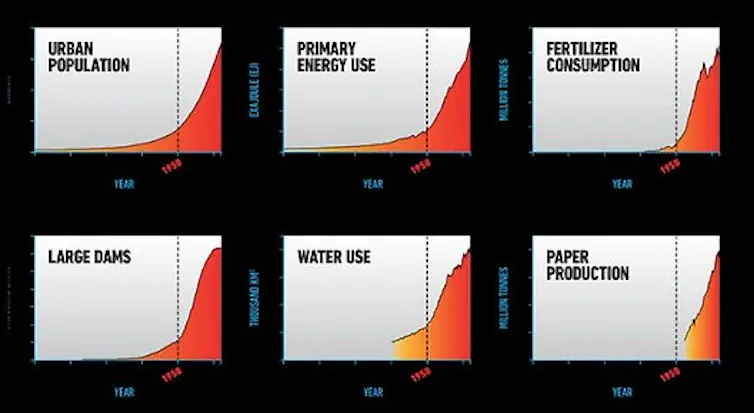
The term “Anthropocene” is still widely used to describe how human activity has reshaped Earth’s systems, even as it is rejected as a formal new geological epoch by some scientists. The concept gained broad attention after Nobel laureate Paul Crutzen proposed it in 2000, linking a recent rise in human impacts to a shift away from the relatively stable climate conditions of the Holocene.
While the idea is not accepted as an official epoch, outlets note that it continues to influence how researchers frame the planet “in deep time.” The Conversation highlights new research suggesting the concept remains useful for capturing Earth-wide transformation in its broader geological context, implying that the debate is not only about formal classification but also about scientific and interpretive value. Phys.org similarly describes the Anthropocene as a lens for understanding recent human-driven changes to global environmental conditions.
Overall, the sources agree that Anthropocene thinking persists in the scientific and public discourse despite formal rejection, with attention turning to what the concept helps explain rather than whether it is officially adopted.