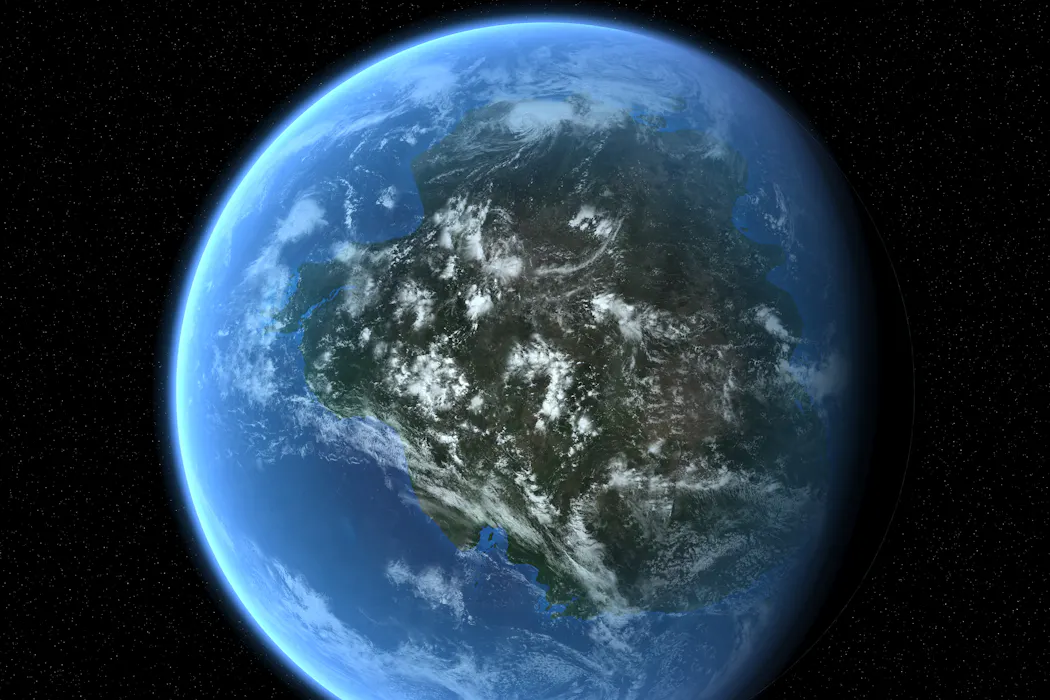
Researchers report new geological findings indicating that Gondwana was a true supercontinent, rather than a looser assembly of landmasses. The work reconstructs the southern portion of Earth about 550 million years ago, when the region is widely described as dominated by one large continent. The study focuses on buried remnants of Gondwana that were previously difficult to study.
The new results help address a long-running question about Gondwana’s size and coherence by providing additional physical evidence below the surface. Some outlets describe this as settling debates over whether Gondwana should be classified as a supercontinent. Phys.org and The Conversation both connect the reconstruction to broader questions about early life on Earth, suggesting that the environmental and geological conditions associated with a supercontinent could have played a role in how life began or emerged during that era. While the overall interpretation is similar across the two sources, they emphasize different aspects: one stresses the confirmation of the supercontinent status, while the other highlights how the evidence may inform discussions of life’s early “kick-start.”