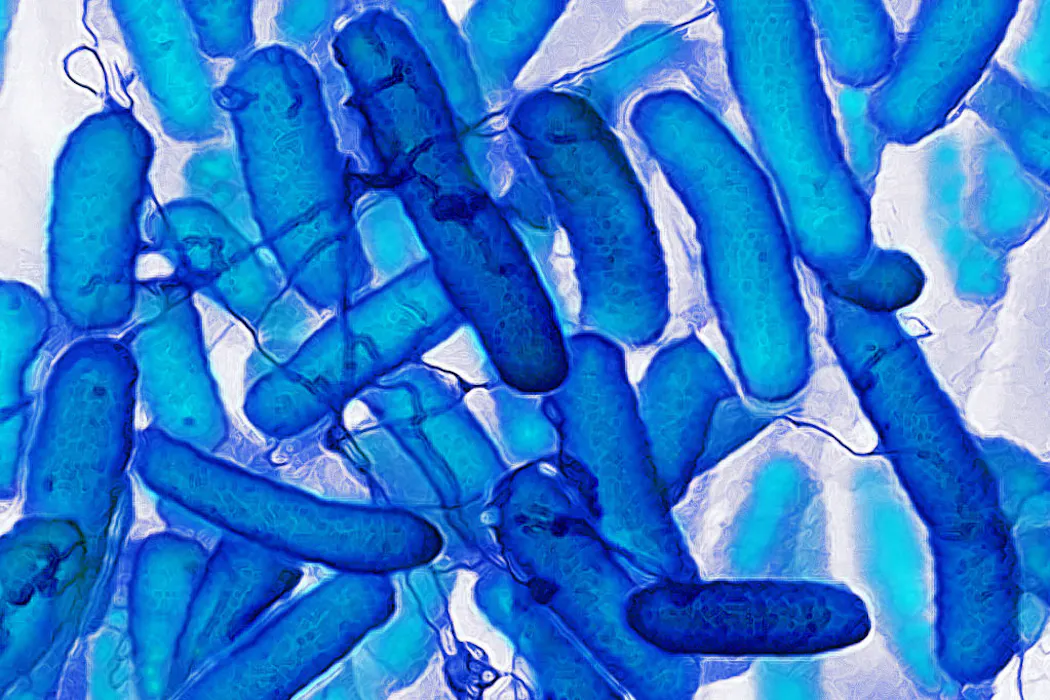
Researchers report that bacteria can exhibit forms of learning and memory-like behavior without using a brain. Instead of neurons, bacteria rely on biological processes that allow them to retain information from prior conditions and respond differently later, resembling certain functions associated with learning in neural systems.
Both outlets describe the key idea that bacterial adaptation can reflect strategies comparable to artificial neural networks, particularly in how past inputs influence future responses. The Conversation emphasizes that these mechanisms let bacteria use history to shape adaptation, while Phys.org frames the topic more broadly as “learning without a brain,” highlighting that learning does not necessarily require neurons or neural architectures. Together, the coverage presents bacterial behavior as a useful model for understanding learning across very different biological systems, and for connecting experimental observations to computational concepts.
While the two sources focus on the same overarching theme, they differ mainly in emphasis: one stresses the conceptual comparison to artificial neural networks, and the other broadens the discussion to how “learning” can be implemented through non-neural mechanisms. Both agree that the underlying processes enable bacteria to remember past conditions and adapt in subsequent environments.