


Recent research and testing efforts examine why the Great Pyramid of Giza has remained standing for more than 4,500 years despite repeated earthquakes in the region. Multiple outlets report that the pyramid’s overall structure shows a consistent, stable behavior when subjected to simulated seismic vibrations. Tests described by outlets such as NDTV and Phys.org indicate that the structure’s materials and geometry contribute to a relatively homogeneous response, with seismic shaking not significantly disrupting the pyramid’s main body. Phys.org also notes that real earthquake events, including the magnitude 5.8 Cairo earthquake in 1992, have affected parts of the monument—such as dislodging some outer casing stones—while leaving the core largely intact. Other coverage, including Live Science and Popular Science, links the findings to the engineering characteristics of the pyramid’s design, while The Conversation emphasizes that researchers can identify defensive structural features but cannot confirm whether the original builders intended to make the pyramid earthquake-resistant. Overall, the reporting converges on the idea that the pyramid’s construction helps it tolerate seismic stresses and reduces damage to its primary mass.
Study finds Great Pyramid of Giza shows stable response to earthquake vibrations
Recent research and testing efforts examine why the Great Pyramid of Giza has remained standing for more than 4,500 years despite repeated earthquakes in the region. Multiple outlets report that the p...
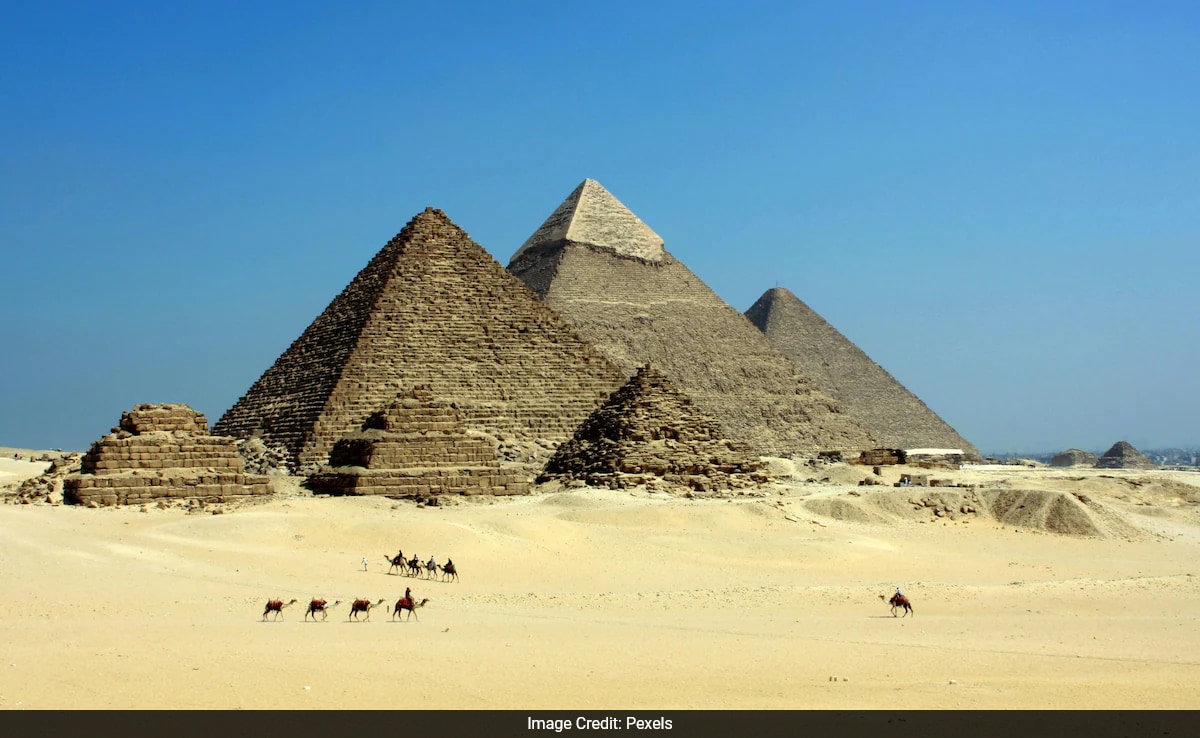
- Researchers assess the Great Pyramid’s durability against earthquakes using seismic testing and analysis.
- The pyramid shows a stable, relatively homogeneous structural response to simulated seismic vibrations.
- The main body remains largely intact even though some outer casing stones can be dislodged.
- The 1992 magnitude 5.8 Cairo earthquake is cited as an example of shaking that affected the pyramid’s exterior but not its core.
- Some commentators note that while defensive features are observable, the original intent of the builders is not confirmed.
If ever there were a structure built to stand the test of time, it surely would be the Great Pyramid of Giza, a transcendent monument to human imagination and ambition. Since being erected during the Old Kingdom period of ancient Egypt, it has stood impassively as time marched on and civilizations rose and fell. Researchers […]
2 months agoIf ever there were a structure built to stand the test of time, it surely would be the Great Pyramid of Giza, a transcendent monument to human imagination and ambition. Since bein...
3 months agoThe Great Pyramid of Giza in Egypt has survived more than 4,500 years. Earthquakes have repeatedly shaken the region, including the magnitude 5.8 Cairo earthquake in 1992, which dislodged some of the pyramid's outer casing stones. Yet the main body remained essentially intact.
3 months agoKey features of the famous monument defend it from earthquakes – but we can’t know if that’s what the builders had in mind.
3 months agoA team of archeologists set out to understand the pyramid's structural resilience against seismic hazards.
3 months agoThe pyramid, during a test conducted by researchers, exhibited a remarkably homogeneous and stable structural response to the seismic vibrations despite its size and complexity.
3 months ago
Nancy Grace Roman Telescope set for Aug. 30 launch to study dark energy and exoplanets
NASA’s Nancy Grace Roman Space Telescope is scheduled to launch from Kennedy Space Center in Florida on Sunday, Aug. 30,...

Delhi auto unions threaten Sept 9 strike over CNG price hike and demand higher fares
Delhi auto and taxi unions threaten to go on strike on September 9, citing rising CNG prices that they say are squeezing...

Fourth-generation Queensland dairy family says milk market contract not renewed
A fourth-generation dairy farming family in Queensland says it cannot find a buyer for its milk after a contract is not...