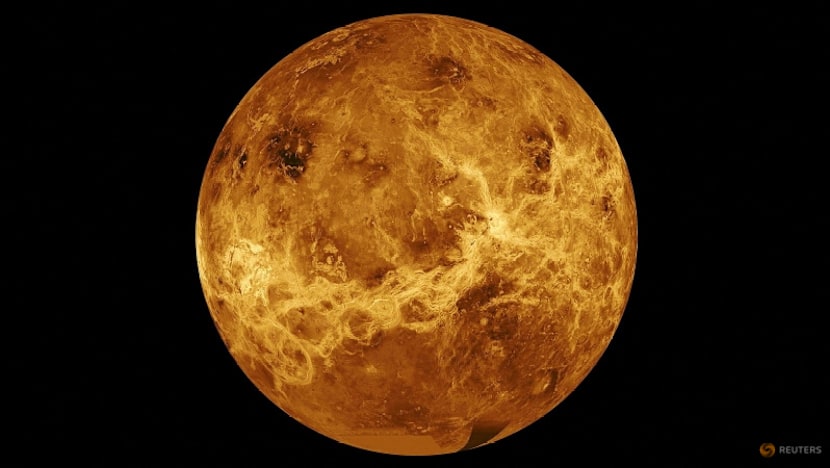
A new astrophysics study proposes that Venus may once have had a moon that gradually spiraled into the planet and eventually collided with it. The research links this scenario to Venus’ very slow rotation, arguing that tidal interactions over long periods could drive a satellite’s orbit inward.
The outlets reporting on the findings describe the hypothesis as a possible explanation for Venus’ current lack of a moon. While the claim is presented as a model based on planetary dynamics rather than direct observation of past events, it relies on established ideas about how gravity and tides can change orbital distances over time. The reports do not indicate that the study has been confirmed by independent measurements of ancient Venusian conditions.
In terms of angles, both sources focus on the same central mechanism—Venus’ slow spin influencing orbital decay—and the same broad outcome—an impact with a former satellite. Neither article provides additional competing interpretations, but both frame the work as scientific reasoning aimed at explaining present-day observations of Venus.