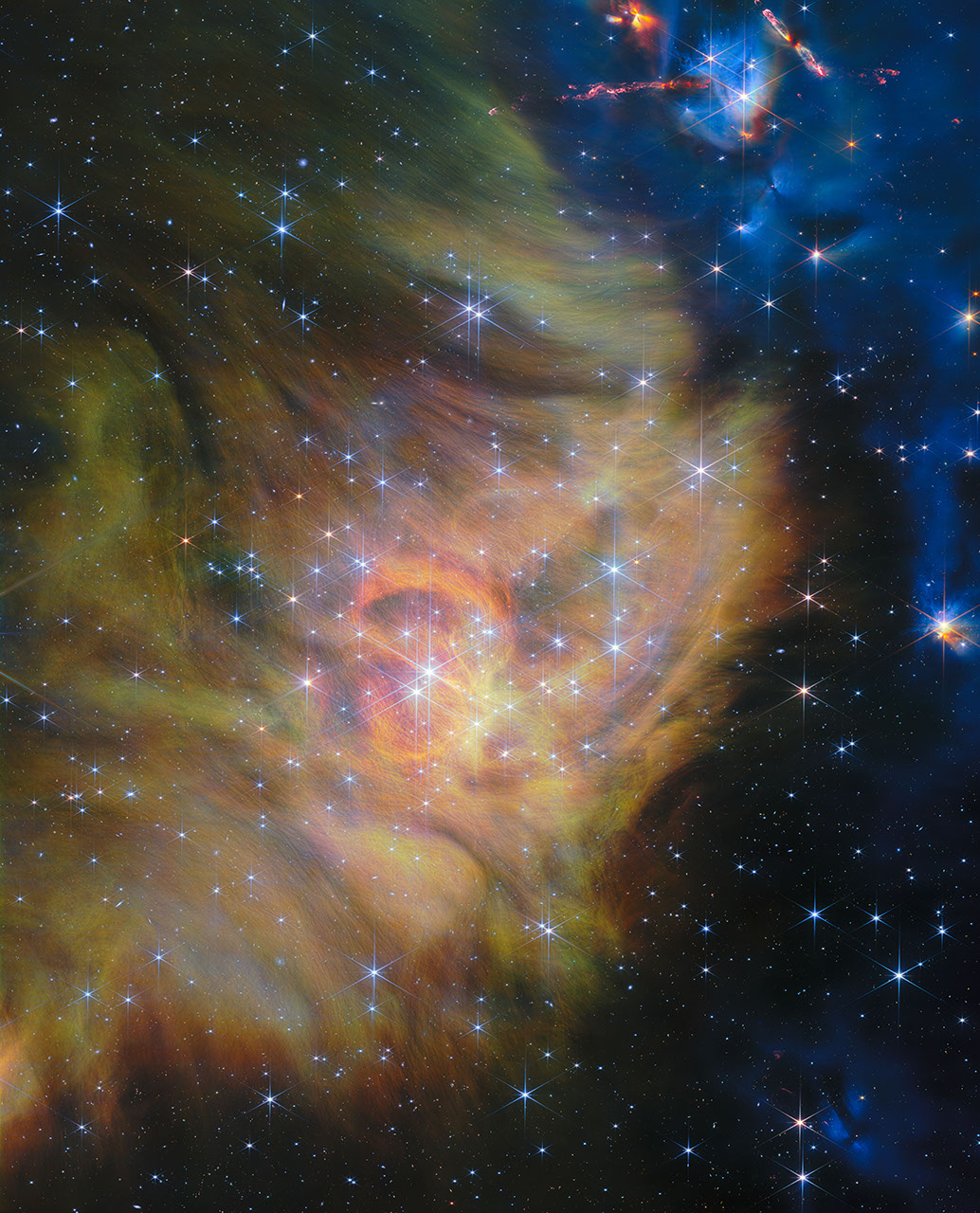
NASA’s James Webb Space Telescope releases a large image of the nearby star-forming region IC 348, presenting a wide view of active star birth. In the same research, astronomers use Webb observations of IC 348 to search for brown dwarfs—objects too low in mass to sustain hydrogen fusion like stars.
Across the outlets, the key reported result is the detection of brown dwarfs with masses around twice that of Jupiter. The sources describe this as expanding the known mass range for brown dwarfs and adding new observational constraints on how low-mass objects form within star-forming regions. One outlet emphasizes the image itself as among Webb’s largest releases to date, while another highlights that the findings include the smallest brown dwarfs known, specifically placing them in this newly identified low-mass regime.
Together, the coverage links the telescope’s imaging with the scientific survey of IC 348, framing the work as both a visual and data-driven contribution to understanding star formation and the emergence of very low-mass substellar objects.