


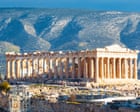
A study by a UK mathematician challenges a long-running legend that the Parthenon’s subtle curves were deliberately designed to correct optical illusions. The myth holds that without these geometric variations, the temple’s “clean lines” would appear distorted when viewed from typical angles.
The research examines the optical effects associated with the Parthenon and the claims that spread through centuries of scholarship, textbooks, and tourist material. The study contrasts with the widespread narrative that credits ancient architects for anticipating how the structure would look to human observers and using specific corrections to counter perception.
While the outlets agree on what the legend says and what the study questions, they differ mainly in emphasis. Phys.org focuses on the challenge to the 2,000-year-old account tied to optical illusions and architectural intent, while The Guardian highlights the effort to debunk what it describes as one of history’s longest-running myths through new optical/technical analysis.


