


Archaeologists investigating two skeletons found placed in an embracing position near a 13th-century cathedral in Poland have confirmed the individuals are both women through ancient DNA testing, according to reports from Live Science and The Independent. The remains, dated to the medieval period (about the 1200s), had long been discussed as possibly representing a same-sex relationship because of how they were laid to rest together. Researchers stress, however, that the genetic findings establish biological sex rather than the nature of the relationship. The accounts note that ideas about what the pairing “means” in terms of social or romantic partnership remain uncertain, since burial positions can reflect many possibilities such as close kinship, ritual practice, or community burial customs. The genetic results do make the burial notable in that it is described as Poland’s only confirmed medieval same-sex double burial in the accounts cited, but both sources caution against drawing definitive conclusions about the relationship based solely on placement and sex. The study’s key contribution, as presented in the reporting, is the confirmation of sex for both individuals using ancient DNA.
Ancient DNA confirms two women in Poland’s medieval “hugging skeletons” double burial
Archaeologists investigating two skeletons found placed in an embracing position near a 13th-century cathedral in Poland have confirmed the individuals are both women through ancient DNA testing, acco...
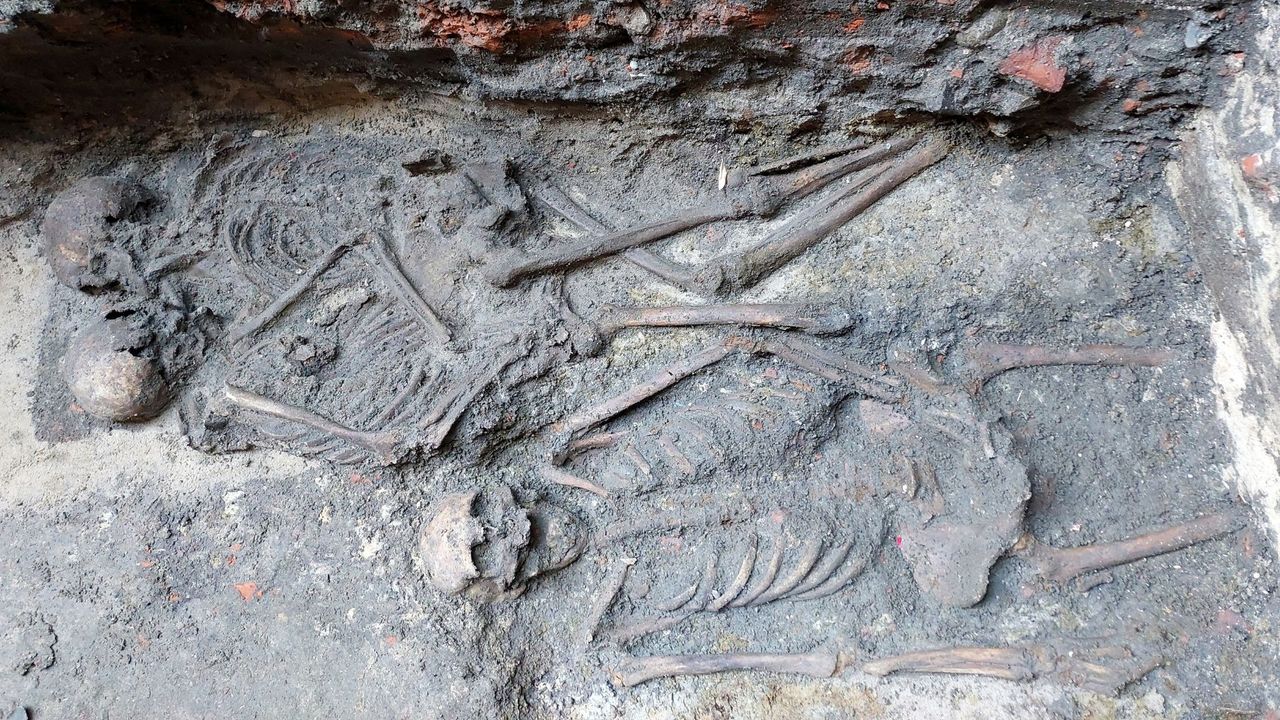
- Two skeletons found placed in an embrace near a 13th-century cathedral in Poland are both identified as women through ancient DNA analysis.
- The double burial dates to the medieval period, reported as belonging to the 13th century.
- The findings are described as confirming a same-sex double burial in Poland for the period covered by the reports.
- Researchers emphasize that genetic sex confirmation does not determine the relationship between the individuals.
- The precise nature of why the two people are buried together remains unknown.
Any assumptions about the relationship between the two individuals can be misleading, scientists say
3 months agoTwo skeletons found in an embrace next to a 13th-century Polish cathedral were both women, an ancient DNA analysis confirms, but their relationship remains a mystery.
3 months ago
Qantas unveils lie-flat business class suites for A321XLR and 787 aircraft
Qantas unveils lie-flat business class suites for its next aircraft types, bringing a feature more commonly seen on larg...

UK plug-in solar panels set for sale, with advice on suitability and savings
Plug-in solar panels are expected to go on sale in the UK, offering households a new way to generate electricity at home...

Gurpatwant Singh Pannun says FBI and RCMP warn of new threat to his life
Gurpatwant Singh Pannun, a prominent Sikh separatist and lawyer associated with Sikhs For Justice, says he has received...