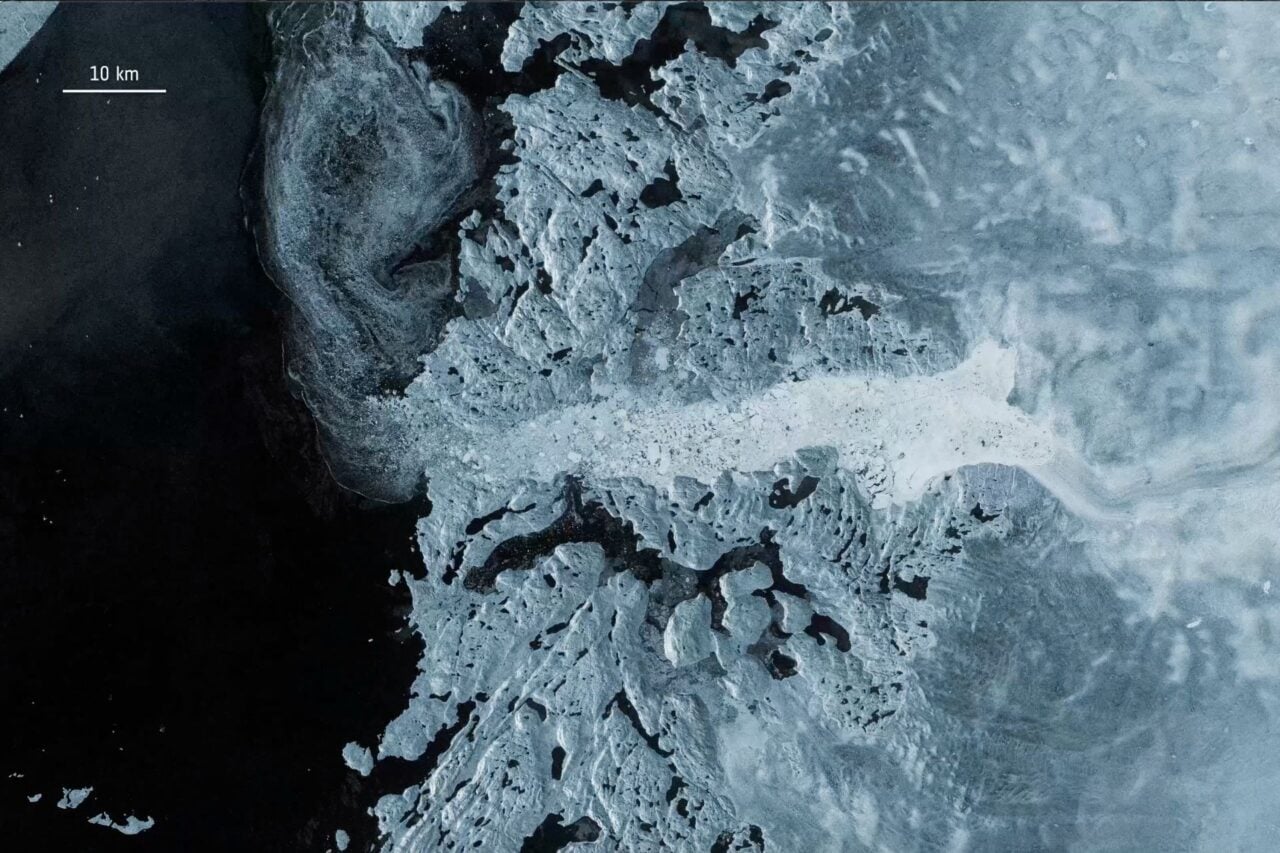
Greenland and Antarctica have lost more than 11 trillion metric tons of ice since the 1970s, according to a new analysis of the longest satellite record assembled to date. The study estimates that the ice loss contributes to global sea level rise of more than 3 centimeters (about 1.2 inches).
The research finds that the dominant mechanism is increased flow of glaciers and ice streams into the ocean. Instead of pointing primarily to melting at the surface, it attributes most of the mass loss to ice moving faster toward the sea. This emphasis helps clarify how polar ice reduction occurs over time, using satellite observations spanning decades.
Both outlets describe the same overall findings—scale of loss and the main driver being faster-moving ice—but differ slightly in phrasing. Phys.org presents the glacier-flow explanation in the context of distinguishing it from surface melting, while Gizmodo highlights the “speeding” glaciers as the central takeaway.