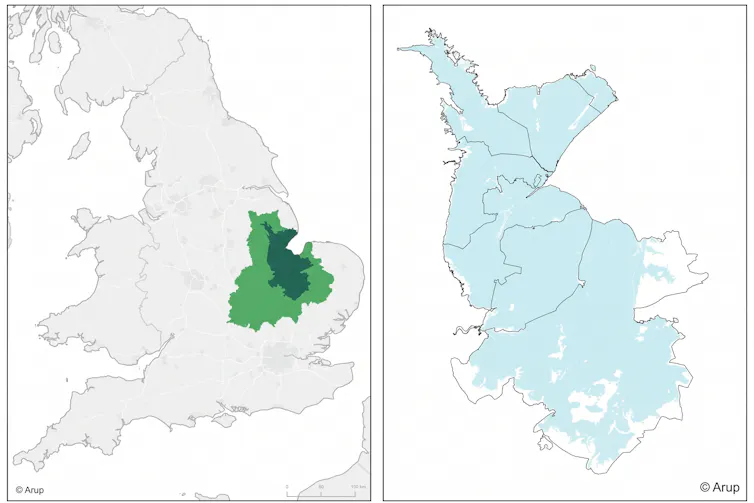
The low-lying Fens in eastern England are heavily shaped by human-built sea and water management systems, and that infrastructure is increasingly at risk as climate change alters water levels and flooding patterns. While the region is a major food-producing area, a substantial share of its land lies below average sea level and is exposed during high tides.
The outlets describe the Fens as an agricultural powerhouse that supports large-scale vegetable production and employment. However, because much of the landscape depends on holding back the sea, rising seas and more extreme tidal conditions threaten the effectiveness and long-term sustainability of existing defenses. The coverage emphasizes that the Fens’ “artificial” character—maintained through continuous management—means adaptation and protection measures are central to the region’s future.
Across the reporting, the differing emphasis lies mainly in framing: one source focuses on the broader idea that the managed landscape may not endure under climate change, while the other highlights specific exposure figures. Despite that variation, both point to the same underlying risk—sea-level and tide-related pressures on the water-retention systems that enable farming.