Let UPI be! Why fix a payment system that isn’t broken?
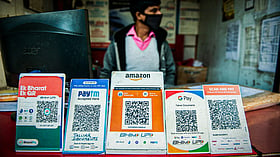
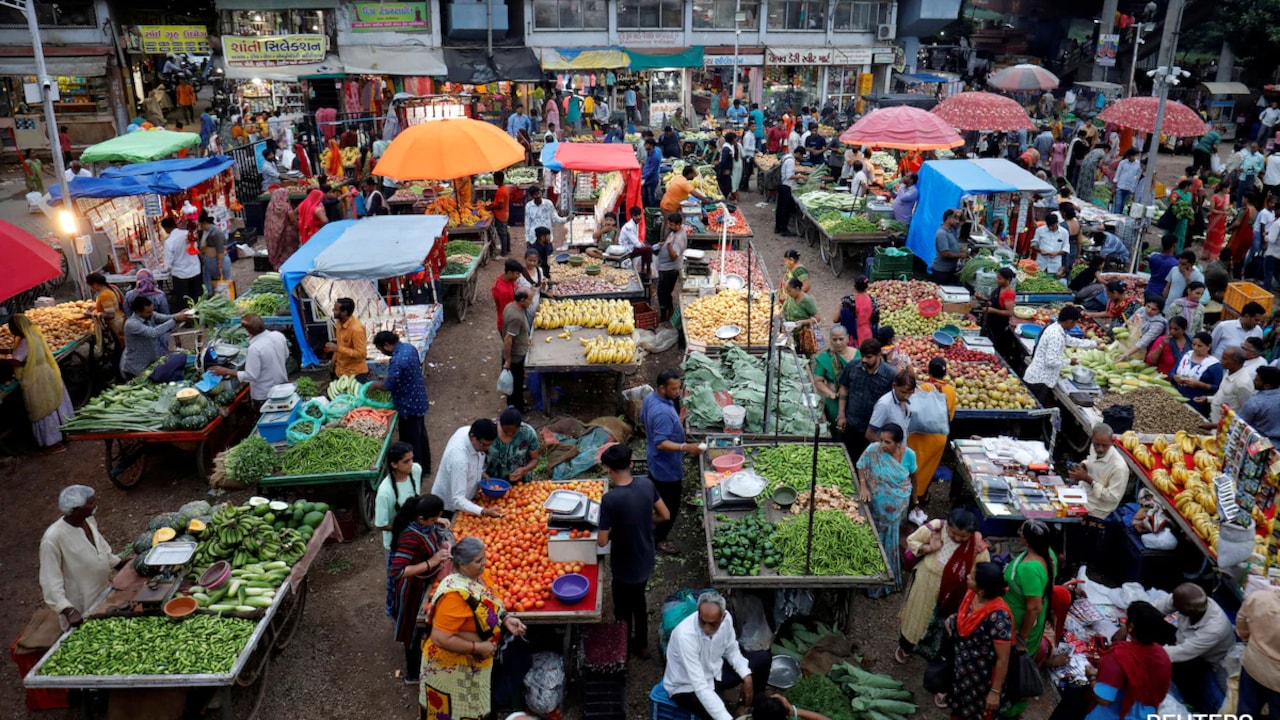
S.N.A.F.U. = Situation normal all fouled up.Let it be, let it be, let it be, let it beWhisper words of wisdom, let it be– Paul McCartney A small industry has sprung up to explain the recent changes made to the Unified Payments Interface (UPI) system. I don’t plan to join it.But I do want to ask: Why tinker with a system that has been working well?Why fix UPI?The answer to that question lies in the argument that the system needs money to survive – or, as the Department of Financial Services under the Ministry of Finance told the Parliament’s Standing Committee on Finance in March 2026, the absence of the merchant discount rate (MDR) makes the UPI ecosystem “financially unsustainable”.Also, when credit cards and debit cards can charge an MDR, why can’t UPI?What we need to remember is that UPI is no longer just another payment system used by a small number of Indians – like, say, credit cards.As of June 2026, UPI had 55.49 crore users – close to 38% of the country’s population.But even that 38% figure understates just how widespread UPI has become. If we look at the population above the age of 15, UPI users account for around half of it. In the 15-59 age group, UPI users make up 58%.In that sense, UPI is now so widely used that it’s as good as cash. And given that, tinkering with it like it’s just another payment system should be avoided.Now, the government, its institutions, and those likely to benefit from the introduction of MDR of 0.4% have gone out of their way to explain why this is a good move and why it doesn’t impact the bulk of the population. The think tankiyas have also joined in.One explanation offered is that the MDR is “applicable only for transactions above Rs 2,000 to ensure UPI remains the most affordable mode of accepting payments”. In fact, 96% of merchant transactions are up to Rs 2,000, so “MDR will apply to only about 4% of merchant transactions”. QED. But what is also true is that if we look at these transactions from the point of view of value (and not volume), 67% of the total merchant transactions are above Rs 2,000. Now, it would be stupid to argue that only the very rich are making these transactions. Anyone going to a doctor can end up paying this amount. Or so can someone who maintains a khaata – a monthly account – with their kirana store. Or someone who buys a phone. Or someone paying a school fee. Or someone paying rent. Or someone who does their monthly grocery shopping all at once.Now, “merchants… cannot pass on MDR charges to customers while accepting payments through UPI”. Or as the Ministry of Finance pointed out: “Banks have been advised to ensure that merchants do not pass MDR charges on to customers.”But who ensures this? Do we build another system on top of UPI? Are the UPI police coming? Hoping that merchants will follow the rules is one thing. Making sure they actually do is quite another. And there isn’t much the UPI police, or the banks for that matter, can do about it. In fact, enough and more murmurs from merchants have already started. It is also worth remembering that in the end – directly or indirectly – the end customer pays for costs. It’s as basic as it gets. (Remember all the convenience fees, marketplace fees, platform fees, and whatnot we pay these days.)This is something that Sanjay Malhotra, the governor of the Reserve Bank of India, said in August 2026 with regard to UPI: “Please keep in mind that ultimately it is the consumer, in some way or the other, who is already paying it”.The cash paradox There is a bigger issue that isn’t being talked about at all.When a change as significant as this is made, what people remember – given the way the human mind works – is the broader message rather than the specific details.And what is the broader message? That we will now have to pay for using UPI. Of course, there are enough ifs, buts and maybes built into the system. But they will get lost in the broader message that people will take away – that using UPI will no longer necessarily be free.Why is this important? It’s worth remembering that many in the Indian economy like dealing in cash.For a large part of the economy, cash remains the preferred mode of payment. Many small businesses prefer it because cash transactions are harder to track.Doctors, lawyers and even some chartered accountants – ironically enough – often prefer cash as well. So do neighbourhood shops, bakeries and a host of other small businesses.You will still occasionally come across a shop proudly declaring: “No GPay, PhonePe or UPI.”Indeed, cash continues to lubricate a large part of the informal economy – from private tuitions and home repairs to wedding expenses, interior work and construction jobs.Even the people who come to our homes to do various kinds of work – and can now be booked through apps – often prefer to be paid in cash. The Mumbai taxi driver, I can say for sure, loves being paid in cash.All such people are more than likely to use this opportunity to push back and return to cash.And that is the larger point: even if most UPI transactions remain free, the perception that using UPI could now cost money may be enough to push many back towards cash.And there isn’t much that the UPI police will be able to do about it.Over the years, UPI has grown enormously – in 2025-26 alone, it processed 241.6 billion transactions worth Rs 314.2 lakh crore. Yet cash has hardly disappeared from the Indian economy.As of March 2026, cash in the financial system stood at Rs 41.7 lakh crore, equivalent to 12.1% of the gross domestic product (GDP). GDP is a measure of the size of the economy.A year earlier, the figure was 11.7% of the GDP. In fact, before demonetisation in 2016, the cash-to-GDP ratio was also around 12%. A decade of rapid digitisation later, we are still broadly at the same level when it comes to cash.In other words, despite the rapid spread of digital payments, the amount of cash in the economy remains remarkably high relative to its size.In this scenario, any move that disincentivises UPI and incentivises cash hasn’t been thought through, given that incentives are stronger than government regulations.More importantly, UPI is now almost as good as cash. And so, money spent through UPI should be worth as much as money spent using cash. There should be no transaction charges involved. It’s as simple as that.Indeed, UPI is now a public convenience. So, the simpler it stays, the better it is for all of us.Is UPI really a free lunch?Editors in the business press and corporate-funded think tankiyas have been talking a lot about how UPI's free lunch needs to end. Now, how much of a free lunch is UPI? In response to a question raised in the Lok Sabha in August 2025, the Ministry of Finance said that, to ensure UPI services continued to run smoothly, the government provided incentives to banks and other UPI ecosystem players. From 2021-22 to 2024-25, over a period of four years, this amounted to Rs 8,730 crore. Interestingly, the report by the Parliament's Standing Committee on Finance, quoted earlier, points out: “Incentive support constitutes only 11% of the cost incurred by the industry and 14% of the potential MDR collected by the industry.”An incentive of Rs 8,730 crore over four years works out to around Rs 2,183 crore per year. At 14% of MDR, this amounts to an MDR of close to Rs 15,600 crore per year.In fact, estimates by different stock brokerages after the introduction of MDR suggest that the charges could generate total revenue of Rs 15,000–20,000 crore for the various financial firms involved in the UPI ecosystem.Now let’s put this cost in perspective: The RBI – India’s banking regulator – transferred a surplus of Rs 2.87 lakh crore to the government in 2025-26. The point being that India’s banking regulator makes a lot of money. (Just compare RBI’s surplus to the three largest banks, which made a total profit of Rs 2.24 lakh crore in 2025-26.)Against numbers like these, a few thousand crore spent on keeping UPI running is small change – whether the money comes through the RBI or the government.So the cost of the “supposed” UPI subsidy isn’t really much, and any argument that it costs too much is difficult to digest. The larger question is: is UPI really a free lunch? Not once you take into account the kind of data it provides the financial system and the government. Many in the informal economy have been able to borrow because UPI transactions can tell the lender what their repayment capability is.Each UPI transaction leaves a record – cash flow patterns, seasonal changes and details of who is paying whom and how much. This information once cost lenders money to get, and even then they had to make an educated guess. Now, it is available in a structured form. This is one way NBFCs and fintech lenders have been able to lend to gig workers and street vendors who may not have filed tax returns, have little or no collateral, and little or no CIBIL history.UPI statements have, in effect, become the financial balance sheet of the informal economy. The lender gets useful information at almost no extra cost, while the borrower gets access to credit that may otherwise have been difficult to get.In fact, the Department of Financial Services told the same to the Parliament Standing Committee on Finance: “By enabling seamless, traceable transactions through platforms like UPI, digital payments have created a robust financial footprint for individuals and businesses. These footprints serve as alternative data points for financial institutions, allowing them to assess creditworthiness even in the absence of traditional documentation.”It further said: “As a result, more people are able to access formal credit channels, which not only empowers economic participation but also brings more entities into the formal financial ecosystem. Digital platforms like UPI have enabled citizens, including small vendors and rural users, to accept digital payments, reducing cash dependency and increasing formal economic participation.”Or if I were to talk like a venture capitalist or someone in the payments business, and in an honest way: “Nobody's paying for that pipe, but somebody's certainly monetising what flows through it.”So, there is really no free lunch. Or as the old cliché goes: “If you are not paying for the product, you are the product.” And that won’t change in this case even if one starts paying for the product.Above all, remember that UPI is digital money. And people don’t experience the same pain while spending digital money that they feel while spending cash, encouraging them to spend more than they usually would. This lack of pain has helped e-commerce companies, which also own payment apps. Of course, they are not going to admit it.Let UPI beFor a government whose main goal all these years has been to control the narrative, one sincerely wonders why are they doing this. It makes no sense and only adds needless confusion to a system that has been working well.Further, over the years, the government has vehemently denied any plans to introduce a charge on UPI transactions. Consider this tweet from the Ministry of Finance published in June 2025: “Speculation and claims that the MDR will be charged on UPI transactions are completely false, baseless, and misleading. Such baseless and sensation-creating speculations cause needless uncertainty, fear and suspicion among our citizens.”What has changed in a little over a year’s time? To conclude, once you put all this together, the case for simply letting UPI be becomes quite strong. It is now too deeply embedded in the economy to be treated like just another payment system. The cost of keeping it running is relatively small, while the benefits – including the financial data it generates – are much larger.More importantly, there is no real need to create confusion around something that has worked remarkably well. If the government wants people to move from cash to digital payments, telling them that digital payments may now cost money is a strange way of going about it.So, let UPI be. Indeed, the Department of Financial Services told the Standing Committee that the UPI could grow tenfold – 600 million more users, 100 to 150 billion transactions a month – over the next five to seven years. A policy that risks nudging existing users back to cash works directly against that ambition.There is no need to fix something that isn’t broken. This is a SNAFU of the government’s own making.Vivek Kaul is an economic commentator and a writer. Our new project visits the landscape described in Vande Mataram as it stands today, to ask what has become of the country the national song sings about. Support it here.
6 hours ago