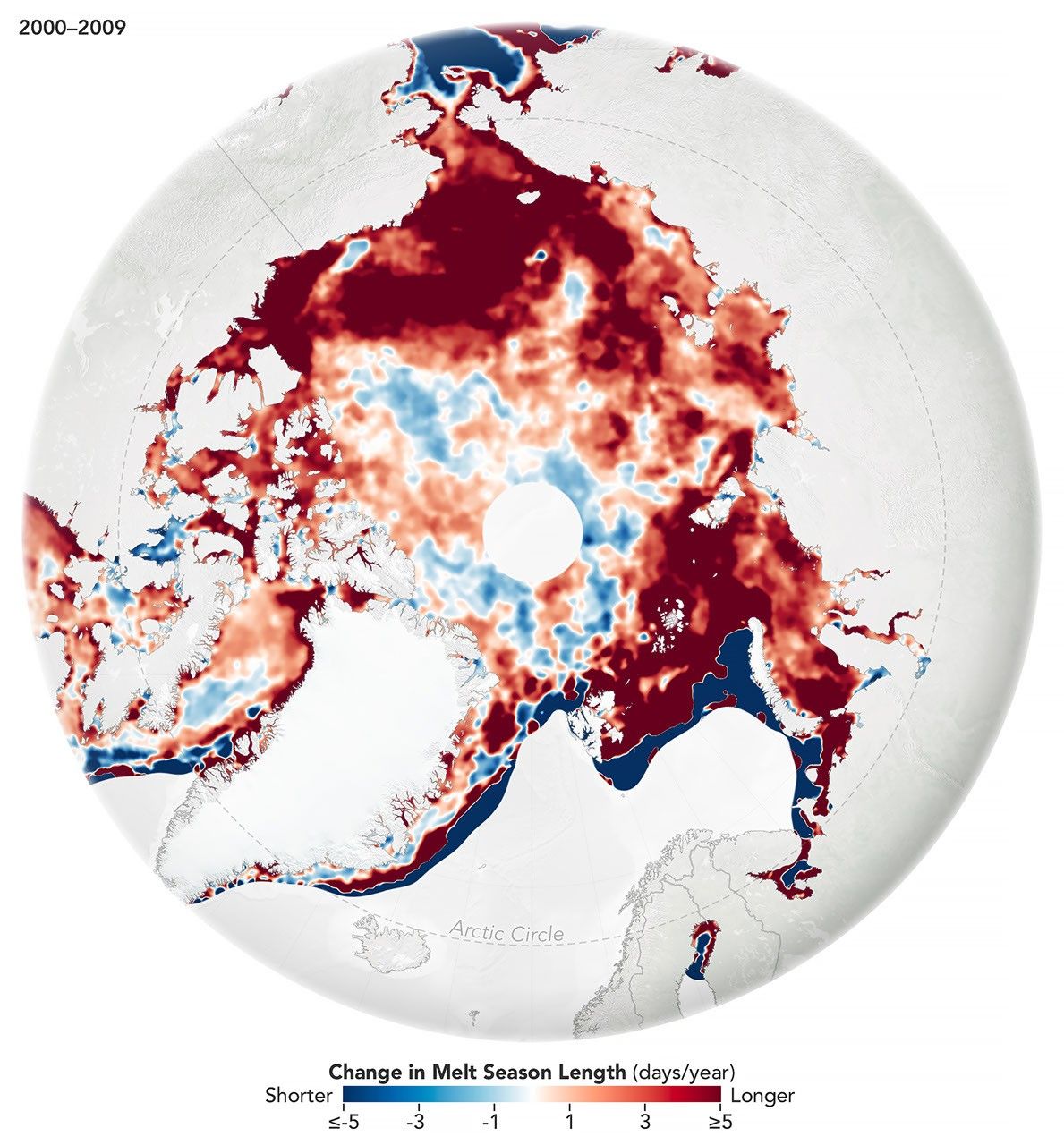
NASA reports that the Arctic sea-ice melt season, which has lengthened across much of the satellite record, appears to level off around 2010. The finding comes from a NASA-led analysis that examines how long sea ice takes to melt in spring and refreeze in fall.
Both sources describe decades of earlier spring melt and later autumn freeze, a pattern linked to substantial ice loss. However, the new study finds that the rate of melt-season lengthening does not continue to increase steadily. Instead, the trend unexpectedly stabilizes around 2010, indicating a plateau after a period of pronounced change.
NASA and Phys.org both point to the same conclusion: the melt season has not lengthened continuously at the same pace for the entire satellite era. Phys.org adds that the results are published in *Communications Earth & Environment*, framing the study as part of a broader effort to understand the mechanisms driving Arctic sea-ice change.
The outlets do not present competing interpretations of the plateau, but they differ in emphasis: NASA focuses on the stabilization finding, while Phys.org places it in the longer context of decades-long sea-ice melt-season extension.