


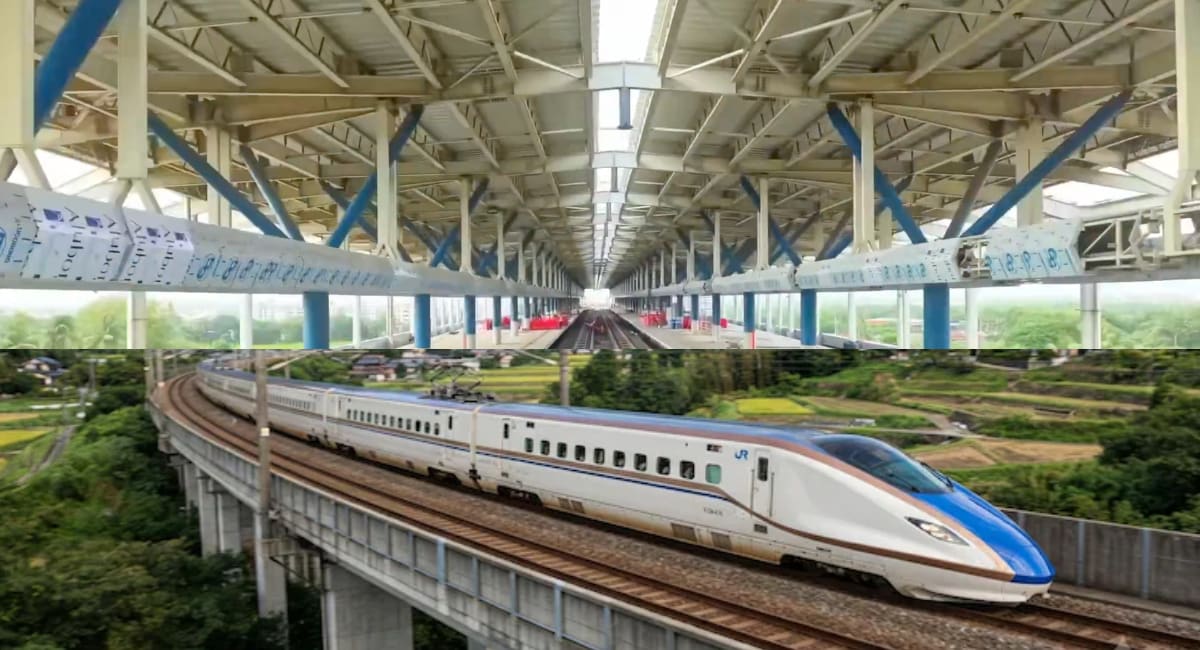
India’s planned Mumbai–Ahmedabad bullet train corridor is set to use a designed approach for switching tracks at very high speed, including conceptions intended to avoid a sudden jolt when trains reach about 320 km/h. NDTV describes that the technology aims to keep ride comfort and stability during track changes as part of the broader high-speed rail system.
The corridor runs from Bandra-Kurla Complex (BKC) in Mumbai to Sabarmati in Ahmedabad. According to the reports, the full line is expected to be completed by December 2029. Both pieces focus on the same theme—how the system manages track switching without abrupt impacts at operational speeds—presenting it as a key feature of the bullet train’s technology. While the outlets do not dispute core details, they emphasize the jolt-prevention aspect in separate explainers, rather than offering different technical interpretations.
Overall, the coverage links the track-switching design directly to the expected high-speed running of the line, while providing the shared project timeline to completion.

.jpeg?width=1200&auto=webp&trim=0%2C0%2C0%2C0)
