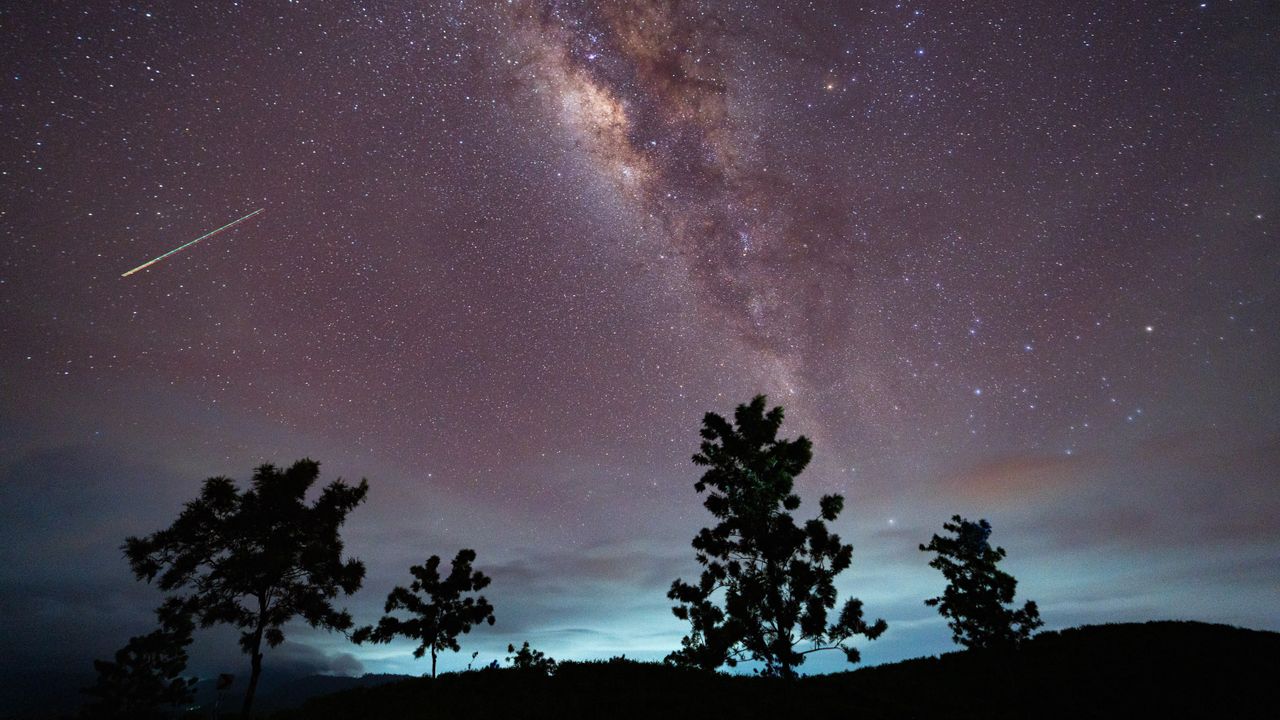
The Eta Aquarid meteor shower (also referred to as the Eta Aquariids/”Eta Aquarids” by some outlets) is expected to peak over the first weekend of May 2026. Multiple reports place the peak on May 5–6, with Space.com noting the peak occurs in the early hours of May 6 and that viewing is possible when the Aquarius constellation is above the horizon. Observers are generally directed toward the pre-dawn sky, looking toward the eastern horizon for best chances.
All sources describe visible “shooting stars,” produced when small debris enters Earth’s atmosphere and creates glowing streaks. Live Science and others attribute the stream to debris from Halley’s Comet.
Several outlets also emphasize that the shower does not produce a single sharp maximum, with activity clustering around the broader week of May 4–10. Daily Mail claims higher hourly rates during peak viewing, while BBC and other outlets focus more on general skywatching guidance and conditions.
One complication mentioned is moonlight: Live Science reports that bright moonlight may reduce how easily meteors are seen, even during peak hours.