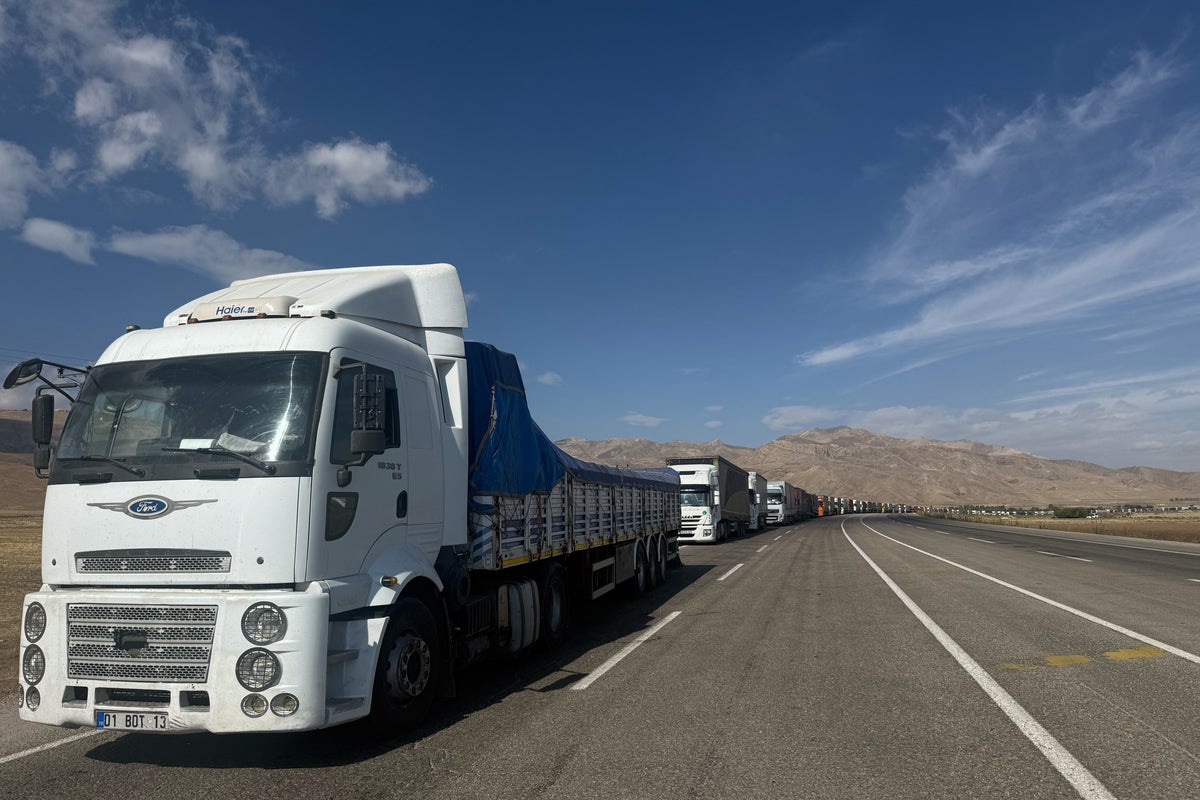
Hundreds of trucks are reported to be queued at the Turkey–Iran border crossing as trade flows shift overland, according to coverage of the disruption. The backlog reflects increased strain on regional logistics routes linking Iran with Turkey, with knock-on effects reported for onward movement.
The situation is linked to a U.S. naval blockade of Iranian ports, which reduces Iran’s ability to move goods by sea. With maritime routes constrained, some traders reroute shipments through neighboring countries and border crossings, increasing demand for trucking capacity and customs processing. Sources frame the congestion as a direct consequence of the blockade’s impact on Iran-bound supply chains and trading routes.
While both outlets describe the same broader cause—U.S. action affecting Iran’s sea access—and the same visible effect—long queues of trucks at the border—coverage focuses on different regional implications. One report emphasizes the broader overland rerouting through Turkey and also references additional pressure on routes via Pakistan, reflecting the wider redistribution of freight once sea transport becomes harder.