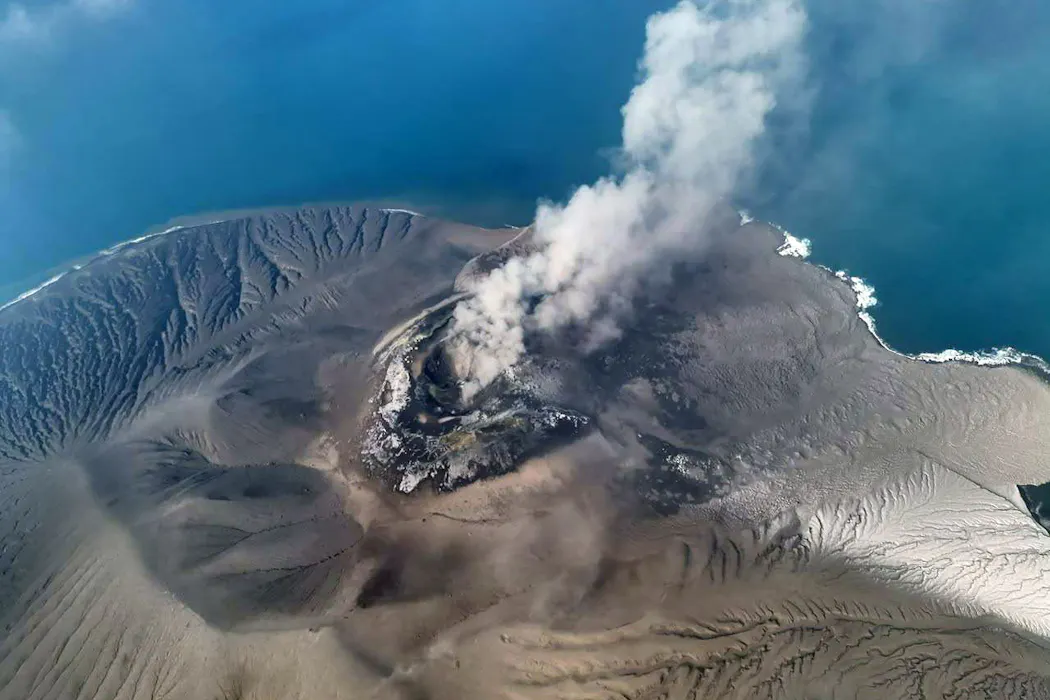
Anak Krakatau’s eruption in early September 2026 is shown to trigger major environmental change on nearby Sertung Island, according to satellite observations reported by multiple outlets. Images indicate that areas that were previously covered by lush vegetation are replaced by ash-affected surfaces, reflecting the scale of the eruption’s fallout.
Researchers frame Sertung Island as a new site for studying early ecosystem recovery. The removal of plant cover and the deposition of volcanic material create conditions that can be used to track how soil begins to form and how vegetation and nutrients return over time. Both sources emphasize the use of satellite imagery to document the transition from green ground to ash-covered landscapes and to support further field and laboratory investigations.
While the outlets agree on the broad picture of ecological disruption and the emergence of a “natural laboratory” effect, they differ mainly in how they describe the wider significance. One focuses more explicitly on the “birth of soil” angle, while the other situates the eruption as having impacts extending beyond immediate ashfall.