


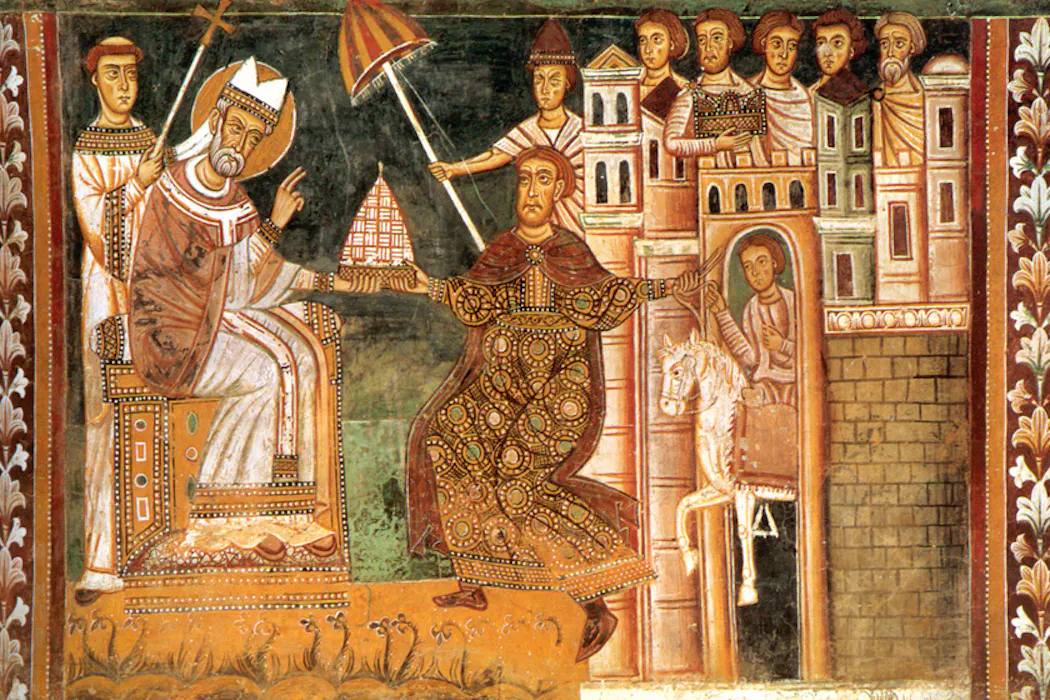
Church officials rely on what later scholars describe as a forged imperial decree—often compared to modern “deepfakes”—and its use lasts for centuries, according to reporting and academic discussion of the episode.
The document is said to have been presented as an authentic imperial order and then cited repeatedly by church authorities as they pursued greater influence. The accounts frame it as part of broader efforts to extend papal authority across the Italian peninsula, where disputes over jurisdiction and control were common.
Different outlets emphasize different aspects of the story. One focuses on the broader lesson about how falsified documents can mislead decision-makers over long periods and notes that skepticism toward sources has long been necessary. The other highlights the specific political and institutional aim associated with the forged decree, describing how the text is used as leverage in attempts to expand church control. Both agree the decree was not genuine and that its authority persists long after its creation or circulation.


