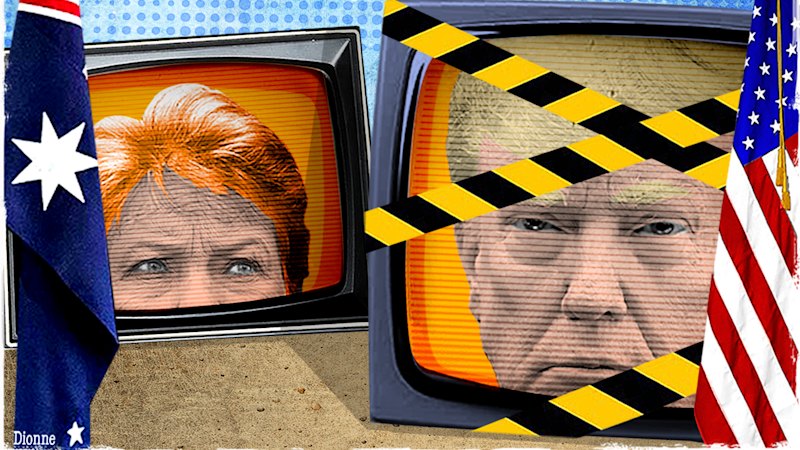
Multiple outlets frame a wider debate around a “media boycott” in the United States and its alleged impact on Donald Trump. The articles argue that boycotting or reducing media exposure is portrayed by supporters as a direct way to pressure political figures, because it targets visibility and coverage.
The commentary then extends the idea to Australia, suggesting “now it’s Hanson’s turn,” referring to Pauline Hanson. While the sources share the premise that media pressure can be politically significant, they differ mainly in tone and emphasis: two outlets focus on the apparent paradox of such coordinated media action emerging from a highly polarised political environment, while the third presents a similar point with minimal additional framing. Across the coverage, the focus remains on how organised media responses—rather than formal policy—are used as a political signal and a tactic.
None of the provided excerpts specify concrete dates, participants, or measurable outcomes, but all three set up a comparison between US and Australian contexts, using the same headline argument to highlight perceived parallels.