


Romania’s Prime Minister Ilie Bolojan is ousted from office after losing a no-confidence vote in parliament. According to multiple reports, the vote follows the departure of the Social Democratic Party (PSD), the largest party in his governing coalition, which broke ranks and moved to remove him. The coalition’s collapse is attributed to tensions over austerity measures introduced to reduce Romania’s deficit. BBC reports that the PSD aligned with the far-right opposition to depose Bolojan, while other coverage focuses on the internal rupture driven by public and political resistance to the austerity programme. DW reports that Bolojan could face dismissal in the vote and later states that lawmakers have voted him out, framing the episode as the consequence of the PSD leaving the coalition and pursuing his removal. The Japan Times similarly links the downfall to PSD’s fallout with the pro-European prime minister over deficit-cutting austerity policies, and notes that Romania’s deficit is among the highest in the European Union. The government’s collapse therefore follows both the coalition break and the parliamentary action that removes the prime minister.
Romania’s PM Ilie Bolojan ousted after no-confidence vote amid coalition split
Romania’s Prime Minister Ilie Bolojan is ousted from office after losing a no-confidence vote in parliament. According to multiple reports, the vote follows the departure of the Social Democratic Part...
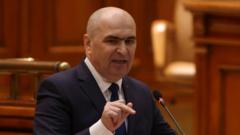
- Ilie Bolojan loses a no-confidence vote in Romania’s parliament and is removed as prime minister.
- The Social Democrats (PSD), Romania’s largest party in the coalition, leaves the governing alliance.
- The split is linked to unpopular austerity measures aimed at reducing Romania’s budget deficit.
- BBC reports PSD joins the far-right opposition to depose Bolojan.
- Multiple outlets describe the outcome as the collapse of Bolojan’s government.
The Social Democrats fell out with Prime Minister Ilie Bolojan over unpopular austerity measures aimed at reducing the deficit, the biggest in the European Union.
3 months agoIlie Bolojan lost the vote after the largest party in his coalition joined the far-right opposition to depose him.
3 months agoPrime Minister Ilie Bolojan has been voted out of office by lawmakers. Romania's coalition was driven apart by unpopular austerity measures, with the Social Democrats leaving and moving to oust the PM.
3 months agoPrime Minister Ilie Bolojan has been voted out of office by lawmakers. Romania's coalition was driven apart by unpopular austerity measures, with the Social Democrats leaving and moving to oust the PM.
3 months agoPrime Minister Ilie Bolojan has been voted out of office by lawmakers. Romania's coalition was driven apart by unpopular austerity measures, with the Social Democrats leaving and moving to oust the PM.
3 months agoPrime Minister Ilie Bolojan has been voted out of office by lawmakers. Romania's coalition was driven apart by unpopular austerity measures, with the Social Democrats leaving and moving to oust the PM.
3 months ago
Yahoo Sports publishes new instalments of Cowboys’ “Top 100 iconic games” countdown
Yahoo Sports publishes multiple instalments of its “Cowboys countdown to kickoff: Top 100 iconic games” series, featurin...

Kemi Badenoch calls for talks with civil service amid speculation of an early election
Kemi Badenoch says she wants meetings with the civil service to ensure officials are fully briefed on the government’s p...

Dubois and Wardley set for October 17 heavyweight rematch in London
Daniel Dubois and Fabio Wardley are set for a rematch in London on 17 October, following their earlier heavyweight bout...