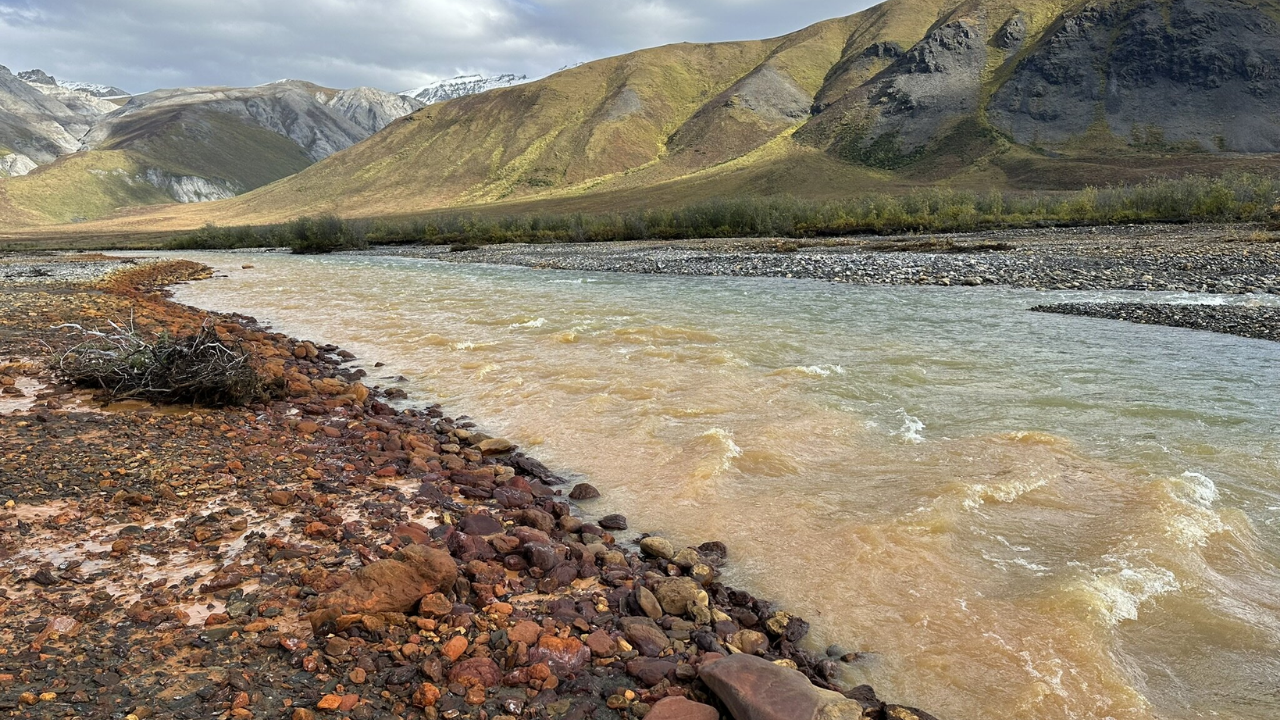
In northern Alaska, rivers that turn orange as permafrost thaws are becoming more acidic and metallic than researchers expected from typical natural drainage. A study of waterways in the Brooks Range finds that “rusting” waters tied to thawing tundra are more acidic and metal-rich than nearby reference drainage associated with conventional metal mining.
The reports describe a mechanism in which minerals stored in frozen ground begin leaching into streams and rivers as Arctic temperatures rise. As tundra thaws, natural acid rock drainage releases higher levels of sulfate and dissolved metals, changing river chemistry in ways that can affect downstream ecosystems and the people who rely on those waters. The articles also emphasize that these changes are being monitored over time to assess how persistent the effects will be.
While the sources share the same core findings—color change, increased acidity, and elevated metals tied to permafrost thaw—coverage differs slightly in emphasis. One outlet frames the comparison directly against mine drainage, while the other focuses on toxicity implications and broader downstream impacts, based on findings across multiple watersheds.