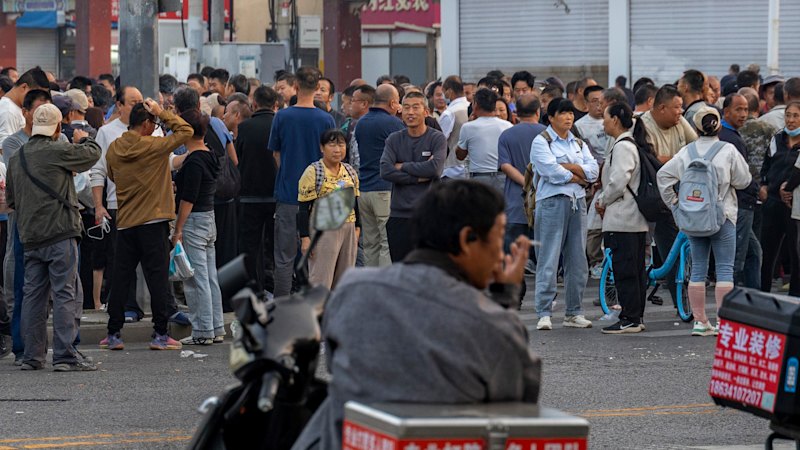
Multiple outlets report on the daily experience of gig and temporary workers at Beijing’s largest temporary job market, describing how finding work has become increasingly difficult. The reporting focuses on what street-level job exchanges reveal about income pressure and uncertainty for lower-income residents.
The articles use the market as a barometer for China’s broader economic conditions, which analysts increasingly describe as a “K-shaped” pattern—where gains and stability are concentrated among some groups while others experience worsening prospects. While the outlets largely align on the overall picture of reduced job availability and heightened competition for short-term work, they emphasize slightly different aspects of daily life, such as workers’ reliance on informal or temporary arrangements and the immediacy of economic strain.
Across the coverage, the central angle remains consistent: the job market’s flow and workers’ accounts illustrate a tightening labor environment at the bottom of the economy. The reporting does not present a single policy or corporate cause, instead situating individual hardship within wider economic debate.