Middle East Eye
Centre-left
Why does the US control Iraq's oil revenues?
Why does the US control Iraq's oil revenues?
Submitted by
Azhar Al-Rubaie
on
Mon, 09/21/2026 - 08:50
A system created after the 2003 invasion was designed to protect Iraq's oil wealth. More than two decades later, it gives Washington significant leverage over Baghdad
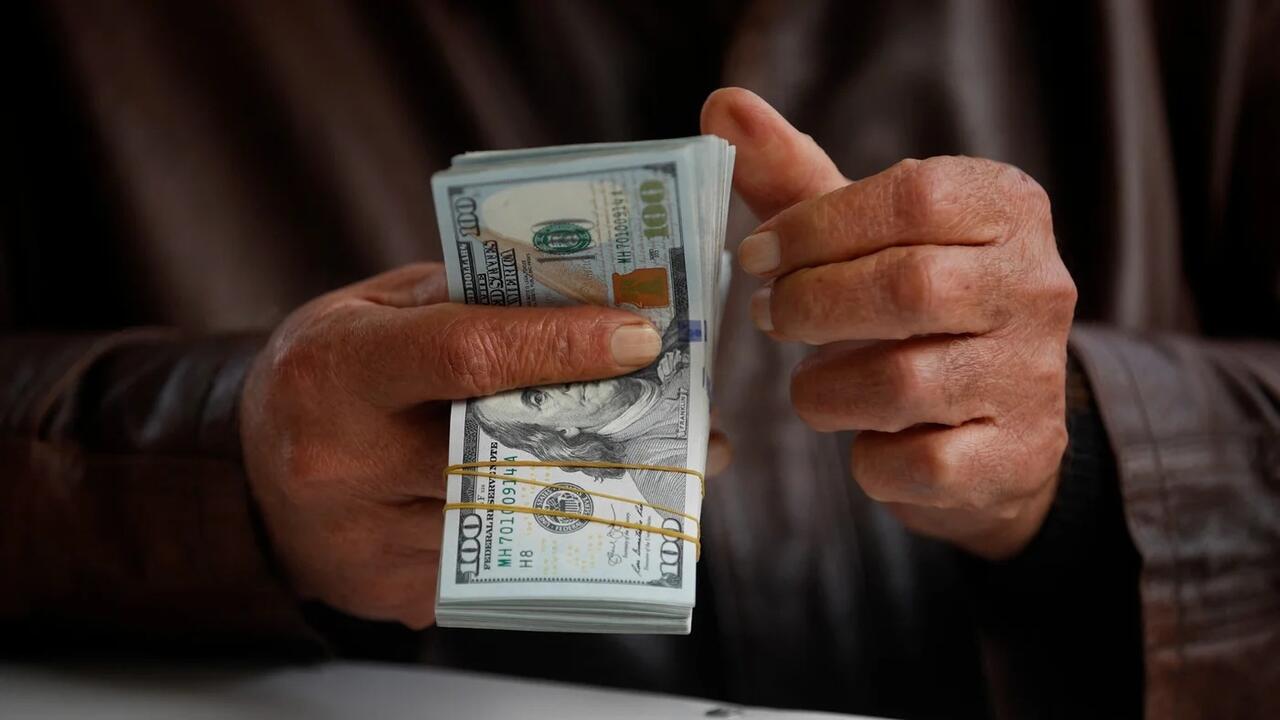
A man counts US dollar banknotes at al-Kifah stock market in Baghdad on 27 December 2022 (Ahmad al-Rubaye/AFP)
Off
For more than two decades, Iraq's oil wealth has passed through a financial system centred thousands of miles away in New York.
The arrangement, created after the US-led invasion of Iraq in 2003, was initially designed to protect Iraqi oil revenues from creditors and help fund reconstruction.
Today, it gives Washington significant leverage over Iraq's access to its own dollars, leverage that the US is increasingly using as it pressures Baghdad to curb Iran's influence and the activities of armed groups aligned with Tehran.
The issue came into sharp focus in April, when Washington blocked a shipment of about $500m in cash to Iraq as it pressured the government over Iran-aligned armed groups.
Muayen al-Kadhimi, a former parliamentary Finance Committee member, condemned the decision at the time, calling on the government to end what he described as US dominance over Iraqi funds.
"The US decision to freeze or delay sending Iraq's foreign currency entitlements represents a serious violation of the financial and political sovereignty of the Iraqi state," al-Kadhimi said.
The shipment was later restored, but the episode demonstrated how Iraq's dependence on the US financial system can be used as a political tool.
The arrangement began after the US-led invasion in May 2003, when the Coalition Provisional Authority established the Development Fund for Iraq (DFI) to collect the country's oil revenues and use them for reconstruction and humanitarian needs.
Under UN Security Council Resolution 1483, issued in May 2003, Iraqi oil and gas revenues were transferred to a special account in the name of the Central Bank of Iraq at the US Federal Reserve.
With US troops departing, Iraq looks beyond balancing Washington and Tehran
Read More »
Five percent of the revenues were deducted for compensation to Kuwait following Iraq's 1990 invasion.
The system also included frozen assets belonging to Saddam Hussein's former government and surplus funds from the UN's Oil-for-Food programme.
The arrangement was intended in part to protect Iraqi assets from international creditors pursuing claims dating back to Saddam's rule.
An International Advisory and Monitoring Board, including representatives from the UN, IMF, World Bank and Arab Fund for Economic and Social Development, was established to oversee the fund.
The UN-backed system ended in 2011 at the request of the Iraqi government but Iraq's oil revenues remained tied to the Federal Reserve.
A new account, known as IRAQ2, was established at the New York Fed. Oil revenues are deposited there before being transferred to the Central Bank of Iraq.
At the same time, Iraq lost the comprehensive international protection previously provided under the UN system and became dependent on annual US executive orders granting immunity to its sovereign funds.
So while the formal international arrangement changed, the underlying dependence on the US financial system remained.
Why can't Iraq simply move its money?
Iraqi oil is priced overwhelmingly in US dollars, while the country depends heavily on the currency for imports and international trade.
Iraq also has about $40bn in unsettled external debts, creating concerns that moving its funds outside the existing system could expose them to claims from creditors.
Ahmed Saddam, an associate professor of economics at the University of Basra, told Middle East Eye that keeping the Central Bank of Iraq's account in New York has important benefits.
"I believe that the most important advantages of keeping the Central Bank of Iraq's account in New York are protecting Iraqi oil revenues from being seized by creditors of the former regime, since the debts are estimated at tens of billions of dollars.
"The second advantage is facilitating the sale of oil and the settlement of Iraq's international trade; this account reduces transfer costs, and we should not forget that the dollar is the most widely used currency in international transactions."
But Saddam said the arrangement also leaves Iraq vulnerable to US pressure.
'Financial independence can be achieved by opening multiple sovereign accounts outside the United States while keeping the current account in New York'
- Ahmed Saddam, University
of Basra
"As for the most prominent disadvantages, they lie in the ability of the US authorities to impose their influence by restricting access to dollars to Iraq, for example, and this means there is no real financial independence."
According to Saddam, Iraq could sell its oil in euros or Chinese yuan, provided there were no binding conditions in its oil contracts, but even then that would not necessarily free Iraq from the dollar.
"Even if that happens, the price will remain linked to the dollar because oil is priced in dollars, and what happens in practice is that the buyer pays the value in a non-dollar currency after converting it according to the dollar exchange rate."
Iraq would still need dollars for much of its international trade, Saddam said, while shifting currencies could expose the country to exchange-rate losses and political pressure from Washington.
His proposal was therefore diversification rather than an immediate break with the US system.
"I believe that Iraq's financial independence will not be achieved if we assume moving the Central Bank of Iraq's account from the United States to another country.
"In my view, financial independence can be achieved by opening multiple sovereign accounts outside the United States while keeping the current account in New York. For example, the Central Bank could open an account with the European Central Bank, as well as with central banks in East Asia," Saddam said.
"Part of Iraq's oil could also be sold in euros and yuan, let us assume only 15–20 percent, while the remaining 80–85 percent is sold in US dollars. In addition, financial independence requires developing the banking system in Iraq by expanding direct correspondent banking relationships with major banks in Europe and Asia," he added.
How is the system being used against Iran?
The financial arrangement has taken on greater importance as Washington seeks to squeeze Iran economically and target armed groups in Iraq that are aligned with Tehran.
Iraq has close political, economic and security ties with Iran, while several powerful armed groups operate inside the country.
For Washington, that has made Iraq's financial system a key battleground in its efforts to restrict the flow of dollars to Iran.
The US has accused Iraqi banks, exchange companies and other financial networks of exploiting the country's financial system to move dollars towards sanctioned entities.
A quarter-century after the 'war on terror' began, the American Middle East is over
Read More »
Since the US and Israel launched their war on Iran, Washington has responded by tightening its oversight of Iraq's access to the dollar and pressuring Baghdad to bring its financial system into line with US sanctions.
In early 2025, Iraq ended its long-running dollar auction system, formally known as the foreign currency window, after sustained US pressure. The system had allowed private banks and exchange companies to obtain dollars from the Central Bank of Iraq in exchange for Iraqi dinars.
But Washington's leverage extends beyond Iraq's banking system to the physical movement of dollars into the country.
The April suspension of the $500m shipment was particularly significant because the cash was generated from Iraq's own oil revenues.
Although electronic dollar transfers for international trade continued, the episode showed that Washington could restrict access to physical dollars when it wanted to pressure Baghdad.
The Iraqi government has sought to maintain its relationship with Washington while balancing its ties with Tehran and Iran-aligned armed groups.
Iraq's Oil Minister Basem Mohammed Khudhair refused to answer questions about moving away from the Federal Reserve, telling MEE that the question fell under the remit of the finance ministry. However, he described the relationship between Baghdad and Washington as positive.
"There has been dialogue with the United States - a very positive dialogue, especially after our trip accompanied by the Prime Minister Ali al-Zaidi there," he said.
"There is great understanding between the Iraqi government and the American government, and the US has provided all support to the Iraqi government for its success in its economic and political dossiers."
But the consequences of Iraq's financial dependence are ultimately felt beyond government ministries and central banks.
'US controls Iraq's fate'
Hussein Ali, a 35-year-old Baghdad native, said removing US oversight would not necessarily improve the lives of ordinary Iraqis.
"For us, whether Iraq's money goes to the Federal Reserve in America or comes directly to Iraq, I don't think our situation as citizens will improve.
"Instead, the money will be at the disposal of the corrupt, and financial corruption will be even greater than it is now. From my viewpoint, I find it better for the money to remain in New York, under the guardianship and oversight of the US banking authorities."
Ali nevertheless acknowledged the sovereignty problem.
'Whether Iraq's money goes to the Federal Reserve in America or comes directly to Iraq, I don't think our situation as citizens will improve'
- Hussein Ali, Baghdad native
"It is true that keeping Iraq's money in the US bank gives the United States the freedom to control Iraq's fate politically, financially and in sovereign terms. But Iraq is not ready in terms of banking infrastructure, and the situation requires a strong government to come that cares about the country’s affairs and the interests of its people."
He also raised concerns about money being moved towards Iran.
"We have often heard how many officials and not state people smuggle money to Iran to help it confront the American economic blockade on Iran. Imagine what would happen if Iraq received its oil sale money into Iraqi banks far from American oversight and auditing. I believe Iraq's situation will only get worse."
Fatima Abdulkarim, a 55-year-old from Basra, shared those concerns.
"I do not believe that Iraq's oil funds going to Iraq directly instead of going to US banks will help to improve our economic situation.
"Yes, it means Iraqis would dispose of the money without direct US intervention, but corruption will be greater, and the money will go to the same corrupt parties and officials. If the money remains in New York, it is at least under oversight and auditing. But if it comes to Iraqi banks far from any real oversight, I believe Iraq's situation will be worse off."
"Keeping the money under the guardianship and oversight of the US banking authorities is better than it reaching the hands of the corrupt," Abdulkarim said.
Inside Iraq
Basra
News
Post Date Override
1
Update Date
Mon, 05/04/2020 - 21:19
Update Date Override
0
21 hours ago