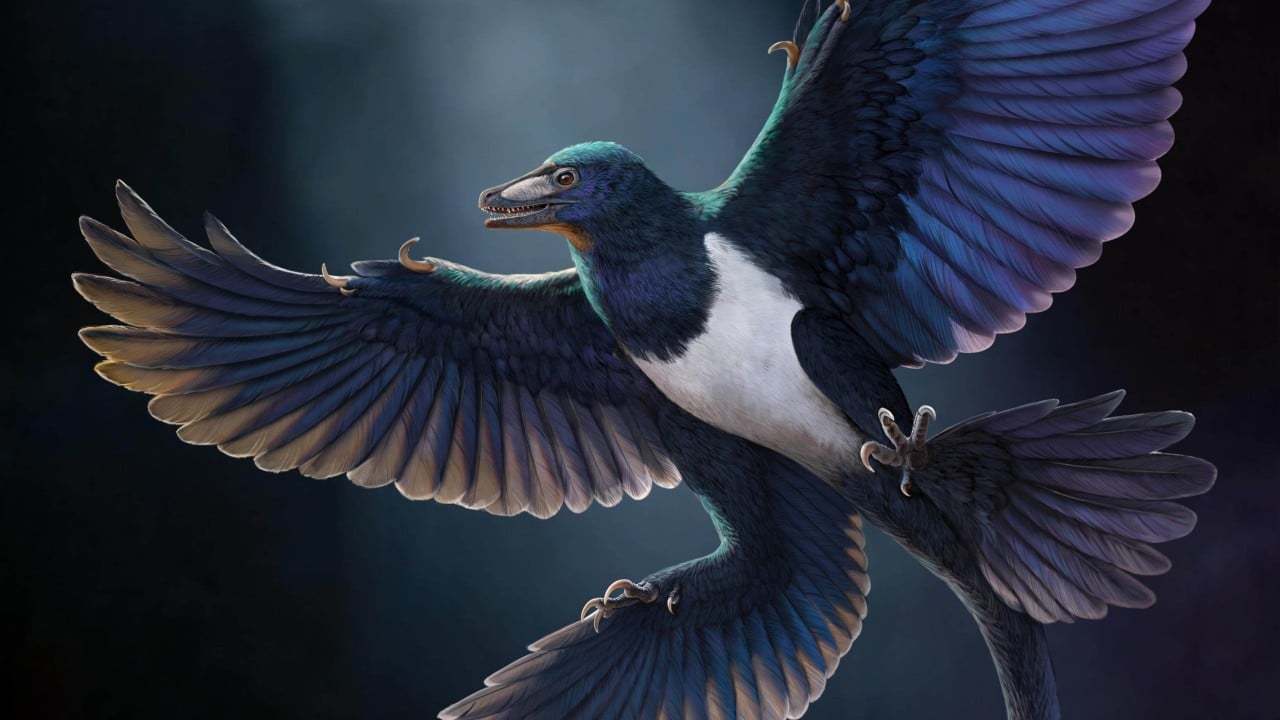
Scientists in China describe an exceptionally well-preserved, 100-million-year-old fossil of a small, feathered predatory dinosaur named Norellraptor barsboldi. The specimen includes sharply curved teeth and claws and shows four wings, adding new anatomical evidence for how some non-avian dinosaurs may have used wing-like forelimbs and hindlimbs.
The fossil was found in northeastern China’s Liaoning region and is about 57 cm (22 inches) long. Researchers place Norellraptor among microraptorines, a group of small, feathered dinosaurs closely related to birds. Together with previously studied relatives, the find supports the idea that “flight” or flight-like capabilities may have evolved multiple times across different dinosaur lineages rather than arising from a single origin.
Across outlets, the emphasis is on how the preserved four-winged body plan challenges simplified models of dinosaur flight. While both sources agree on the classification and wing structure, they frame the broader implication differently: one highlights broader evolutionary “several-times” interpretations, while the other stresses the challenge to a single-origin explanation for dinosaur flight.