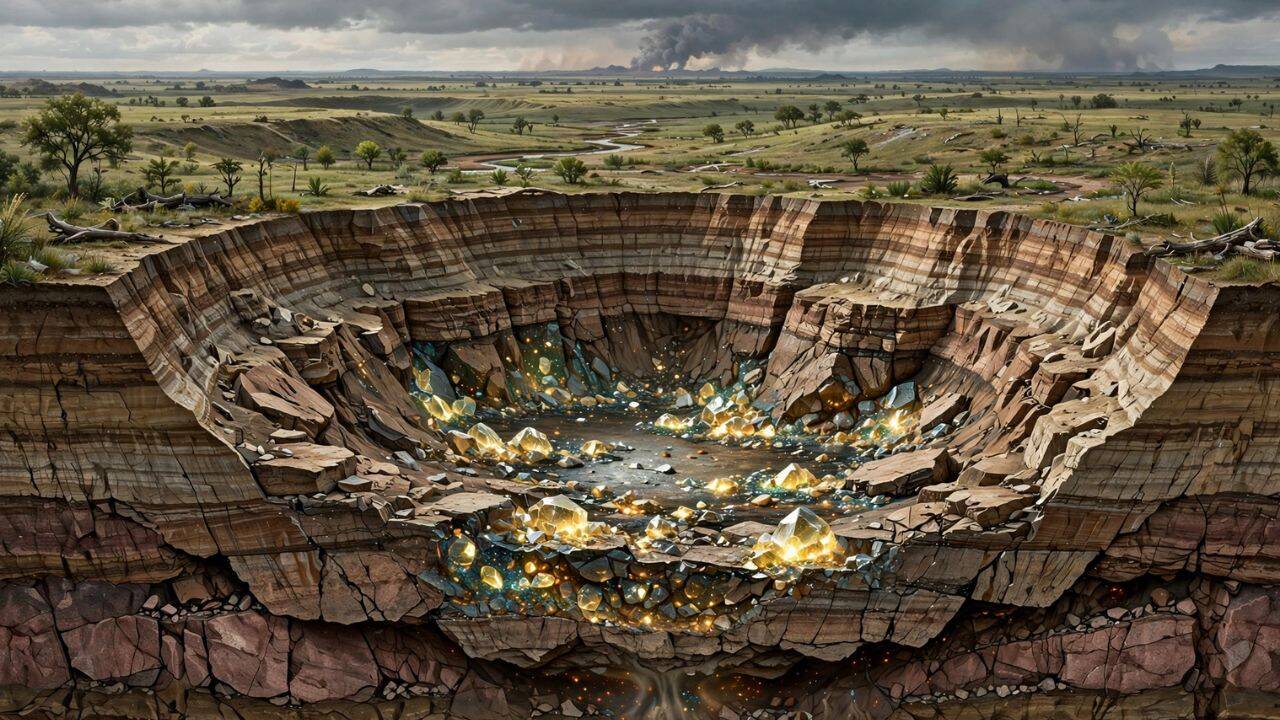
Researchers re-date the Ames crater beneath Oklahoma, finding it is nearly 100 million years younger than earlier estimates. Enhanced dating of zircon crystals and related materials from impacted rock indicates the impact occurred at roughly 370 million years ago, rather than the older timeframe previously suggested by fossil-based interpretations.
The redating shifts the crater’s relevance in Earth history. Earlier work connected the structure to the Ordovician meteor event, which some studies have linked to larger-scale impact activity, including the idea of a ring of debris around Earth. Multiple outlets report the new results weaken that connection. Instead, they place the Ames impact closer to a major mass extinction, affecting marine life, which is described as occurring around the same period.
Across the reports, the main angle differences relate to the past proposed age and how strongly the new date alters interpretations. Times of India emphasizes the methodological update using radioisotopic dating of zircon and plagioclase, while ScienceDaily focuses on the implication that the impact aligns with a later extinction episode rather than the older Ordovician bombardment.