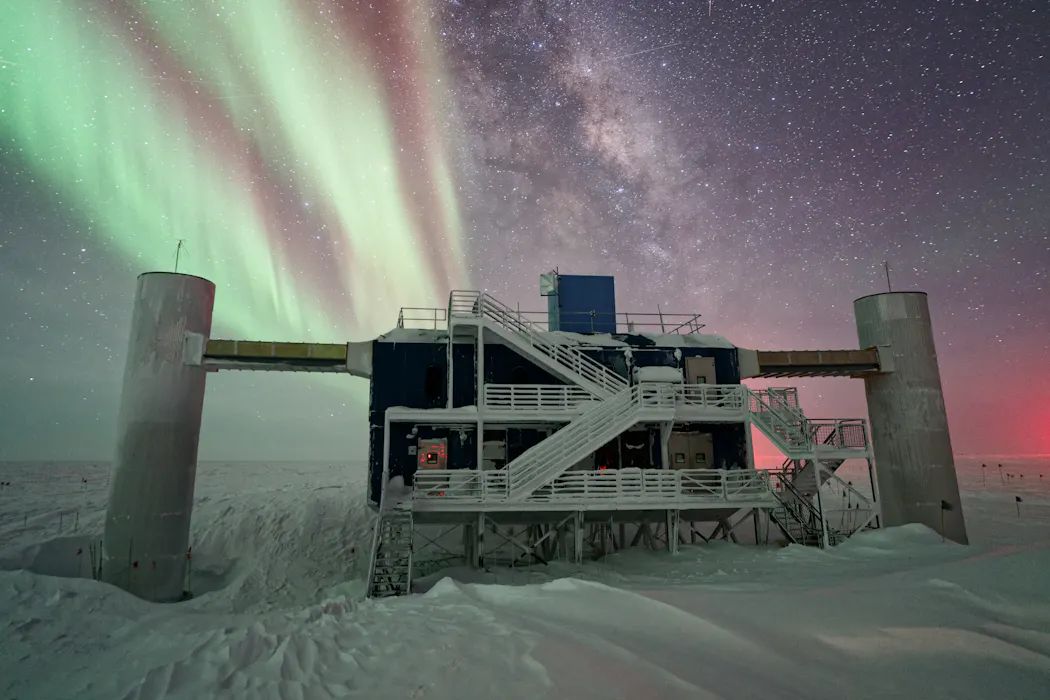
Belgian physicist Francis Halzen wins the 2026 Nobel Prize in Physics for turning about a cubic kilometre of Antarctic ice into the world’s largest neutrino detector. The work is tied to the search for neutrinos—often described as “ghostly” particles—that can travel from distant parts of the universe and pass through matter with little interaction.
Both outlets describe Halzen, 82, as a central figure behind the Antarctic telescope concept and its construction. Euronews emphasizes the scale of the detector built within Antarctic ice and frames it as a major scientific effort to catch elusive particles from space. The Conversation similarly links the prize to Halzen’s long-running vision and notes the neutrino discoveries associated with the instrument.
While the sources use different wording and one focuses more on the physics description of neutrino detection, they converge on the same core facts: Halzen’s role in developing the Antarctic neutrino detector and the Nobel committee’s recognition of its significance for particle physics and observations of neutrinos.