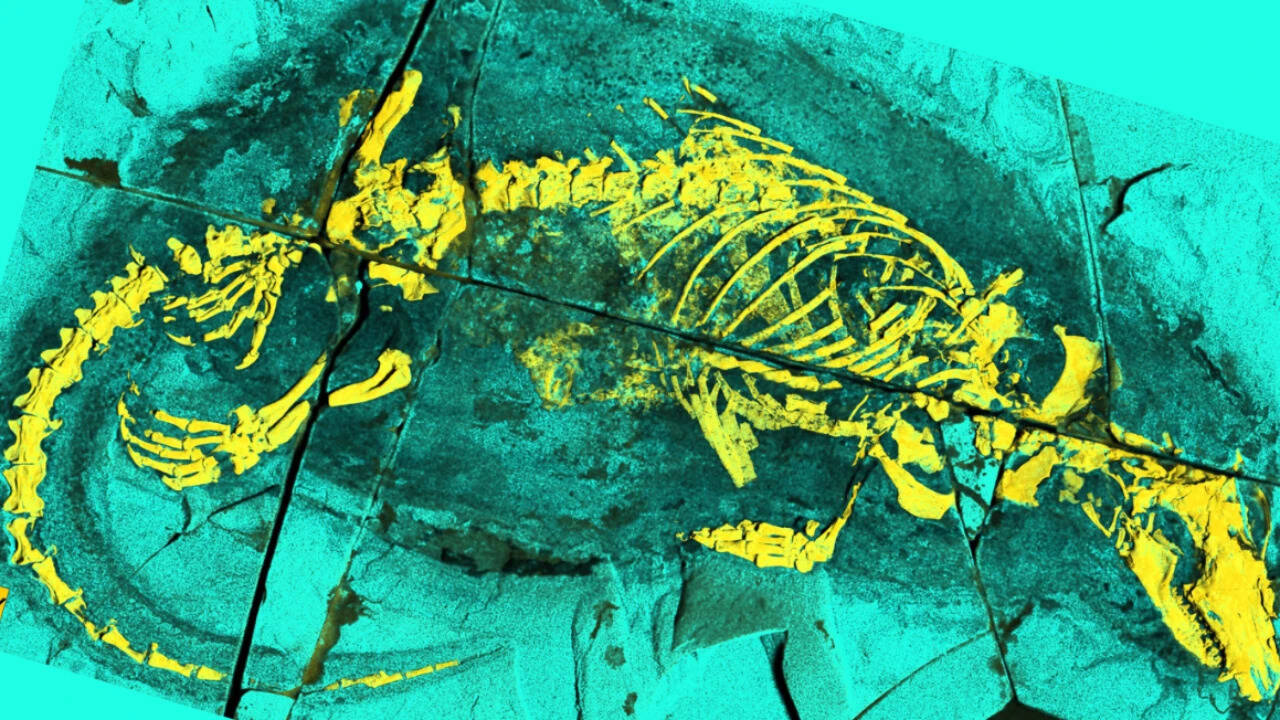
Scientists report a 165-million-year-old fossil from China that they say represents an early predecessor to modern mammals. Described as Megacauda sungei, the Jurassic-era animal is reconstructed as having features suited to swimming, along with throat anatomy preserved in detail.
Researchers highlight mammal-like structures in the throat region, including bones involved in swallowing. The study examines how these throat features relate to two key mammal traits: adult swallowing and baby suckling. By comparing the fossil’s pharynx and throat bones with those of modern mammals, the work aims to clarify how feeding abilities evolved in the lineage leading to today’s species.
Outlets differ mainly in emphasis—some foreground the animal’s swimming and swallowing capabilities, while others focus on the earliest evidence for the evolution of suckling—but all describe the same fossil discovery and its significance for understanding the development of mammal feeding mechanics.