


The World Health Organization says it suspects rare human-to-human transmission of hantavirus among very close contacts on board the MV Hondius cruise ship, where there are seven confirmed or suspected cases. WHO emphasizes that human-to-human spread is not common for hantaviruses and that the risk to the general public is low. The infection is typically acquired through contact with rodents, and investigators are looking into whether limited transmission occurred between people on the vessel. Reports from multiple outlets describe the outbreak as having involved deaths among passengers, including a Dutch couple and a German national, while a British passenger was evacuated and treated in South Africa. WHO officials also indicate that additional cases may be confirmed as investigations continue, with some reporting that confirmed numbers are increasing. The ship has reportedly stopped at several locations off the coast of Africa, including areas with rodent activity, which may relate to exposure risks. The Netherlands is preparing medical evacuations for those identified as needing care, while the status and disembarkation plans for other passengers are being determined. Authorities and medical teams continue to monitor passengers and crew and review exposure history.
WHO suspects rare human-to-human hantavirus transmission on cruise; wider public risk remains low
The World Health Organization says it suspects rare human-to-human transmission of hantavirus among very close contacts on board the MV Hondius cruise ship, where there are seven confirmed or suspecte...
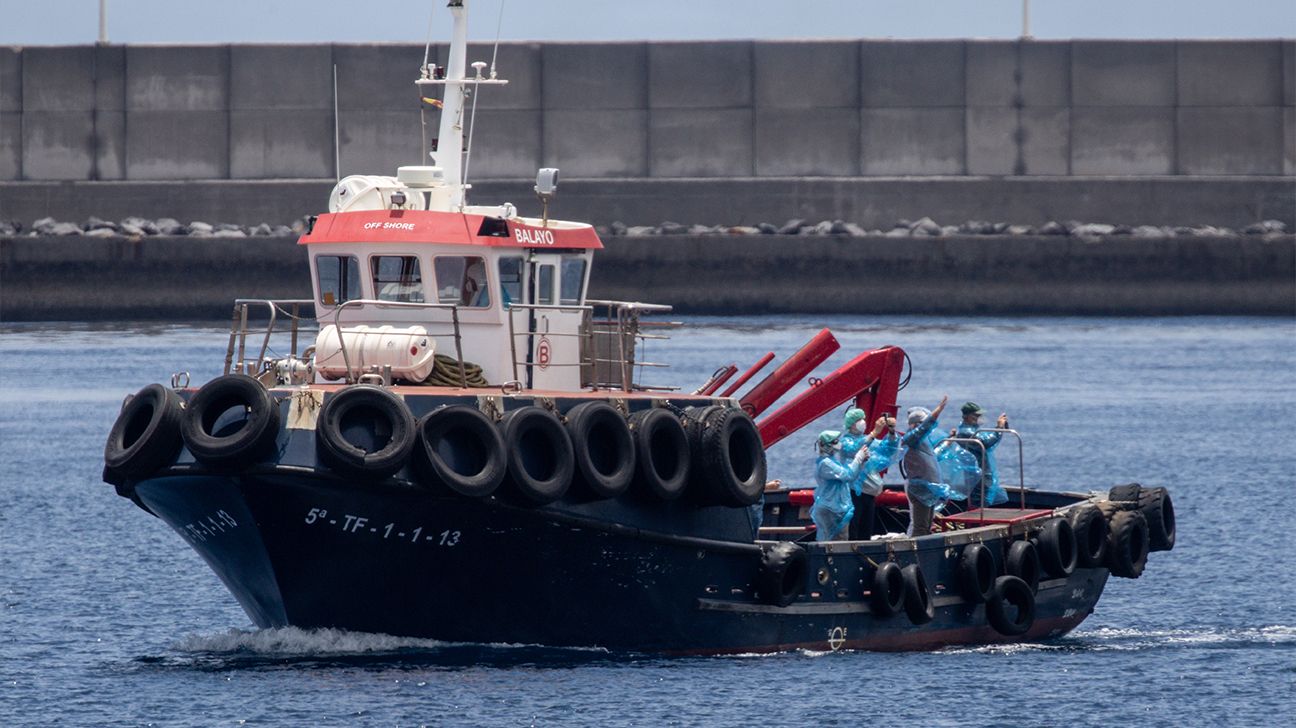
- WHO says it suspects some rare human-to-human transmission of hantavirus among very close contacts on the MV Hondius.
- Human-to-human transmission is described by WHO as uncommon, and the risk to the wider public is assessed as low.
- There are seven confirmed or suspected hantavirus cases linked to the cruise ship, and some outlets report additional confirmations.
- Reported deaths include a Dutch couple and a German national; a British passenger has been evacuated and treated in South Africa.
- The cruise is reported to have visited islands off the coast of Africa, including areas with rodent activity that could explain typical zoonotic exposure.
As passengers aboard a cruise ship linked to a deadly hantavirus outbreak return to their home countries, experts say the risk of another pandemic remains low. Chris McGrath/Getty Images 18 American passengers have been airlifted to the U.S. after a deadly hantavirus outbreak aboard an Antarctic expedition cruise ship. Investigators believe the rare Andes virus strain may have spread among passengers in the ship’s close quarters. Experts say the outbreak highlights the severity of hantavirus, but stress that the risk of a COVID-like pandemic remains low. Health officials say that 18 Americans have returned safely to the United States after traveling on a cruise ship in the Atlantic linked to a deadly hantavirus outbreak. The U.S. State Department airlifted the passengers from the Spanish island of Tenerife on May 10. Two of those passengers are being treated in biocontainment units “out of an abundance of caution,” according to the Health and Human Services X account. One passenger tested positive for hantavirus, while the other developed mild symptoms, officials said. Of the repatriated Americans, 16 are being treated at an ASPR Regional Emerging Special Pathogen Treatment Center in Omaha, NE. Two others are being treated at a RESPTC in Atlanta, GA. The Americans are among dozens of passengers monitored as international health officials continue investigating the outbreak aboard the ship. The Dutch-flagged MV Hondius departed from southern Argentina on April 1 with roughly 150 passengers and crew aboard for an expedition cruise through the Atlantic Ocean. Just 11 days into the voyage, a 70-year-old man died after developing fever, headaches, and abdominal pain. After several additional passengers became ill, the World Health Organization (WHO) identified the ship as the site of a hantavirus outbreak. As of May 12, the number of confirmed hantavirus cases linked to the ship rose to 11, according to the WHO. Three deaths have also been confirmed: a Dutch married couple and a German national. All remaining passengers have disembarked and are being repatriated to their home countries, according to the latest statement from Oceanwide Expeditions, the ship’s operator. However, the repatriation effort appeared to cause alarm and fuel fears of another pandemic — concerns that experts say are overstated. “I think we’re actually in very good shape,” said Lina Moses, PhD, an epidemiologist and disease ecologist at Tulane University’s Celia Scott Weatherhead School of Public Health & Tropical Medicine, who specializes in rodent-borne diseases. “It’s not surprising we’re starting to see more suspected cases. That means that the process is working right. They are monitoring people effectively and identifying people as they become ill,” Moses told Healthline. Could hantavirus cause the next pandemic? Pandemic fears have largely been driven by what is believed to be human-to-human transmission of hantavirus aboard the Hondius, a rare but documented phenomenon. Hantavirus is typically transmitted through exposure to the urine or droppings of infected mice and rats. The virus can survive in dust and debris, and when that dust is inhaled, infection can occur. However, one strain of hantavirus endemic to South America, the Andes virus, has been linked to cases of human-to-human transmission. It is the only hantavirus known to spread from person to person. The leading theory on the outbreak aboard the Hondius is that an individual carrying the Andes virus boarded the ship and subsequently passed it on to other passengers. Experts say that the level of transmission aboard the ship is reasonable given the circumstances and does not indicate anything out of the ordinary. “Previously, we’ve seen person-to-person spread with Andes virus in situations such as close household contacts or at a large social gathering. There’s nothing here that is remarkably different from what we’ve seen in the past,” said Steven Bradfute, PhD, an associate professor at the University of New Mexico Health Sciences Center who specializes in hantavirus research. Researchers have documented this transmission in Argentina, including “super spreader” events that resulted in numerous infections at once. Cruise ships can be the perfect environment for disease outbreaks, such as norovirus, which have been documented regularly. “The most plausible explanation is that the passengers of the cruise ship likely became infected before boarding the cruise, then human-to-human transmission occurred among close contacts,” said Robert Glatter, MD, attending physician in the Department of Emergency Medicine at Lenox Hill Hospital in New York City, and assistant professor of Emergency Medicine at Zucker School of Medicine at Hofstra/ Northwell. “The confined ship environment with close quarters and shared spaces likely facilitated transmission between passengers in ways that wouldn’t occur in typical community settings,” he told Healthline. Hantavirus spreads less easily than COVID-19 Not all viruses are created equal. Some are capable of surviving for extended periods of time outside the body, and some die almost immediately. One virus could be easily transmitted through the air, while another could require prolonged close contact with an infected person. In the case of the Andes virus, experts say it simply does not have the same transmission potential as a virus like the coronavirus, which causes COVID-19. “We do have the advantage of historical comparison and what we’re seeing is that Andes virus transmission is much less efficient than what we were seeing in the early stages of COVID,” Moses said. While experts don’t necessarily understand the exact mechanisms by which the Andes virus spreads from person to person, unlike other hantaviruses, they are confident in their assessment of its relatively low transmissibility. “When you compare it to what we see with SARS-CoV-2, the common cold, or influenza, it’s not even in the same ballpark. That doesn’t mean we are dismissing it; these are dangerous viruses, but the transmissibility is not in the same ballpark,” Bradfute told Healthline. Another complicating factor is the disease’s incubation period—the time between infection and the onset of symptoms — which can range from 4 to 42 days. That long incubation period has stoked fears that individuals who are asymptomatic may be able to transmit the virus without even being aware they have it, which was common during the COVID-19 pandemic. But that too is unlikely for Andes virus, experts say. “The viral load appears highest during the early symptomatic period when patients experience fever and respiratory symptoms. This pattern means that severely ill patients — those most likely to transmit the virus — are also most likely to be hospitalized and isolated, naturally limiting transmission opportunities,” Glatter said. Everything we know so far points to the following: The Andes virus can lead to serious and potentially fatal outcomes in humans, but it is rarely transmitted from one person to another. Person-to-person transmission requires extended intimate contact with an infected individual. Therefore, the risk of a new global pandemic and threat to the public at large remains low. “I’m not changing any of my travel plans,” Bradfute said. “These viruses are dangerous. They’re to be taken seriously. But from what we know of this virus and what we’re seeing so far, there’s nothing here that is concerning for a pandemic at this point.”
There were no treatments or vaccines to protect people during the recent hantavirus outbreak on a cruise ship
4 months agoA WA health specialist has warned that social media misinformation about the recent hantavirus outbreak on a cruise ship could be dangerous.
4 months agoThe new case involves a ‘close contact’ of a person connected to the initial outbreak, Spain’s Health Ministry said.
4 months agoSocial media users around the world have been claiming that hantavirus can’t be spread from one human to another. However, scientists have confirmed that the strain of the virus that circulated on the MV Hondius cruise ship can indeed be transmitted that way, though it isn’t very contagious.
4 months agoThe hantavirus-stricken cruise ship MV Hondius arrived at its last stop Monday. Now the waiting begins. The diagnosis of a strain of the Andes strain of hantavirus — an infection that’s fatal in about 40 percent of cases — on a ship carrying people from roughly two dozen countries has given public health officials around … The post A critical window to stop hantavirus is opening. Not all countries are managing exposed travelers the same way appeared first on Egypt Independent.
4 months agoGENEVA, Switzerland – The World Health Organization said Sunday it was maintaining its assessment of the hantavirus outbreak as “low risk” as the cruise ship where the outbreak originated approached the Netherlands. “The public health risk has been reassessed with the most current information available, and the global risk remains low,” said a WHO statement. READ: Canada confirms first hantavirus case linked to cruise “While additional cases may still occur among passengers and crew members exposed before containment measures were implemented, the risk of onward transmission is expected to be reduced following disembarkation and the implementation of control measures,” it added. […]...Keep on reading: WHO keeps evaluation of hantavirus as 'low risk'
4 months agoThe overall risk to the general population in Canada from the Andes hantavirus outbreak linked to the MV Hondius cruise ship remains low at this time, Canada's public health agency stressed.
4 months agoNew findings appear to conflict with earlier assumptions about how the deadly strain spreads.
4 months agoThe Andes virus strain linked to the MV Hondius cruise ship outbreak is the only hantavirus capable of spreading person to person, the WHO says.
5 months agoThe World Health Organization has highlighted that Andes hantavirus is most infectious at the onset of illness, urging strict quarantine for nearly 150 individuals from the MV Hondius cruise ship. This rare virus, linked to three deaths, has a six-week incubation period, prompting varied quarantine durations by returning countries.
5 months agoWhile most varieties of hantavirus are not transmissible human-to-human, the strain confirmed to be on the MV Hondius is the Andes Strain, and that sadly is.
5 months agoWHO official warns all MV Hondius cruise ship passengers should be considered "high-risk" contacts after deadly hantavirus outbreak kills three people.
5 months agoHealth experts say a hantavirus outbreak linked to a cruise ship should not be compared to Covid-19, despite growing public concern and online misinformation. Professor of Medecine Paul Hunter of the University of East Anglia said the virus is well known, spreads only through close contact, and poses “very little risk” to the wider public, even as passengers continue to be monitored after disembarking in the Canary Islands.
5 months agoLONDON — As the cruise ship hit by a hantavirus outbreak sails towards Tenerife, World Health Organization officials are racing to draw up step-by-step guidance for what should happen next for the nearly 150 passengers when they finally reach land on Sunday. The hantavirus outbreak – which has killed three people among at least eight suspected or confirmed infections - is the first ever recorded on a cruise ship, so some new protocols are needed. Half a dozen current and former WHO officials and hantavirus experts said the outbreak could be managed by adapting standard public health steps, like isolating sick passengers or those who may have been in contact with them. None of the passengers on the ship now have symptoms, the ship's operator has said. Tips from Argentina Officials are also seeking tips from Argentina, where a previous outbreak of the Andes virus, the same strain as on the ship, was snuffed out in 2019. “If we follow public health measures and the lessons we learned from Argentina ... we can break this chain of transmission. This doesn't need to be a large epidemic,
5 months agoHealth authorities are urgently tracing passengers from the MV Hondius cruise ship following a hantavirus outbreak that has claimed three lives. The Andes strain, capable of human-to-human transmission, was identified, prompting isolation and contact tracing. While not comparable to COVID-19, the virus requires close contact to spread.
5 months agoHealth authorities across several countries are racing to trace and contain an outbreak of the hantavirus after the World Health Organization (WHO) said Thursday that five confirmed infections had been identified among people connected to the cruise ship MV Hondius. Three people – a Dutch couple and a German national – have died since the … The post From US to Singapore, countries race to track hantavirus appeared first on Egypt Independent.
5 months agoHantavirus cases are usually rare, but the strain in the outbreak is the only one thought to be transmitted from person to person.
5 months agoDr Tedros Adhanom Ghebreyesus, WHO Director-General, briefed media today on a cluster of hantavirus cases linked to a cruise ship, the MV Hondius.Eight cases have been reported so far, including three deaths. Five of the 8 cases have been confirmed as hantavirus.The hantavirus involved is the Andes virus, the only species known to be capable of limited transmission between humans, linked to close and prolonged contact.Describing the situation, Dr Tedros said, “While this is a serious incident, WHO assesses the public health risk as low.” He noted that given the incubation period, “it’s possible that more cases may be reported.”WHO is coordinating closely with multiple countries under the International Health Regulations or IHR, rules that define the rights and obligations of countries and WHO in responding to public health events. This event demonstrates why the IHR exist, demonstrating the importance of global cooperation and solidarity in responding to health threats that know no borders.“Our priorities are to ensure the affected patients receive care, that the remaining passengers on the ship are kept safe and treated with dignity, and to prevent any further spread of the virus,” Dr Tedros said.WHO has taken a number of actions since it was notified of the situation on Saturday, 2 May 2026. The latest of these include deploying an expert on board the ship, to support a comprehensive medical assessment of all passengers and crew, while gathering critical information to evaluate their risk of infection.WHO has arranged for the shipment of 2500 diagnostic kits from Argentina to laboratories in five countries to strengthen testing capacity. The Organization is also developing step-by-step operational guidance for the safe and respectful disembarkation and onward travel of passengers and crew when they arrive.Watch the full press conference
5 months agoThe World Health Organization has assured that a hantavirus outbreak on a cruise ship is expected to be limited, though more cases are possible. The rare Andes strain, which can spread between humans, is believed to have originated in Argentina. Authorities confirm three passenger deaths and several infections globally, with diagnostic kits sent to affected nations.
5 months agoGENEVA — The World Health Organization said Thursday that more cases of the hantavirus could emerge but expected the outbreak to be "limited" if precautions are taken, after the disease killed three passengers from a cruise ship. Another sick passenger from the MV Hondius landed in Europe earlier in the day, as the vessel headed to a Spanish island and health officials scrambled to map the outbreak of the potentially deadly human-to-human strain. The fate of the Hondius sparked international alarm after three people travelling on it died, though health officials have played down fears of a wider global outbreak from the rat-borne virus, which is less contagious than Covid-19. WHO chief Tedros Adhanom Ghebreyesus told journalists in Geneva that five confirmed and three suspected cases had been reported overall, including the three deaths. "Given the incubation period of the Andes virus, which can be up to six weeks, it's possible that more cases may be reported," he said, referring to the rare strain detected aboard the Hondius, which can be transmitted between humans. His prediction was
5 months agoHong Kong health authorities are seeking more information from the World Health Organization (WHO) on an outbreak of a deadly hantavirus strain capable of limited human-to-human transmission reported on a cruise ship in the Atlantic, while ramping up efforts to prevent the rare disease from reaching the city’s shores. The Department of Health’s Centre for Health Protection revealed on Thursday that it had contacted the WHO about the hantavirus cluster found on the MV Hondius after the vessel...
5 months agoFive of the eight suspected cases of hantavirus linked to the MV Hondius cruise ship have now been confirmed, the World Health Organization said at a press briefing on Thursday.
5 months agoThe World Health Organization said Thursday that more cases of the hantavirus could emerge but expected the outbreak to be "limited" if precautions are taken, after the disease killed three passengers from a cruise ship.
5 months agoHealth authorities are stepping up international monitoring and response efforts after additional cases linked to an Andes hantavirus outbreak aboard the expedition cruise vessel MV Hondius were confirmed in Europe. The World Health Organization (WHO) confirmed today (6 May) that Swiss authorities had identified a hantavirus case in a passenger from the vessel after the […]
5 months agoHealth agencies across multiple countries are tracing passengers and probing the source of a deadly hantavirus outbreak linked to a cruise ship
5 months agoThe virus has infected several passengers, killing three, who were aboard a Dutch cruise ship.
5 months agoThe World Health Organization (W.H.O.) confirmed on Wednesday morning the Hantavirus outbreak onboard Dutch cruise ship Hondius is the rare Andes strain of the virus, endemic in Argentina and known to be transmissible between humans. The post W.H.O.: Hantavirus on Cruise Ship Can Transmit Among Humans appeared first on Breitbart.
5 months ago[UN News] Hantavirus victims on a ship in the Atlantic Ocean may have been infected prior to joining the cruise and human-to-human transmission on board cannot be ruled out - although it is rare - the World Health Organization (WHO) said on Tuesday.
5 months agoThe WHO said that some passengers aboard the MV Hondius cruise ship may have been infected with the deadly hantavirus through extremely rare person-to-person transmission.
5 months agoThe World Health Organization says the suspected hantavirus outbreak on a cruise ship may have been a rare case of human-to-human transmission. Cruise expert Stewart Chiron joins to explain the protocol on board during viral outbreaks.
5 months agoHantavirus is typically spread through contact with rodent feces, urine or saliva. But cases on the MV Hondius cruise ship point to an unusual means of transmission.
5 months agoWhile most hantaviruses spread through contact with rodent feces, urine or saliva, officials confirm that the type on the cruise ship is Andes hantavirus, which is known to spread between people.
5 months agoThe World Health Organization said on Tuesday that it suspects some rare human-to-human transmission of the deadly hantavirus took place between very close contacts on board a luxury cruise ship hit by seven confirmed or suspected cases. Human-to-human transmission is not common, and the UN health agency reiterated that the risk to the wider public was low from a disease typically spread from contact with infected rodents. A Dutch couple and a German national have died, while a British national...
5 months agoThe World Health Organization said Tuesday it is investigating a rare instance of possible human-to-human transmission of hantavirus among close contacts aboard a luxury cruise shi...
5 months agoLONDON/GENEVA/AMSTERDAM — The World Health Organization said on Tuesday that it suspects some rare human to human transmission of the deadly hantavirus took place between very close contacts on board a luxury cruise ship hit by seven confirmed or suspected cases. Human to human transmission is not common, and the U.N. health agency reiterated that the risk to the wider public was low from a disease typically spread from contact with infected rodents. A Dutch couple and a German national have died, while a British national was evacuated from the ship and is in intensive care in South Africa, officials said. Two crew members require urgent medical care, the Dutch-flagged MV Hondius ship's operator, Oceanwide Expeditions, said. Another person on board with a suspected case has only reported a mild fever. Dutch preparing medical evacuations The Dutch foreign ministry said it was preparing the medical evacuation of three people to the Netherlands. It was not yet clear when or where the nearly 150 other people still onboard would disembark. The cruise ship hit by the deadly outbreak is moored
5 months agoAt least some cases aboard the MV Hondius are now suspected to have been caused by human-to-human transmission, WHO officials say.
5 months agoA World Health Organization official said that the cruise stopped at several islands off the coast of Africa, some of which 'have a lot of rodents.'
5 months agoThe World Health Organization said Tuesday it suspected that hantavirus may have spread between people on a cruise ship, with three dead among seven confirmed and suspected cases. "We do believe that there may be some human-to-human transmission that is happening among the really close contacts," the WHO's epidemic and pandemic preparedness and prevention director Maria Van Kerkhove told reporters.
5 months agoThere may be some human-to-human transmission happening between close contacts on board the cruise ship hit by a hantavirus outbreak, the World Health Organization has said.
5 months ago
Groundwater in Nashik’s Ambad area shows hexavalent chromium up to 1,000 times safety limit
Groundwater in Nashik’s Ambad area is reportedly contaminated with hexavalent chromium at levels around 1,000 times high...

Victoria sees sharp rise in cannabis-related psychosis hospitalizations, study finds
A new Monash University study reports a sharp increase in cannabis-related psychosis hospital admissions across Victoria...

Pharmacist explains how to distinguish COVID-19 from flu symptoms
A pharmacist says people can use a simple symptom check to help tell whether they are dealing with COVID-19 or flu, as b...