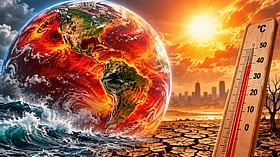
Scientists and international weather agencies warn that a strengthening El Niño is driving unusually warm global conditions, with the strongest heat expected to peak between October and December. Multiple outlets cite forecasts that sea surface temperatures in the central and eastern tropical Pacific could reach about 3.7°C above normal. Researchers describe widespread temperature anomalies across global climate maps, with some commentary using vivid language about the planet appearing “in red.”
The World Meteorological Organisation (WMO), part of the United Nations weather and climate system, warns this year’s El Niño could be among the strongest recorded since at least 1950. The WMO also says El Niño’s effects may worsen the impact of human-driven climate change. While outlets generally agree on the magnitude and timing of the warming, they differ mainly in emphasis: some highlight the potential for extreme weather and disrupted rainfall patterns worldwide, while others focus on El Niño persisting into early 2027 or even into spring next year, extending its influence beyond the end of 2026.