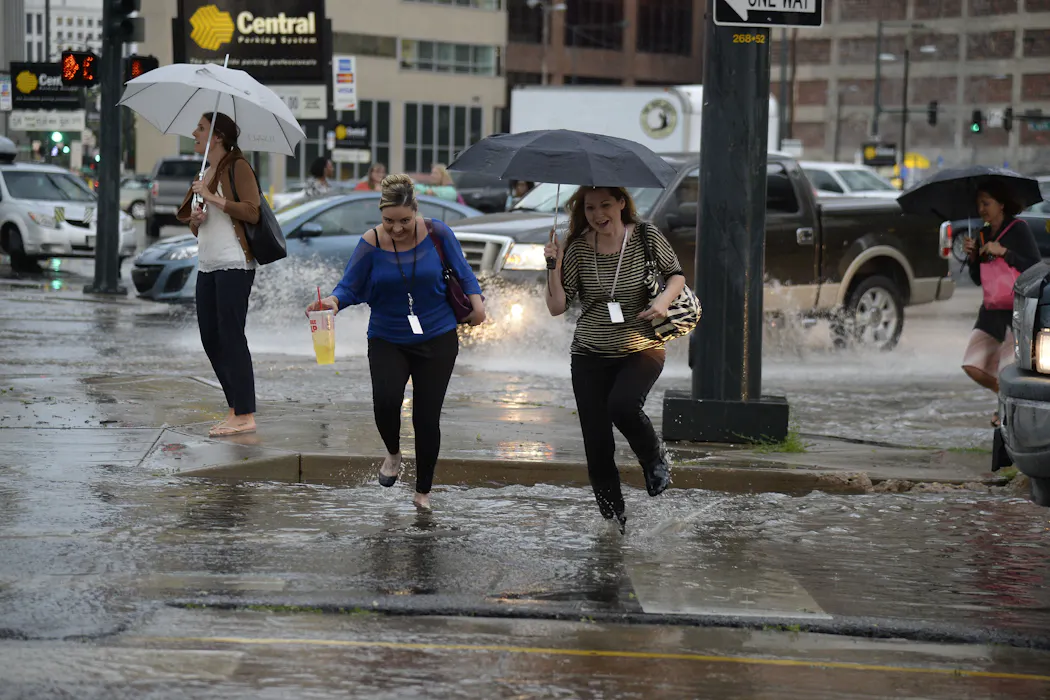
Multiple outlets report that the United States is experiencing more intense storms while drought conditions worsen in other places. One explanation is that increasing global temperatures intensify the water cycle: warmer air holds more moisture, which can lead to heavier downpours when storms form. At the same time, higher temperatures increase evaporation from land and open water, and they can accelerate soil moisture loss, making landscapes dry out more quickly between rainfall events.
The Conversation notes that even as average annual precipitation rises in some areas at the national scale, drying can still outpace wetting locally. Phys.org highlights that in late spring 2026, about two-thirds of the U.S. is in some stage of drought while the country also sees more intense downpours. The two conditions can therefore coexist because precipitation and drought are influenced not only by total rainfall amounts, but also by timing, storm intensity, and how quickly water returns to the atmosphere or stays in the ground.
Together, the sources conclude that both stronger storms and worsening drought reflect the effects of higher temperatures on how the atmosphere stores, moves, and releases water.