


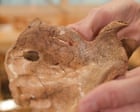
Archaeologists report that a Neanderthal adult excavated from Shanidar Cave in Iraqi Kurdistan died more than 70,000 years ago, and that a distinctive round hole in the shoulder blade may reflect a lethal injury consistent with a wooden spear attack. The remains, recovered from under nearly 8 metres of rock and sediment, include the adult “Shanidar A” alongside other Neanderthal fossils.
Across outlets, researchers describe the wound as resembling a “kill shot” that likely pierced the scapula and caused fatal trauma. Phys.org and ABC Australia frame the find as potentially the earliest evidence of lethal interpersonal violence with a wooden spear in the hominin fossil record. Live Science and The Guardian similarly highlight the injury’s shape and location as key evidence, while ScienceAlert and others emphasize the rarity of such direct injury marks in deep-prehistoric human and Neanderthal remains. All sources stress that the conclusion is based on interpretation of the bone damage and its match to a spear-like impact, rather than on the recovery of the weapon itself.


