Ultra-Processed Food Intake May Not Be Linked to Colorectal Cancer
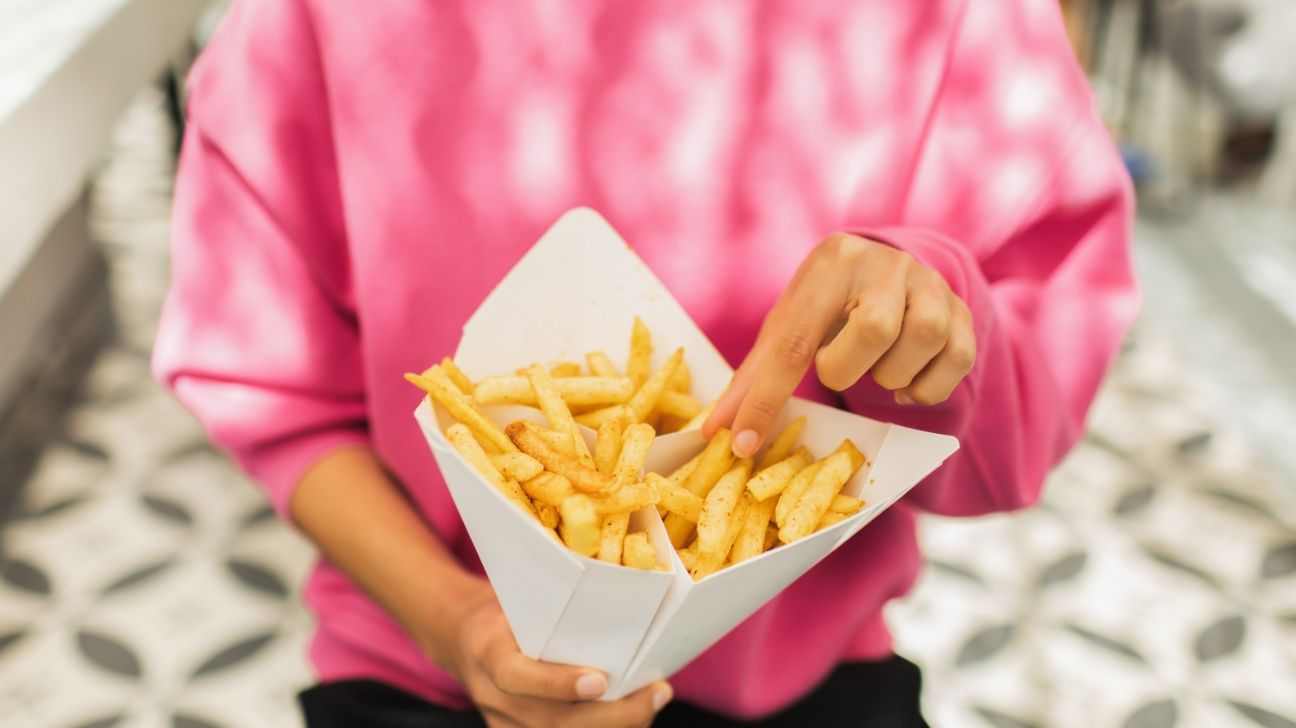
Researchers found no association between overall intake of ultra-processed foods and colorectal cancer in a large U.S. study. Anastasiia Krivenok/Moment/Getty Images
Researchers report that consumption of ultra-processed foods doesn’t necessarily increase a person’s risk of developing colorectal cancer.
They note that there is a wide range of foods considered ultra-processed, and each may carry different risks.
Experts say people should adopt a healthy diet rich in fruits, vegetables, whole grains, and calcium-rich foods to lower their risk of colorectal cancer.
Ultra-processed foods as a group do not increase the risk of colorectal cancer, according to a new study.
Researchers from the National Cancer Institute (NCI) report that they found no association between overall intake of ultra-processed foods and colorectal cancer incidence among the more than 400,000 adults they studied.
They said their findings are important because ultra-processed foods now account for more than half of adults’ energy intake in the United States. They published their research on October 15 in PLOS Medicine.
The study comes amid recent research that has connected ultra-processed foods to an increased risk of heart disease, type 2 diabetes, and obesity.
However, the link between colorectal cancer and ultra-processed foods has been less clear.
A 2025 study reported that ultra-processed foods may increase the risk of colorectal cancer in females under 50.
A 2022 study found that males who consumed high rates of ultra-processed foods had a higher risk of developing colorectal cancer.
NCI scientists noted in their new study that ultra-processed products represent a wide range of foods.
They pointed out that foods such as whole grains and dairy products were associated with a lower risk of colorectal cancer among study participants, while foods such as processed meats were associated with a higher risk.
“We did not observe an association between total ultra-processed food (UPF) intake and colorectal cancer incidence,” said Erikka Loftfield, PhD, a former investigator with the NCI, in a news release. “However, when we looked at food groups, like whole grains, dairy, and meat, by UPF or non-UPF source, we found that associations were in line with current dietary guidance for colorectal cancer prevention.”
Experts not involved in the study told Healthline that the NCI scientists appear to be on the right track.
“While the study did not find that overall ultra-processed food intake was associated with colorectal cancer risk, the findings suggest that simply classifying foods by their level of processing may not tell the whole story,” said Marissa Shams-White, PhD, a senior principal scientist in population science at the American Cancer Society.
“One of the challenges with studying ultra-processed foods is that the category includes a very wide range of foods and beverages, and we don’t yet know whether they all relate to colorectal cancer risk in the same way,” she added.
Ketan Thanki, MD, a colorectal surgeon specializing in benign and malignant diseases of the colon, rectum, and anus at the MemorialCare Todd Cancer Institute at Long Beach Medical Center in California, agrees.
“Just because it is ultra-processed doesn’t mean it is inherently bad or good for you,” he said. “The source of the food and the additives like preservatives, flavorings, sugars, and pigments that are added to increase palatability probably play a much larger role in increasing cancer risk.”
“A whole grain cereal and a hot dog are both UPF, but they push risk in opposite directions,” Thanki noted.
Ultra-processed foods and colorectal cancer risk
In their study, the National Cancer Institute researchers analyzed data from 461,682 adults aged 50 to 71 years who enrolled in the NIH-AARP Diet and Health Study between 1995 and 1996.
The participants recorded their eating habits using a food frequency questionnaire. Researchers then used that data to estimate each person’s intake of ultra-processed foods. The median consumption of ultra-processed foods among participants was 43% of daily median intake.
The participants were then followed until 2018, for a median of nearly 19 years. The scientists reported that 10,075 cases of colorectal adenocarcinoma were diagnosed during that period.
The researchers reported no association between overall intake of ultra-processed foods and the incidence of colorectal cancer.
However, they said their findings varied by food type. Higher intake of whole grains, fiber, dairy products, and calcium derived from UPF sources was associated with lower colorectal cancer incidence, while meat from UPF sources was associated with higher incidence.
Researchers also found that replacing 10% of gram weight from UPF intake with minimally processed foods was associated with a 2% lower incidence of CRC.
The researchers acknowledged limitations to their study.
They noted that the participants were primarily older, white Americans. In addition, UPF intake was only measured once at the beginning of the study period, so the findings cannot account for changes in eating habits or the increasing availability of ultra-processed foods.
Nonetheless, Ashkan Farhadi, MD, a gastroenterologist at MemorialCare Orange Coast Medical Center in California, who wasn’t involved in the study, said he found the results “very interesting.”
“The definition of ultra-processed foods is so broad,” he told Healthline. “It’s important to designate what type of ultra-processed foods you’re talking about.”
“You shouldn’t just go by whether a food is designated as ultra-processed,” Farhadi added. “You should go by what’s on the [ingredient] label.”
Shams-White shared a similar approach. “When it comes to diet, it is important to follow an overall healthy dietary pattern,” she told Healthline. “Emphasize a variety of fruits and vegetables and whole grains and limit red and processed meats, sugar-sweetened beverages, ultra-processed foods, and refined grain products.”
“Eating a diet rich in fiber and whole grains, dairy and calcium, and limiting processed and red meat and alcohol is what really reduces your risk of developing cancer,” added Thanki.
Risk factors for colorectal cancer
The American Cancer Society estimates there will be about 108,000 new cases of colon cancer and nearly 50,000 new cases of rectal cancer in the United States in 2026.
The incidence rate is slightly higher in men than in females.
The organization reports that the rate of colorectal cancer cases in the United States has declined since the mid-1980s, but they note that most of that decrease has occurred in older adults.
The incidence rate among people under 50 increased by nearly 3% from 2013 to 2022. Colorectal cancer is now the leading cause of death from cancer for U.S. adults under the age of 50.
Colorectal cancer occurs when cells in the large intestine grow out of control. About 70% of cases begin in the colon.
There are a number of symptoms of colorectal cancer. Some of the common ones include:
constipation
diarrhea
blood in the stool
bleeding in the rectum
abdominal pain
Diet is considered one of the risk factors for colorectal cancer. However, there are other considerations.
Farhadi said genetics, obesity, smoking, alcohol consumption, and a sedentary lifestyle can also increase a person’s risk of developing colorectal cancer.
Shams-White noted that the American Cancer Society Guideline for Diet and Physical Activity for Cancer Prevention recommended achieving and maintaining a healthy weight, being physically active, following a healthy eating pattern, and avoiding alcohol and tobacco.
Thanki points out that there are risk factors for colorectal cancer that can be modified and others that can’t.
“Among non-modifiable factors, the biggest are age, a personal or family history of colorectal cancer or advanced polyps, inherited syndromes such as Lynch syndrome, and longstanding inflammatory bowel disease (ulcerative colitis or Crohn’s colitis),” he told Healthline.
“On the modifiable side, the evidence is strongest for obesity, physical inactivity, smoking, alcohol, and diets high in red and processed meat and low in fiber, whole grains, and calcium,” he added.
Colorectal cancer treatment outcomes improve if the disease is caught at an early stage. The 5-year relative survival for localized colorectal cancer is 91.3%. The 5-year relative survival rate for colorectal cancer caught at various stages, including cancer that has spread, is 65.4%.
Shams-White points out that the American Cancer Society Colorectal Cancer Guidelines recommend that people at average risk of colorectal cancer start getting screened at age 45.
“Screening can help prevent cancer by finding abnormal cells and polyps so they can be removed before they can become colorectal cancer, as well as detect cancer at an earlier stage,” she said.
Thanki had similar advice. “Get screened starting at 45, or earlier if you have a family history or other risk factors, because colonoscopies can prevent cancer by removing polyps,” he said. “And never ignore symptoms like rectal bleeding or a change in bowel habits at any age.”