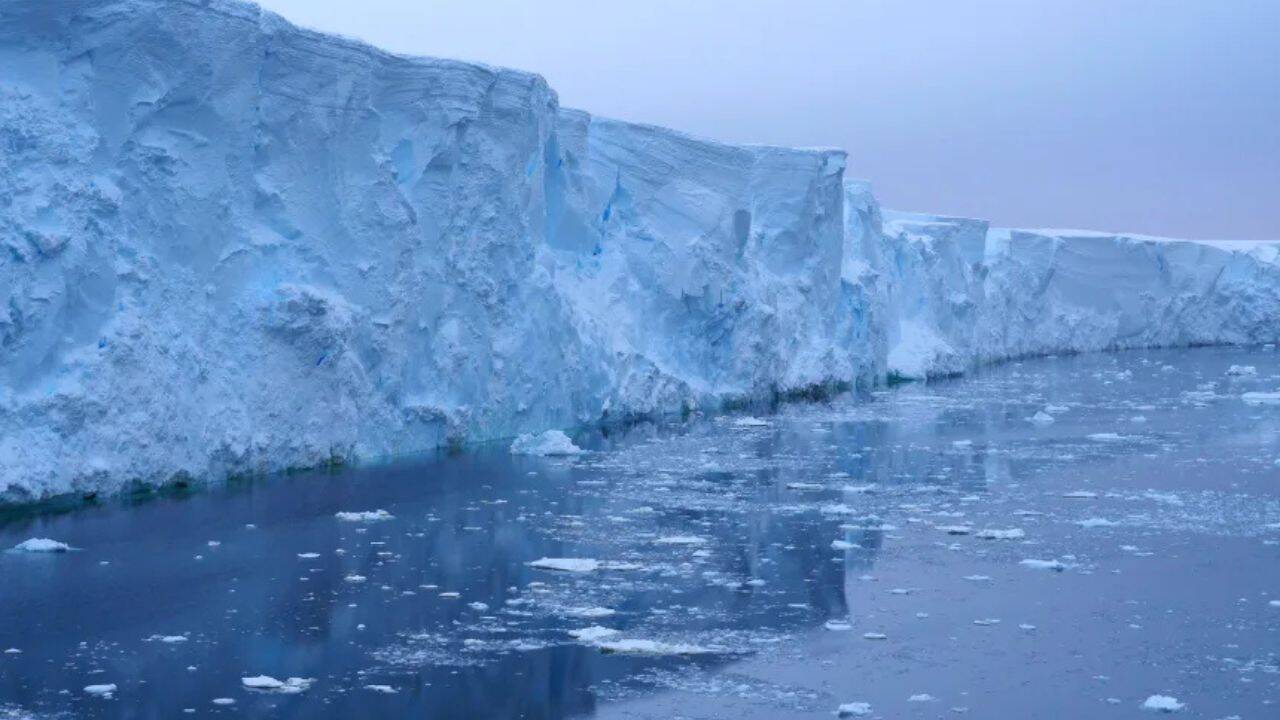
Scientists report that Antarctica’s Thwaites Glacier (often dubbed the “doomsday glacier”) is melting faster than previously estimated. Multiple outlets cite findings and modelling that warm ocean water reaches beneath the ice, driving retreat. One analysis suggests that if current conditions persist, Thwaites could eventually detach a portion of the ice from the Mouginot Ridge by around 2100.
Outlets also agree that cooling the oceans alone is unlikely to fully halt the process. Euronews and New Scientist describe computer models indicating that even if ocean temperatures were reduced to unrealistically cold levels, Thwaites would still continue losing ice in the near term, because the glacier’s internal dynamics and ice-ocean interactions can sustain retreat. New Scientist adds that while Thwaites keeps melting, a nearby glacier may begin to grow, highlighting potential shifts in regional ice balance.
Across coverage, the potential consequences remain centred on global sea-level rise, with estimates commonly quoted around 65 cm if Thwaites fully collapses.