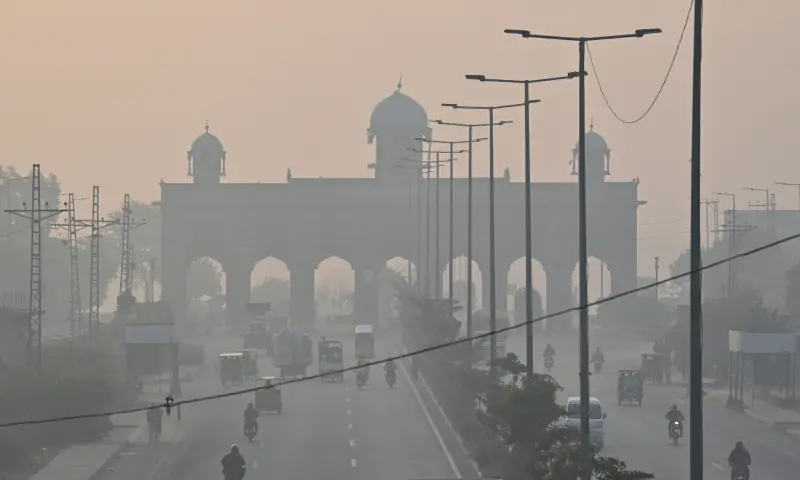
Lahore’s air quality deteriorates during early November, with satellite monitoring and ground-based measurements showing very high PM2.5 levels. A report cited by Dawn says Lahore’s average PM2.5 concentration reaches 126 micrograms per cubic metre, described as eight times a WHO guideline value, and that the NEQS are exceeded on all days with valid data.
The reporting centres on what is driving the pollution. Dawn and the Pakistan Air Quality Initiative analysis questions the emphasis on Diwali fireworks in India, citing likely crop-residue fires detected across Punjab between Oct 1 and Nov 9. It says likely crop-residue burning accounts for most detected fires and that upwind fire activity correlates with higher PM2.5 in Lahore and other cities.
The Independent frames the issue differently, reporting Pakistan’s view that pollution from Diwali firecrackers in India worsened Lahore’s smog and noting Lahore’s ranking among the world’s most polluted major cities for a second consecutive day. Together, the outlets reflect a dispute over attribution: one stresses regional fire activity detected by satellite, while the other highlights cross-border fireworks as a factor.