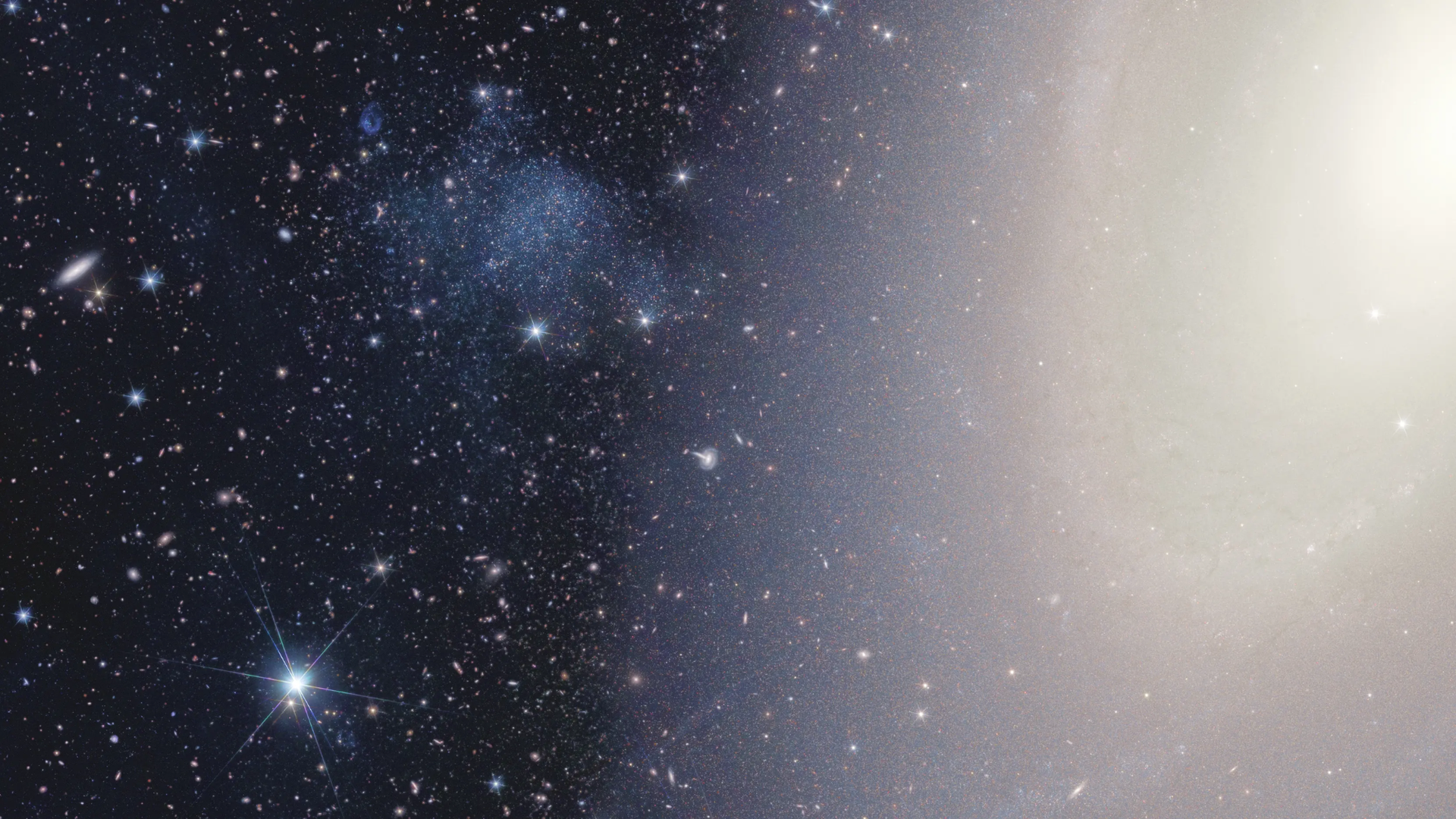
The European Space Agency’s Euclid space telescope has released its first major batch of data, capturing light from more than a billion objects. The observations cover a sky area described as equivalent to about 9,500 full moons and are presented as a major early step toward building an unprecedented 3D view of the cosmos.
Multiple outlets frame the release as the beginning of Euclid’s effort to produce large-scale mapping for what some stories call the “dark universe.” Space.com and Live Science emphasize the scale of the data and the promise of results, while Phys.org stresses that the release provides a foundation for Europe’s “largest-ever” 3D map and notes the role of German research facilities. Two right-leaning tabloids, Mail Online and the Daily Mail, lead more directly with the idea of seeing the universe “like never before,” focusing on the first photos.
Across the coverage, outlets agree on the main numbers and the purpose of the release: Euclid has started returning large quantities of data aimed at constructing a major 3D map, with implications for studying dark matter and dark energy, though specific findings are not detailed here.