


A paper presented at the European Geosciences Union (EGU) 2026 General Assembly in Vienna concludes that the dwarf planet Ceres has a surface that is more complex than scientists previously understood. The findings build on ongoing efforts to interpret Ceres’ geology as new observations and analyses refine what is visible on its surface. Rather than presenting a single, uniformly described set of features, the work suggests Ceres displays more varied or intricate characteristics than earlier studies had implied. Both outlets characterize Ceres—widely studied since it became the first named asteroid—as a world whose puzzling landscape continues to reveal additional complexity. The reporting emphasizes that the conclusion is drawn from the newly presented research at EGU 2026, indicating that the scientific community is reassessing aspects of Ceres’ surface based on updated analysis. The articles do not specify details such as which specific regions, features, or data sources drive the conclusion, but they agree that the new study adds to the broader picture of Ceres as more geologically intricate than previously thought.
EGU 2026 paper finds Ceres’ surface is more complex than previously mapped
A paper presented at the European Geosciences Union (EGU) 2026 General Assembly in Vienna concludes that the dwarf planet Ceres has a surface that is more complex than scientists previously understood...

- A study presented at EGU 2026 in Vienna reports that Ceres’ surface is more complex than previously thought.
- The work is based on findings shared during the EGU26 General Assembly.
- Both reports describe Ceres as a long-studied, puzzling dwarf planet with additional features becoming clearer over time.
- The new paper adds to ongoing reassessments of Ceres’ surface characteristics.
- The outlets agree on the central conclusion: Ceres’ surface complexity is greater than earlier mapping suggested.
The long, puzzling dwarf planet Ceres, in reality the first named asteroid, has surface features that are much more complex than previously thought. Or at least that's the conclusion of a recent paper presented at the European Geosciences Union 2026 General Assembly in Vienna.
2 months agoThe dwarf planet Ceres has a surface that seems to get more perplexing with each new study. A recent paper presented at EGU26 in Vienna only adds to its mystery.
2 months ago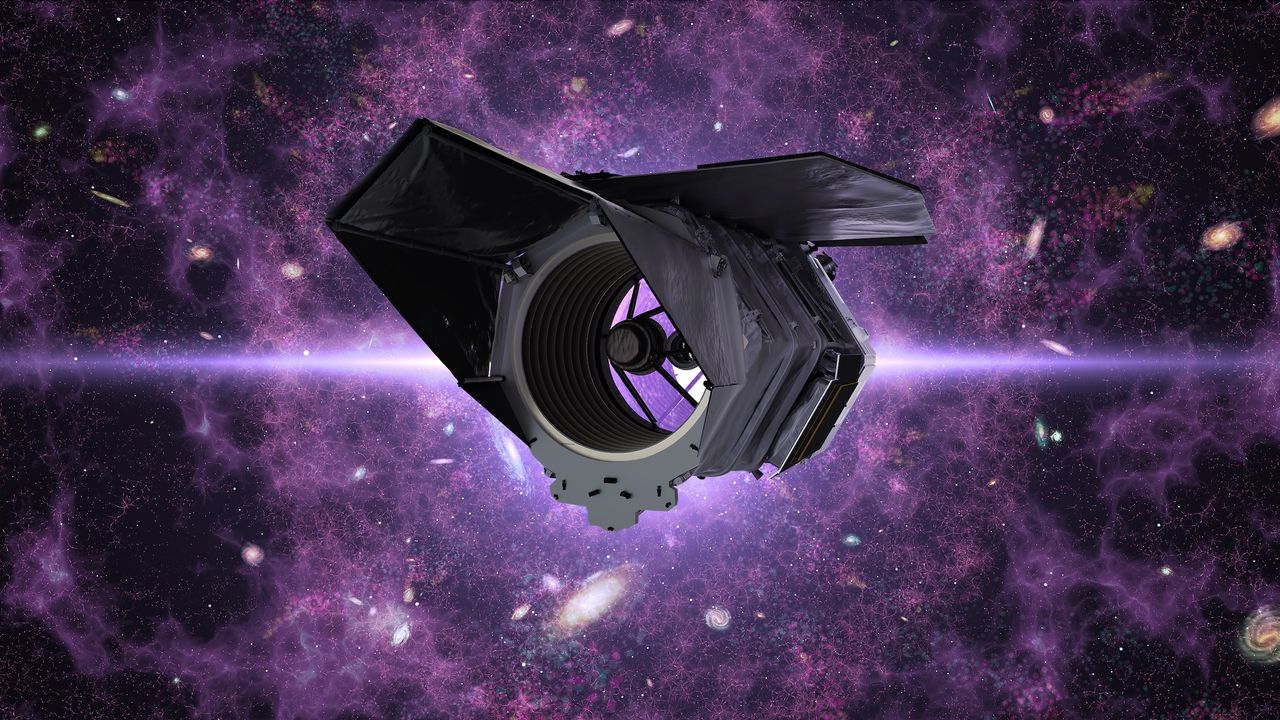
NASA’s Nancy Grace Roman Telescope set for Aug. 30 launch on SpaceX Falcon Heavy
NASA is preparing the Nancy Grace Roman Space Telescope for liftoff on Sunday, Aug. 30, from NASA’s Kennedy Space Center...

Hrehaan Roshan makes music debut with “This Heavenly Place” single
Hrehaan Roshan, the 18-year-old son of actor Hrithik Roshan, makes his music debut as an independent artist with his fir...

Climate change increases heat stress for hundreds of millions of children worldwide and in India
A new study finds that climate change is already exposing children to additional periods of dangerous heat each year, in...