


Researchers describe newly discovered, extremely small fossil mammal teeth from the ancient Arctic and argue they shed light on early mammalian evolution. The teeth, which are mined from sediment and rock and then examined under microscopes, show distinctive tooth features such as cusps, ridges, and worn surfaces. The findings are presented as evidence that the Arctic region during the relevant period was not only a cold boundary of the wider ecosystem, but an environment where mammals adapted and diversified, and in which key evolutionary processes may have occurred. The reporting emphasizes that even a single tooth can provide important information when its morphology is carefully documented, helping scientists identify a newly recognized species or line and place it in the broader pattern of mammalian history. While the interpretation focuses on the Arctic as a “cradle” for mammalian evolution, the core contribution across sources is the paleontological discovery itself and its implications for how and where mammalian diversification and origins unfolded in deep time.
Tiny fossil teeth from ancient Arctic suggest new mammal evolution details
Researchers describe newly discovered, extremely small fossil mammal teeth from the ancient Arctic and argue they shed light on early mammalian evolution. The teeth, which are mined from sediment and...
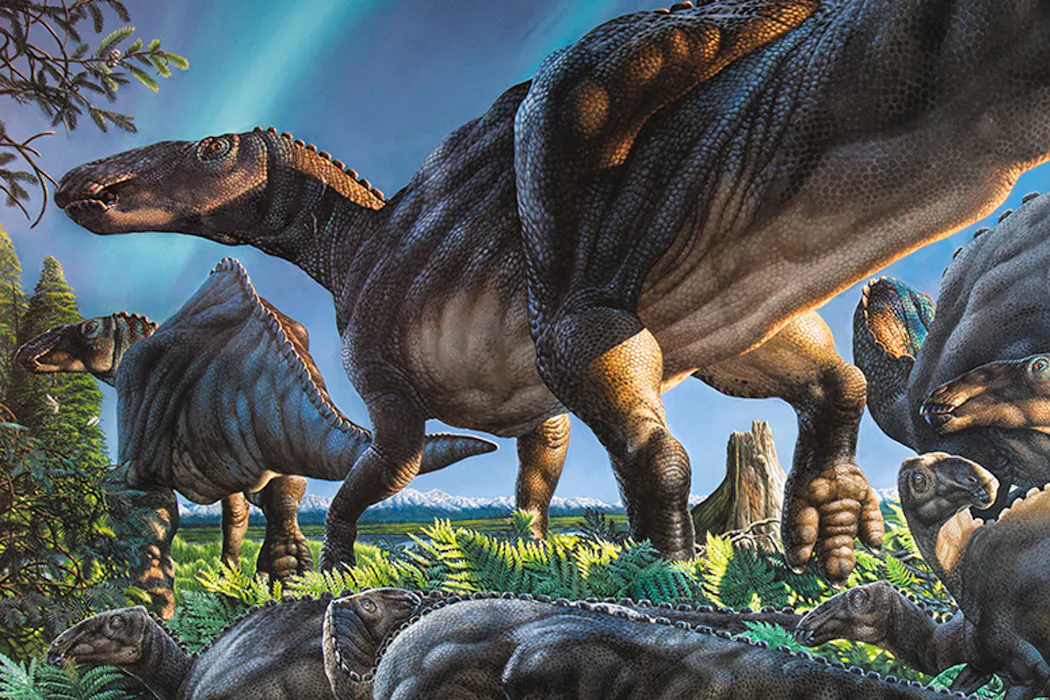
- Scientists report newly discovered fossil mammal teeth from the ancient Arctic.
- The teeth are extremely small and require microscopic examination to reveal diagnostic features.
- Observed tooth traits include cusps, ridges, and worn edges.
- The findings are used to support the idea that the ancient Arctic was important for mammal adaptation and diversification.
- Sources describe the Arctic during the Cretaceous era as more than a peripheral, cold region.
A fossil mammal tooth smaller than a grain of rice does not announce itself loudly. It must be hard won from sediment and stone. Then, under a microscope, it reveals itself—no longer just a speck of blackness but a surface of cusps, ridges, and worn edges.
2 months agoThe Arctic was not simply a cold edge of the Cretaceous world, but a place where mammals adapted, diversified, migrated and originated.
2 months ago
CBC reverses guidance on describing 9/11 as “terrorist attacks” after backlash
The Canadian Broadcasting Corporation (CBC) changes internal guidance on how its journalists describe the Sept. 11, 2001...

Study finds children of centenarians have lower cardiovascular and hypertension risk
Researchers report that having a parent who lives to at least 100 years is linked with better health outcomes later in l...

Study links a daily habit with lower risk of death and heart disease
Researchers report that adopting a simple daily habit is associated with a lower risk of dying earlier and a reduced ris...