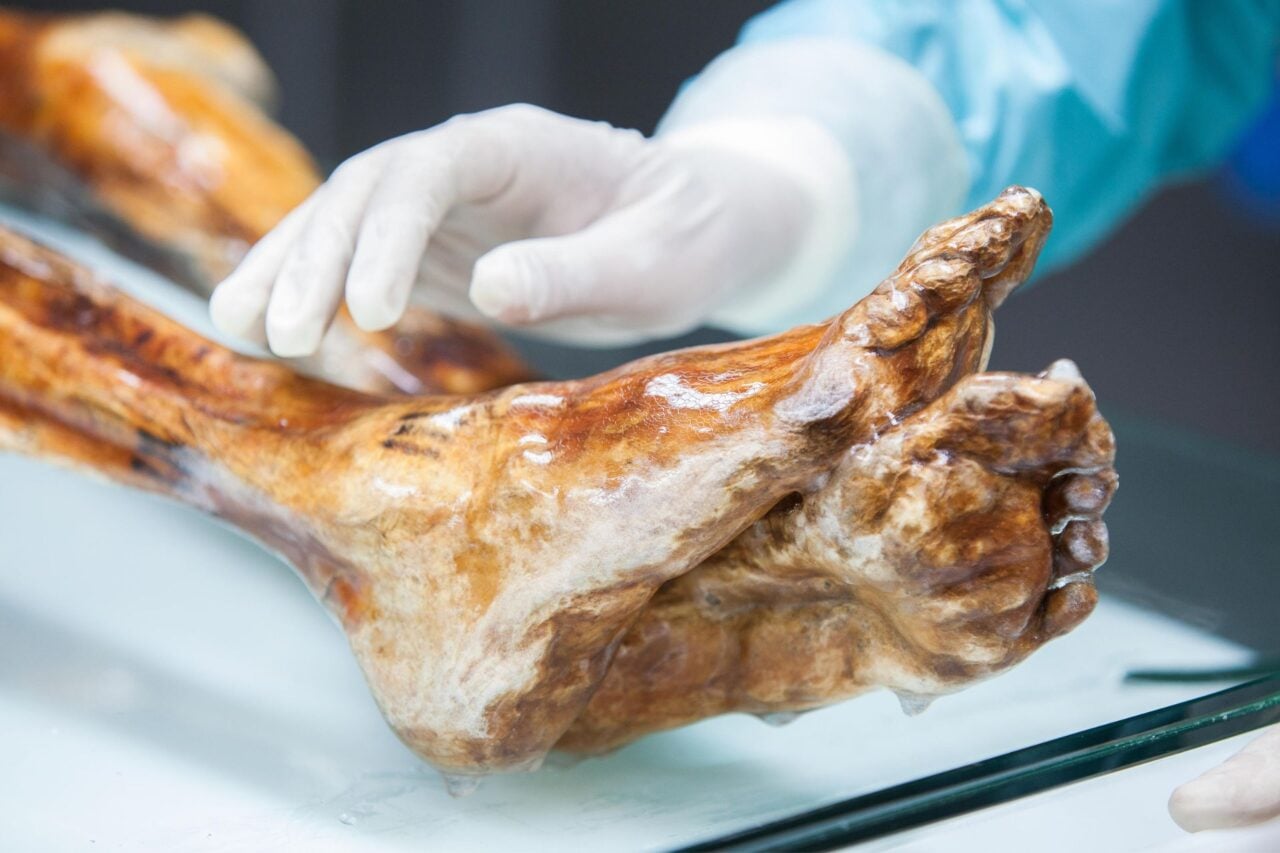
Researchers studying Ötzi the Iceman, a naturally mummified man from about 5,300 years ago found in the Ötztal Alps, report new findings about the microbes associated with his preserved remains. Multiple outlets describe work by researchers at Eurac Research that reconstructs a detailed picture of Ötzi’s microbiome, spanning microbial communities that were present in life and those that colonised his body after death.
The studies identify bacteria linked to the gut flora Ötzi likely carried during the Copper Age, alongside cold-adapted fungi and other microbes that persisted in the frozen environment. Reporting also indicates that some of these microorganisms show signs consistent with metabolic activity or survivability after thousands of years under glacier conditions.
While the research focuses on microbial diversity and survival rather than any cause of death, it frames Ötzi as a long-lived biological record of how ancient human microbes and environmental, cold-tolerant organisms interact over extended time spans.