


Researchers extract cold-loving yeast strains from the mummified remains of Ötzi the Iceman, a prehistoric man preserved in Alpine ice and discovered in 1991 on the Italy–Austria border. Multiple outlets report that the yeast is recovered from or associated with Ötzi’s body and that scientists then use these ancient yeast strains to bake a sourdough loaf. The work is described as taking months and as drawing on earlier microbiome-focused research into microorganisms preserved on and inside the frozen remains. Although reports emphasize the unusual origin of the yeast, they agree on the core finding: viable yeast compatible with bread-making is found in the preserved mummy and can successfully produce sourdough. Several sources also note that the researchers look beyond bread. In particular, they plan follow-up experiments to test whether yeast strains recovered from Ötzi could be used to brew beer as well. The publications consistently frame the results as an intersection of microbiology and food science, using an ancient preservation environment to obtain microbial strains for fermentation.
Scientists bake sourdough with yeast recovered from Ötzi the Iceman
Researchers extract cold-loving yeast strains from the mummified remains of Ötzi the Iceman, a prehistoric man preserved in Alpine ice and discovered in 1991 on the Italy–Austria border. Multiple outl...
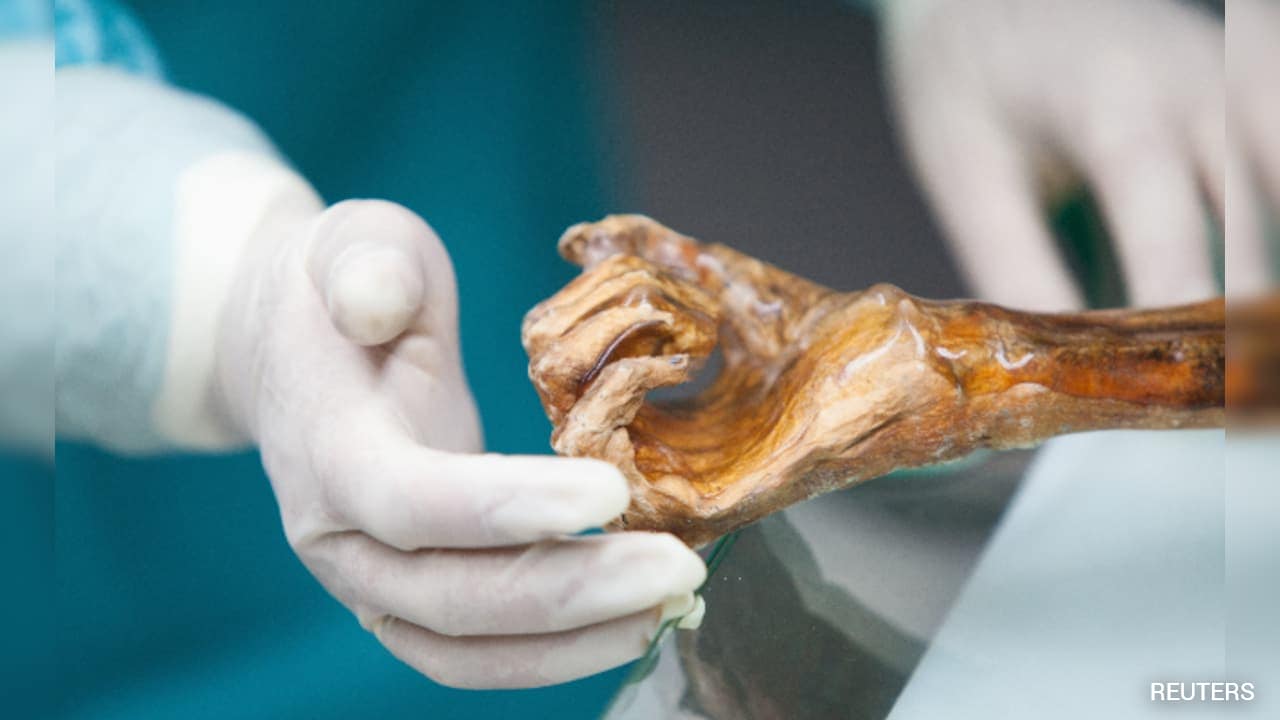
- Ötzi the Iceman is a frozen, mummified prehistoric man discovered in 1991 on the Italy–Austria border.
- Scientists recover yeast strains from Ötzi’s remains and use them in fermentation.
- The researchers successfully bake a sourdough bread loaf using the recovered ancient yeast.
- The findings are connected to a study published in the journal *Microbiome*.
- Researchers plan additional experiments, including testing the yeast for brewing beer.
The yeast was found on Otzi, one of the world’s best-preserved prehistoric human remains discovered frozen in the Alps near the Italy-Austria border in 1991.
2 months agoI recently wrote about Ötzi the Iceman, a guy who died 5,300 years ago and was so well preserved in a glacier in northern Italy that scientists can still study the microbes hanging out on and inside him, according to a new study published in the journal Microbiome. A small detail that didn’t get revealed […] The post Why Scientists Used a 5,000-Year-Old Mummy to Bake Freaky Sourdough Bread appeared first on VICE.
2 months agoScientists have successfully baked sourdough bread using yeast strains recovered from the remains of Ötzi the Iceman, a 5,300-year-old…Continue reading on Medium »
2 months agoTeam now plans to see if they can use yeast strains harvested from Ötzi the Iceman to brew beer tooScientists have baked a sourdough loaf of bread using yeast strains harvested from a 5,000-year-old mummy and now plan to see if they can use them to brew beer too.The yeast came from Ötzi the Iceman, a famous corpse remarkably preserved by being frozen in Alpine ice near the Italy-Austria border until he was discovered in 1991. Ötzi has been the subject of intense study since he was found and has shed much light on pre-historic European people and their way of life. Continue reading...
2 months agoScientists have found signs of life in the 5,300-year-old mummy - in the form of yeast.
2 months ago
Japan brings back Hirosaki Castle keep using ropes and rollers with about 1,800 people
Japan is moving the keep of Hirosaki Castle in Aomori prefecture, using ropes and an ancient relocation method, after re...

JetZero secures $4.2 billion loan for Z4 aircraft aiming for passenger flights by 2030
JetZero says it has secured a $4.2 billion loan to develop its Z4 aircraft, which the company says could begin carrying...

General Mills removes artificial dyes from U.S. cereals including Trix and Lucky Charms
General Mills says it has removed artificial dyes from its U.S. cereal lineup, including popular brands such as Lucky Ch...