


Australian scientists report creating what they describe as the biggest and most detailed image of the universe’s “invisible force” by mapping dark matter. The reporting across multiple outlets says the researchers produce a detailed representation of how dark matter is distributed across space, allowing observers to see large-scale cosmic structure in a way that is not possible with visible light alone. Dark matter does not emit, absorb or reflect light, so it is detected indirectly through its gravitational effects on other matter and on light from distant objects. The articles present the work as a major advance in charting these hidden structures and improving understanding of how galaxies and cosmic webs form and evolve. While the outlets use similar language about the scale and detail of the resulting map, they focus on the broader scientific aim: turning gravitational signals into an image of the unseen component that shapes the universe. The work is described as a significant new dataset that helps researchers investigate the nature of dark matter and the formation of the cosmos at large scales.
Australian researchers create largest map of dark matter to reveal the sky’s structure
Australian scientists report creating what they describe as the biggest and most detailed image of the universe’s “invisible force” by mapping dark matter. The reporting across multiple outlets says t...
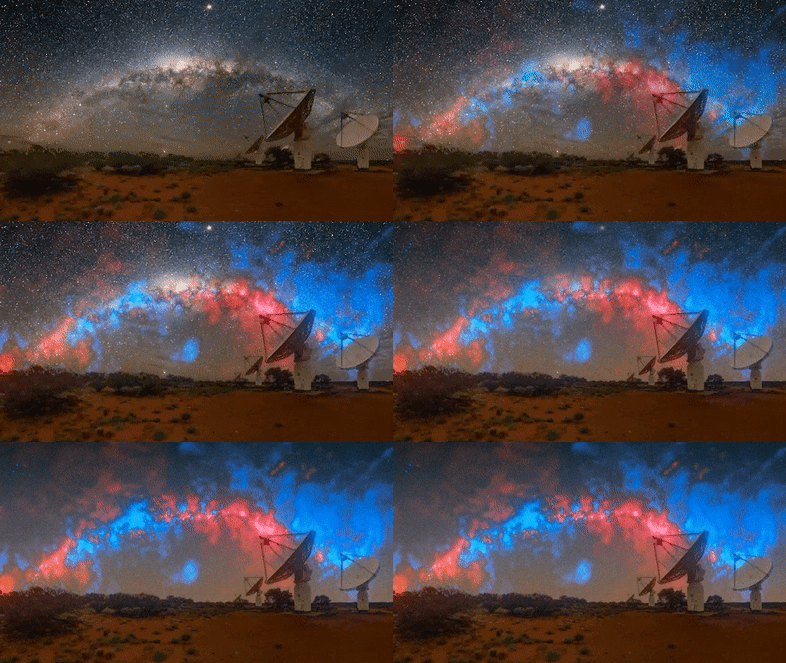
- Australian researchers create a large, detailed map based on dark matter’s effects.
- The mapped “invisible force” refers to dark matter, which cannot be directly seen with light.
- Dark matter is inferred using its gravitational influence on other matter and light.
- The project produces one of the largest and most detailed sky representations of dark matter reported in the coverage.
- The resulting map is intended to help scientists study cosmic structure formation and the role of dark matter.
Australian researchers have created the biggest and most detailed image of a colossal cosmic mystery.
2 months agoAustralian researchers have created the biggest and most detailed image of a colossal cosmic mystery.
2 months agoAustralian researchers have created the biggest and most detailed image of a colossal cosmic mystery.
2 months ago
JetZero secures $4.2 billion loan for Z4 aircraft aiming for passenger flights by 2030
JetZero says it has secured a $4.2 billion loan to develop its Z4 aircraft, which the company says could begin carrying...

General Mills removes artificial dyes from U.S. cereals including Trix and Lucky Charms
General Mills says it has removed artificial dyes from its U.S. cereal lineup, including popular brands such as Lucky Ch...

Scientists expand black ash conservation efforts amid emerald ash borer losses
Scientists are stepping up efforts to save black ash after invasive emerald ash borer beetles wipe out trees across part...