


A new geological study examines how Stonehenge’s Altar Stone—a roughly six-ton micaceous sandstone monolith at the centre of the monument—reached Salisbury Plain. Multiple reports say the stone’s source is likely in northeast Scotland, and that researchers used geological analysis and computer modelling to consider a long-distance transport route of roughly 435 miles (700 kilometres). The central hypothesis is that ice and glacial processes could have moved the rock southwards, potentially across Britain during periods when ice sheets covered parts of the landscape. One outlet notes that the glacier explanation is “widely debated,” while another reports that although glacial transport is plausible in principle, it appears less likely than alternative scenarios. Some coverage also references the possibility that later humans may have relocated the stone after it had been carried or affected by glacial conditions. Overall, the reports agree that the stone’s travel path is uncertain, and that the new findings add evidence and modelling constraints to longstanding questions about how the megalith arrived at Stonehenge.
Study weighs glacial route for Stonehenge’s 6-ton Altar Stone from Scotland
A new geological study examines how Stonehenge’s Altar Stone—a roughly six-ton micaceous sandstone monolith at the centre of the monument—reached Salisbury Plain. Multiple reports say the stone’s sour...
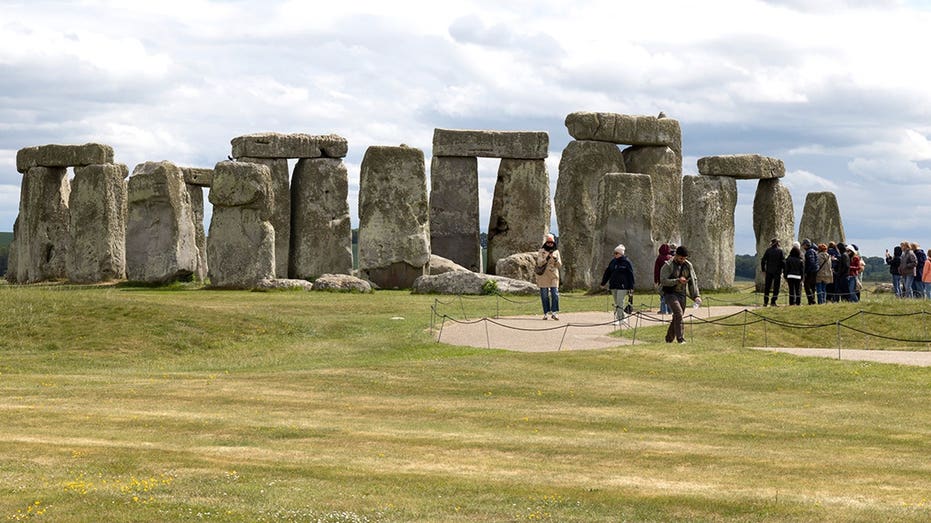
- Stonehenge’s Altar Stone is described as about a six-ton (6 tonne) micaceous sandstone megalith located at the monument’s centre.
- Researchers cite geological evidence pointing to a likely origin in northeast Scotland.
- Computer modelling and geological analysis are used to consider transport of about 435 miles (around 700 km) to Salisbury Plain.
- One proposed mechanism is southward transport by glacial ice, though the likelihood is presented as debated in at least some reports.
- Some reporting suggests the stone’s final placement could involve later movement by people after glacial-related transport or landscape changes.
Researchers used geological analysis and computer modeling to trace Stonehenge's Altar Stone journey from northeast Scotland via glacial movement.
2 months agoA recent geological study suggests Stonehenge's Altar Stone, weighing six tonnes, may have been transported by glacial sheets from Scotland, a journey of 700 kilometers. This discovery challenges previous beliefs about human effort alone. Researchers propose prehistoric communities might have later moved the stone from submerged Doggerland to higher ground, highlighting its cultural significance.
2 months agoScientists have uncovered new evidence that Stonehenge’s six-ton Altar Stone was deliberately transported hundreds of kilometers from Scotland by ancient people. The feat would have required extraordinary planning, teamwork, and determination, revealing a surprisingly sophisticated level of organization thousands of years ago.
2 months agoThe mystery of the central Stonehenge altar stone—a 6 ton, approximately 16-foot-long micaceous sandstone megalith—has posed a tantalizing question to researchers and amateur history buffs for decades: how did such a colossal rock come to rest at the center of the most famous prehistoric monument in England? A new study published on Thursday in the […]
2 months agoResearchers have found that the six-tonne stone could have travelled from north-east Scotland.
2 months agoA glacier could have carried the giant sandstone at the centre of Stonehenge southwards from north-east Scotland, but this scenario appears unlikely
2 months ago
Bosai donates 6 MW generation capacity to Guyana Power and Light
Bosai Minerals Group Guyana Inc. donates six 1-megawatt generator sets—6 MW total generation capacity—along with power-p...

Glacier collapse near Nepal-Tibet border triggers flash floods and debris flows
A catastrophic flood disaster across Nepal and Tibet is widely attributed to a large glacier collapse near the Nepal–Chi...
Trump administration considers land swap to give Yosemite parcel for private access road
The Trump administration is considering transferring a small parcel inside Yosemite National Park to a private developer...