Healthline
ER Visits for Tick Bites Highest in Over a Decade. How to Protect Yourself
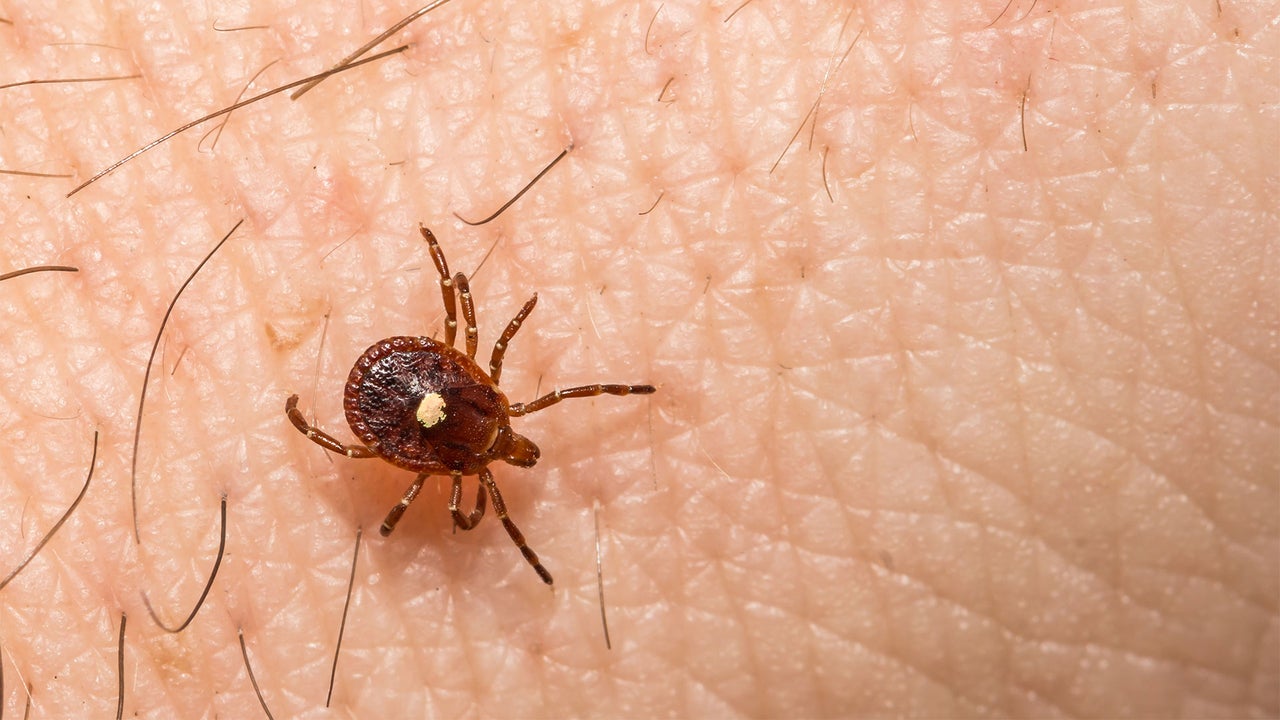
CDC data show that more people are seeking emergency room treatment for tick bites, which can lead to Lyme disease. Image Credit: Iryna Shepetko/Stocksy
Data from the Centers for Disease Control and Prevention (CDC) shows that a rise in tick bites is causing higher-than-usual emergency room (ER) visits.
Tick bites can lead to Lyme disease, a bacterial infection that can be difficult to diagnose and treat.
Climate change may be partially responsible for the higher tick populations in many regions of the United States.
Growing tick populations across the United States are leading to more tick bites.
According to the Centers for Disease Control and Prevention (CDC), tick bites are causing a higher-than-usual number of emergency room (ER) visits.
As of April, the Northeast saw the largest increase in tick-related ER visits. These rates are far higher than in other parts of the United States. The Midwest is the second-most-affected region.
Tick bites can cause Lyme disease, a bacterial infection that can be difficult to diagnose and treat.
“This trend is consistent with a broader pattern of increasing tick-borne disease burden in the United States,” said Robert Glatter, MD, attending physician in the Department of Emergency Medicine at Lenox Hill Hospital and assistant professor of Emergency Medicine at Zucker School of Medicine at Hofstra/ Northwell.
“An estimated 400,000–470,000 cases of Lyme disease are now diagnosed annually in the U.S., and this number has been rising over the past two decades. Higher ER visits for tick bites likely reflect both a true increase in tick encounters and growing public awareness of tick-borne illness,” Glatter told Healthline.
Tick bites drive rise in ER visits
Around 31 million people in the United States are bitten by a tick each year. According to the CDC’s Tick Bite Tracker, visits to the emergency room in many parts of the country are currently higher than usual.
All regions, except the South Central areas, reported the highest weekly number of tick bite ER visits since 2017.
“Emergency departments in endemic areas should be prepared for a corresponding rise in patients presenting with early Lyme disease and other tick-borne infections during peak season (May through August),” said Glatter.
Tick bites can lead to various illnesses, including:
Lyme disease
Rocky Mountain spotted fever
alpha-gal syndrome
Lyme disease, in particular, is the most common tick-borne disease in the United States.
Symptoms of Lyme disease
Lyme disease symptoms can begin 3 to 30 days after a tick bite, making the infection difficult to detect.
One of the earliest signs of Lyme disease is a “bull’s-eye” rash known as erythema migrans. This rash occurs at the site of the tick bite. It usually has a central red spot surrounded by a clear area, with a red edge.
People with lighter skin may have a rash that’s solid red, while people with darker skin may have a rash that resembles a bruise. It may be warm to the touch, but it’s not painful and doesn’t itch.
Other symptoms of stage 1 Lyme disease include:
vision changes
chills
fever
sore throat
enlarged lymph nodes
fatigue
muscle aches
headaches
Causes of shifting Lyme disease cases
According to a media briefing by the Bloomberg School of Public Health, one of the main reasons for the growing shift in Lyme disease cases and ER visits due to tick bites is climate change.
“There has been a rise in tick activity believed to be related to rising temperatures, resulting in shorter and milder winters. Ticks and the animals they thrive on flourish in these conditions,” said Jonathan Jennings, MD, a board certified internist with Medical Offices of Manhattan.
“Naturally, since there is increased tick activity, the risk of Lyme disease and other tick-borne diseases increases proportionally,” he told Healthline.
During this briefing, Nicole Baumgarth, DVM, PhD, director of the Lyme and Tickborne Diseases Research and Education Institute at the Johns Hopkins Bloomberg School of Public Health, explained that climate change contributes to the expansion of tick populations.
“A changing climate, a warming climate is expanding, the ticks northwards who are now able to overwinter in areas further north and at higher altitudes,” she told Healthline.
Glatter agreed, noting that several factors are driving the expansion of tick populations.
“Climate change — particularly warming temperatures — accelerates tick development, improves overwinter survival, and extends the geographic range of Ixodes scapularis into previously unaffected northern regions,” he said.
Glatter added that other drivers of shifts in tick populations, tick bites, and Lyme disease cases may be due to the recovery of white-tailed deer populations. He described white-tailed deer as “critical hosts” for adult ticks, thereby fueling tick abundance and population growth.
“Additionally, suburban development encroaching into wooded areas, habitat fragmentation, and urban greening initiatives have created new interfaces where humans and ticks increasingly overlap. As a result, the net effects of such ecological shifts mean that tick exposure is no longer limited to rural or heavily wooded environments,” said Glatter.
Tips for checking for ticks
Ticks can be as small as a poppy seed, so it is important to do a full-body check after spending time outdoors.
This is especially important when you have been in areas where ticks are most likely to be found, such as high grass and leaf litter.
“When in areas where Lyme disease is endemic, it is important to wear insect repellent and scan your body frequently for ticks,” said Jennings.
The U.S. Forest Service recommends the following steps when checking for ticks:
Check your clothes: Remove your clothes and inspect all outer clothing, shoes, and backpacks for ticks.
Take a shower: As soon as you return from areas that may be high risk for ticks, take a shower or a bath. This can help remove any unattached ticks and help you find any that may be attached.
Do a mirror check: Examine each area of your body using a hand mirror or a full-length mirror. Be on the lookout for any black dots that might resemble new freckles.
Check hidden spots: Ticks prefer warm, dark, moist areas. So, be sure to focus on your hair, around your ears, underarms, groin, behind the knees, between your toes, and even your belly button.
The CDC states that preventing tick bites is the best form of protection. If you find a tick attached, remove it immediately. Removing attached ticks within 24 hours can help prevent Lyme disease.
Seek medical attention if you notice any signs of Lyme disease, like the bull’s-eye rash. You should also seek medical attention if you believe a tick has been attached for more than 24 hours.