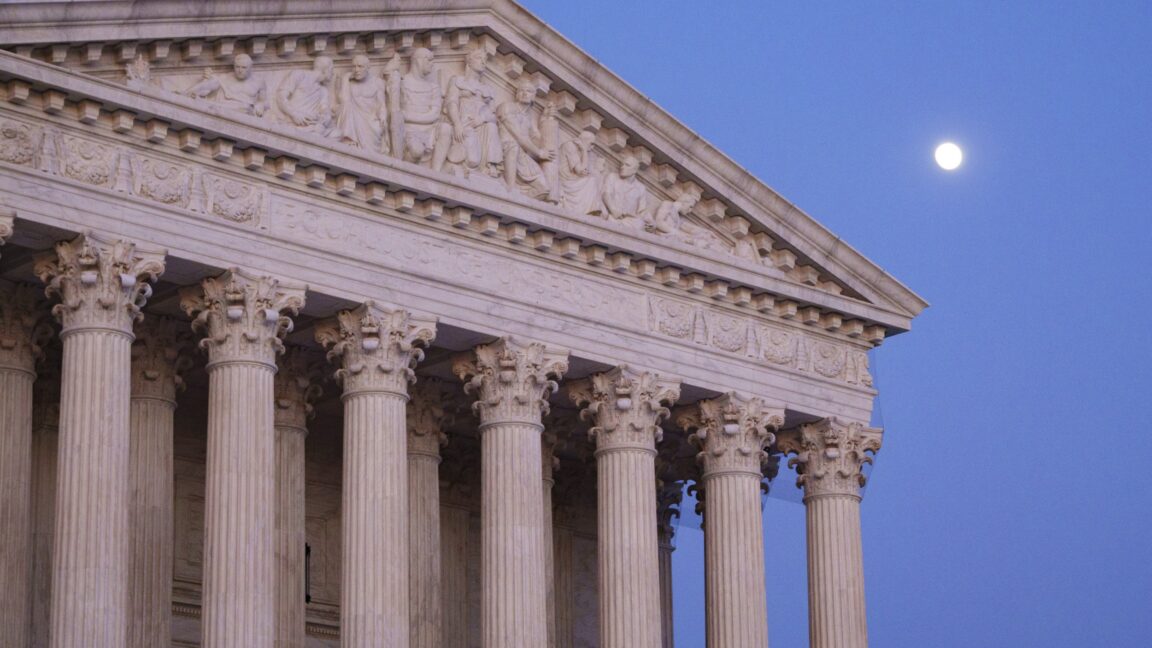
The U.S. Supreme Court upholds fines issued by the Federal Communications Commission (FCC) against wireless carriers AT&T and Verizon. In an 8-1 decision on Thursday, the court rejects the companies’ constitutional challenge, which argued that FCC forfeiture proceedings unlawfully deny them the right to a jury trial. The dispute centers on the FCC’s authority to assess financial penalties through its own in-house process rather than through a jury trial. Chief Justice John Roberts wrote the majority opinion, concluding that AT&T and Verizon are not entitled to a jury trial to contest the FCC’s fines.
All of the accounts describe the same key point: the FCC’s method for imposing penalties is upheld, and the carriers’ attempt to overturn the fines fails. Several reports link the fines to the carriers’ handling and protection of consumer information, including issues involving customer location data. The combined penalty amount is described as exceeding $100 million. The ruling is portrayed as a win for the FCC and, by extension, for the Trump administration’s defense of the FCC’s forfeiture-order framework.