


OPEC+ ministers meet online to discuss whether to raise production quotas to counter oil price gains linked to the Iran conflict and reduced Gulf crude shipments. Sources say the group is considering an increase of around 188,000 barrels per day, similar to recent quota adjustments. However, multiple analysts say geopolitical constraints will limit OPEC+’s ability to affect prices. Since late February, attacks involving the US and Israel on Iran have effectively shut the Strait of Hormuz, a key route for roughly a fifth of global oil and gas supplies, reducing practical export capacity from major Gulf producers. Analysts also note that only a limited number of OPEC+ members have enough spare capacity to increase output; many others face shut-ins or operational constraints. Some estimates cite OPEC+ production falling to about 33 million barrels per day versus nearly 43 million before the conflict, with a US blockade on Iranian ports potentially lowering volumes further. In parallel, the UAE’s decision to leave OPEC has weakened the cartel’s influence, and there are concerns about whether other producers could follow. Overall, analysts say announced quota changes may have limited impact while shipments remain constrained.
OPEC+ weighs higher output quotas as Iran war disrupts Strait of Hormuz oil supply
OPEC+ ministers meet online to discuss whether to raise production quotas to counter oil price gains linked to the Iran conflict and reduced Gulf crude shipments. Sources say the group is considering...
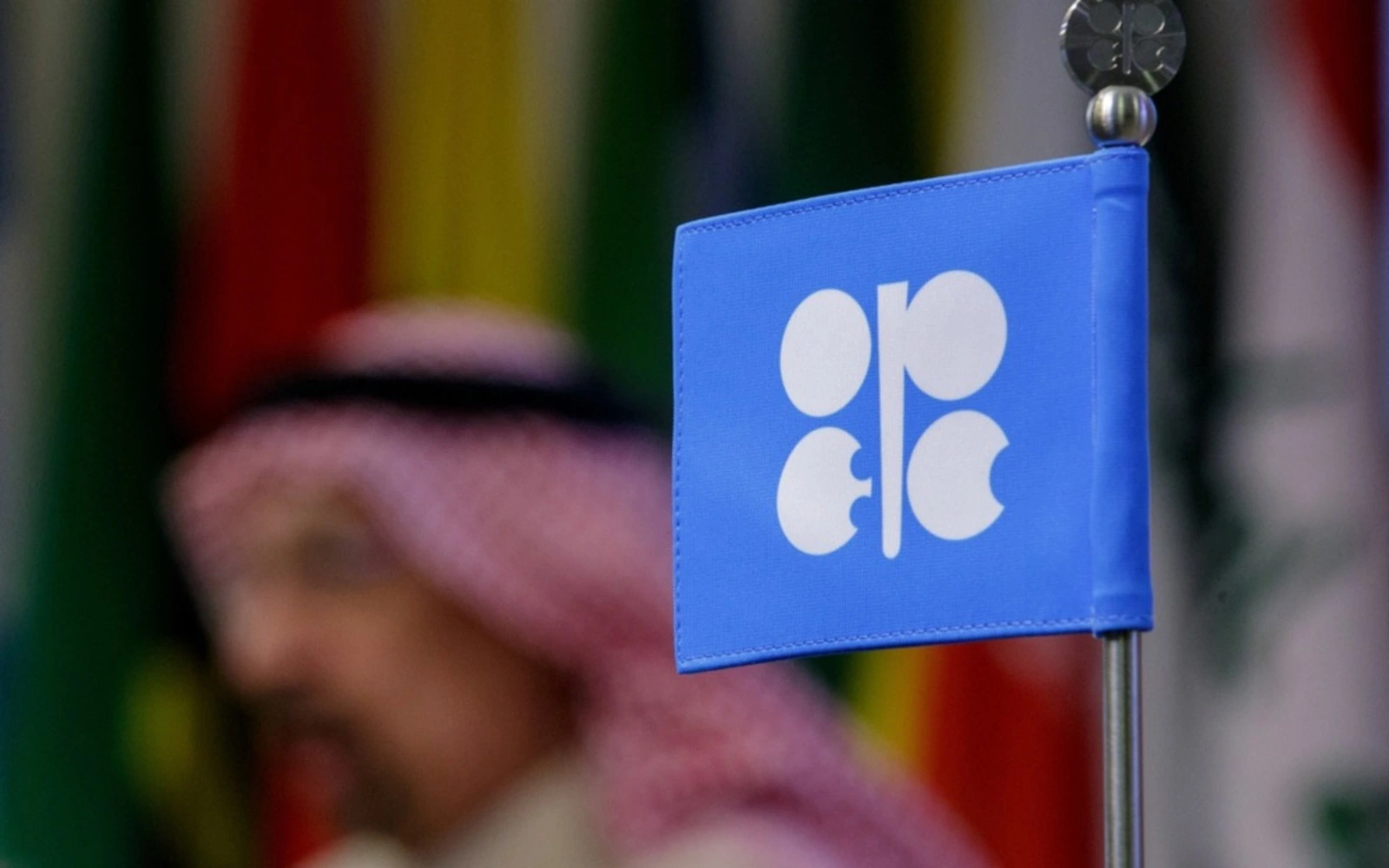
- OPEC+ holds an online meeting to consider higher production quotas to address rising oil prices.
- The Iran-related disruption effectively shuts the Strait of Hormuz, limiting about a fifth of global oil and gas flows.
- Analysts say only some OPEC+ members have spare capacity to raise output, and practical supply constraints persist.
- Some estimates put OPEC+ output around 33 million barrels per day, down from nearly 43 million before the conflict.
- Analysts say the UAE’s exit from OPEC reduces cartel influence and raises the risk of further departures.
OPEC+ ministers meet Sunday to weigh higher production quotas in a bid to cap oil prices that have surged since the Iran war effectively choked off Gulf crude shipments.But even if the cartel members vow to ramp up output by thousands of barrels per day, analysts say geopolitical realities mean they probably won't move the needle on prices.With the crucial Strait of Hormuz shut since US and Israeli attacks on Iran in late February, oil prices have nearly doubled, igniting inflation pressures worldwide.
2 months agoEven if the cartel members vow to ramp up output by thousands of barrels per day, analysts say geopolitical realities mean they probably won't move prices.
2 months agoOPEC+ ministers meet Sunday to weigh higher production quotas in a bid to cap oil prices that have surged since the Iran war effectively choked off Gulf crude shipments.But even if the cartel members vow to ramp up output by thousands of barrels per day, analysts say geopolitical realities mean they probably won't move the needle on prices.Also read: OPEC+ leaders expected to up July oil output target despite Hormuz disruption, sources sayWith the crucial Strait of Hormuz shut since US and Israeli attacks on Iran in late February, oil prices have nearly doubled, igniting inflation pressures worldwide.Ministers from the 21 member states of OPEC+, the main oil producing nations and their allies, are holding their quarterly meeting online.The group is likely to beef up its production quotas by "188,000 barrels a day", said Jorge Leon, analyst at Rystad Energy, similar to recent increases. But in reality, only seven members -- Saudi Arabia, Russia, Iraq, Kuwait, Kazakhstan, Algeria and Oman -- have the capacity to do so.Dwindling supply Tehran's threats of retaliatory attacks to US and Israeli strikes have virtually blocked the vital Strait of Hormuz, through which roughly a fifth of global oil and gas supplies normally pass.That is equivalent to about 20 million barrels a day. But with key Gulf producers shut out of the global market, pledges to raise output in a bid to ease spiralling prices are unlikely to sway traders. "Any announced production increases or changes to output targets will have limited practical value," said Ole Hansen, a commodities analyst at Saxo Bank."There is very little OPEC can do," he told AFP.OPEC+ itself says daily production has plummeted to just 33 million barrels a day as tankers remain stuck, compared to nearly 43 million before the conflict.A US blockade on Iranian ports means "it will be even less than that" in reality, said Homayoun Falakshahi, head of crude oil analysis at data firm Kpler.Also read: Oil prices fall on mounting hopes for de-escalation in US-Iran WarUAE slams the door The United Arab Emirates' recent decision to quit OPEC further saps away at the cartel's influence, given its huge excess production capacity.And Abu Dhabi has made clear it wants to boost output."They don't want to be dictated to, they want to maximise their revenues," said Lawrence Haar, a lecturer in finance at the University of Brighton in England. And the cartel risks seeing other countries follow the UAE's example."If Iraq were to leave, it could mark the end of OPEC+," Falakshahi said.Saudi Arabia, by far the cartel's most influential member, "is going to do what it takes to stop anyone else from leaving," Falakshahi predicted.That could translate into more flexible output quotas or decreased penalties for any excess production.But "for now, the compensation framework has effectively become irrelevant due to widespread production shut-ins," Hansen said.As a result, the Iran war has largely neutralised the cartel's stated mission "to secure an efficient, economic and regular supply of petroleum to consumers, and a steady income to producers". For Falakshahi, the only factor limiting further oil price spikes at the moment is China, "which is buying less oil than normal" by tapping into its vast strategic reserves.
2 months ago
Dodgers keep Shohei Ohtani off pitching rotation amid lingering left knee soreness
The Los Angeles Dodgers keep Shohei Ohtani from pitching as he continues to manage a lingering left knee issue. Multiple...
Fed Chair Kevin Warsh addresses Jackson Hole as investors watch for policy signals
Federal Reserve Chair Kevin Warsh delivers his first Jackson Hole speech at the annual economic symposium in Jackson Hol...

U.S. announces “Operation Economic Outcast” to expand sanctions targeting Iran’s financial access
The U.S. Treasury Secretary Scott Bessent announces “Operation Economic Outcast,” a major expansion of sanctions aimed a...