


Multiple Australian outlets raise the question of whether government support that pays parents to stay home and raise children could address declining birth rates. The articles frame the debate around the idea that the financial costs of having children can deter potential parents or discourage them from starting a family. They discuss the concept of providing direct payments or income support to parents who reduce or pause paid work to care for children, positioning it as a possible incentive to increase family formation and retention. The coverage is presented as a policy discussion rather than a confirmed program rollout, focusing on whether such a measure could offset cost barriers. The articles also imply that solutions may need to consider the broader affordability environment, including household expenses and the trade-off between employment income and caregiving time. Overall, the sources converge on the central premise that declining birth rates are linked—at least in part—to economic pressures, and they examine whether paying stay-at-home parents would be an effective response.
Australia debates paying parents to stay home as a response to declining birth rates
Multiple Australian outlets raise the question of whether government support that pays parents to stay home and raise children could address declining birth rates. The articles frame the debate around...

- Outlets discuss whether paying parents to stay home and raise children could help address declining birth rates.
- The coverage links low birth rates to perceived financial barriers to having children.
- The proposed approach centers on direct income support for caregiving rather than only subsidizing childcare.
- The articles treat the issue as a policy debate, not as an existing confirmed program.
- The incentives are presented as a way to reduce the work-and-cost trade-offs for prospective parents.
With the cost associated with having children a deterrent to prospective parents, is paying them to stay home and raise a family the antidote to a slowing of the birth rate.
2 months agoWith the cost associated with having children a deterrent to prospective parents, is paying them to stay home and raise a family the antidote to a slowing of the birth rate.
2 months agoWith the cost associated with having children a deterrent to prospective parents, is paying them to stay home and raise a family the antidote to a slowing of the birth rate.
2 months ago
Boy charged with murder after 17-year-old fatally stabbed at Brent council HQ
A 17-year-old teenager is fatally stabbed at Brent council headquarters in Wembley, north-west London. Police arrest a 1...

TestMu Conference 2026 highlights agentic engineering and AI quality focus
TestMu Conference 2026 is held as TestMu AI’s flagship event, with the programme centered on agentic engineering and qua...
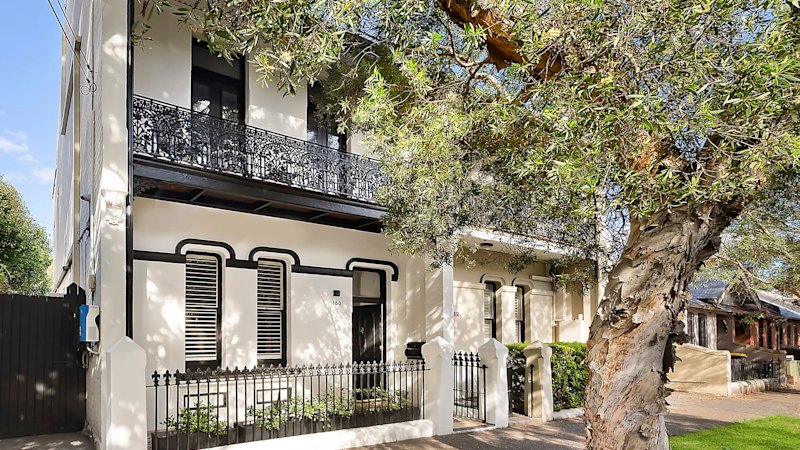
Outlets publish ‘five of the best’ home picks for Sydney and Melbourne
Multiple Australian outlets publish curated lists of “five of the best homes” to enjoy both inside and out in major citi...