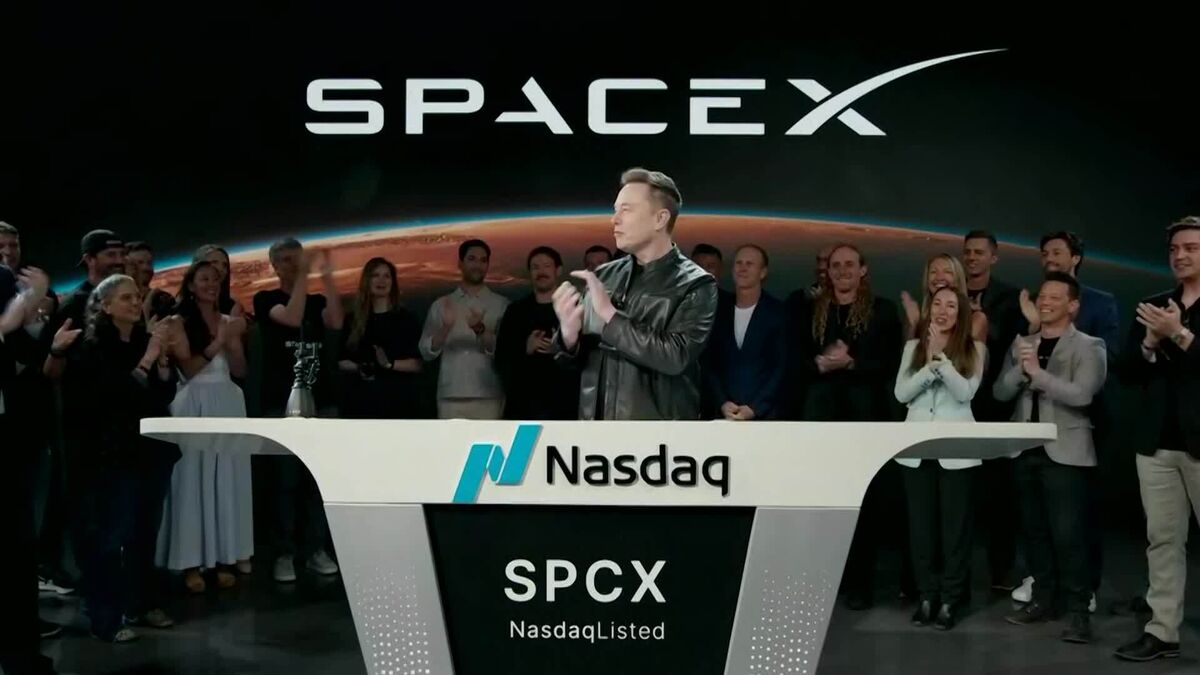
SpaceX, formally Space Exploration Technologies Corp., is preparing for its U.S. stock market debut and plans to allocate a larger-than-usual portion of its IPO to retail investors—individuals buying shares through brokerage accounts rather than institutional investors. The company expects retail participation of up to about 30% of the offering, compared with the more typical 5% to 10% for IPOs. Eligible brokers named by multiple outlets include Charles Schwab, Fidelity, Robinhood, SoFi and E-Trade (via Morgan Stanley). Fidelity’s account minimums for the IPO could be as low as $2,000. The outlets also note that high demand may mean not all investors who indicate interest receive shares. SpaceX warns that its stock could be volatile after listing, citing past patterns where IPOs can jump on the first day but often underperform over subsequent years. The reports add that SpaceX carries substantial debt and continued losses, and says it may not achieve profitability in the future. Separately, the IPO’s governance structure gives “Class A” shares one vote each, while “Class B” shares are not offered; Elon Musk’s existing holdings could translate into control of more than 82% of voting power. Pension fund officials in California and New York criticize elements such as super-voting shares and arbitration, arguing it reduces accountability.
SpaceX IPO targets retail investors, while highlighting volatility and Musk’s voting control
SpaceX, formally Space Exploration Technologies Corp., is preparing for its U.S. stock market debut and plans to allocate a larger-than-usual portion of its IPO to retail investors—individuals buying...
- SpaceX plans to make a significant portion of its IPO available to retail investors, potentially up to about 30%.
- Retail investors are expected to participate through brokers including Charles Schwab, Fidelity, Robinhood, SoFi, and E-Trade (by Morgan Stanley).
- SpaceX warns its IPO stock price could be volatile; IPOs can jump on day one but often lag peers over later years.
- SpaceX has high debt and reports large losses, and it says it may not achieve future profitability.
- The IPO’s voting structure gives Class A shares one vote; Musk’s Class B holdings could give him more than 82% of voting power.
When SpaceX makes its debut on the U.S. stock market, it wants smaller-pocketed, mom-and-pop investors to play a big role in what may be the biggest IPO ever.Elon Musk’s rocket company, formally known as Space Exploration Technologies Corp., is steering some of its initial public offering of stock directly to what are called “retail” investors. These are people who buy stocks in a brokerage account on their phone, not pension funds or other big “institutional” investors routing orders to their professional trading desks.Here are some things to keep in mind as the IPO approaches: A chunk of SpaceX stock will go to regular investors Most IPOs offer only 5% to 10% of the total offering to retail investors, according to Fidelity. In this case, though, it could be up to 30%. SpaceX expects retail investors to participate in its IPO through Charles Schwab, Fidelity, Robinhood, SoFi and E-Trade by Morgan Stanley.At Fidelity, investors with as little as $2,000 in their accounts could potentially snag SpaceX shares in the IPO. That’s down from account minimums of $100,000 or even $500,000 that Fidelity has for other equity offerings.Demand from investors may be so high in this IPO that not everyone indicating interest will actually get a share. Trying for a short-term flip has risks Given all the hype around SpaceX, temptation could be high to grab shares in the IPO and sell them quickly if a frenzy sends its price spiking. But brokerages have policies to block investors from future offerings if they dump shares bought in an IPO quickly, like within a couple weeks. Big swings in price may be possible Potentially high interest from retail investors following the IPO is one reason SpaceX is warning that its stock price could be volatile. These investors aren’t known for moving as meticulously as a pension fund, which is trying to build money for payments it must make years or decades in the future.It’s retail investors, after all, who helped drive GameStop and other “meme stocks” to market-bending heights in 2021 that professional investors called irrational. IPOs can see a big first-day bounce, but that may not last The typical IPO has seen a 7% jump in its first day of trading, from 1980 through 2025, according to Jay Ritter, an IPO expert and a professor at the University of Florida’s Warrington College of Business.But IPOs tend to lag similar-sized peers in the ensuing five years, not including their first day of trading. They do so by an average of 3.6% per year, according to Ritter. SpaceX has debt and has been losing money It’s very expensive to launch things out of the earth’s atmosphere and to construct huge AI data centers, and SpaceX has built up $29.1 billion in debt, as of the end of March.The company also lost $4.9 billion last year and another $4.3 billion through the first three months of 2026. It acknowledges that it “may not achieve profitability in the future.”Over the long term, a stock’s price tends to track with how much profit the company is making. You don’t have to buy SpaceX to own it You could end up owning some of SpaceX even if you never intended to. Consider the many people who own shares of the popular QQQ exchange-traded fund, which tracks the Nasdaq 100 index and has roughly $460 billion in total assets.Historically, the Nasdaq 100 index would wait until each December to add new members in an annual reconstitution to make sure it includes the 100 largest non-financial companies on the Nasdaq. But Nasdaq recently made changes to allow some big companies to enter the Nasdaq 100 index after just 15 trading days.That means if SpaceX’s IPO is as successful as expected, it could quickly join both the Nasdaq 100 and QQQ fund, all while QQQ holders do nothing on their own.The company behind the more popular S&P 500 index, though, is not making changes that would allow SpaceX faster entry. Any shares bought would take a back seat to Musk’s in influence In its IPO, SpaceX is offering 555.6 million shares of its “Class A” stock. Each of these shares gives an investor one vote on matters that shareholders decide. That includes such weighty things as who is on the board of directors overseeing the CEO.This IPO is not offering what are called “Class B” shares, each of which give its holder 10 votes. Musk, meanwhile, owns so many of those shares that he by himself could control more than 82% of all the stock’s voting power following the IPO.In filings with U.S. securities regulators, SpaceX acknowledges the potential for conflicts of interest between it and Musk, along with other companies he owns, such as Tesla. Some big investors really disagree with the ownership structure Officials from pension funds for firefighters, teachers and other workers in California and New York sent a letter to SpaceX last month decrying some of the provisions in its IPO, including “super voting shares,” mandatory arbitration of shareholder claims instead of the possibility of lawsuits and how much power Musk will hold over the company.They said they could become owners of SpaceX stock because they hold index funds, which automatically buy stocks after they get included in certain indexes.If Musk is able to control so much of the voting power on the board of directors, it would make him tremendously powerful atop SpaceX, “essentially making him unfireable without his own consent,” the CEO of California Public Employees’ Retirement System, the New York state comptroller and the New York City comptroller wrote in their letter.“This level of insulation from accountability is virtually unheard of among any other large U.S. issuer whose governing documents foreclose accountability to public owners on these terms.” Don’t confuse SpaceX with other companies with similar names SpaceX plans to trade under the ticker symbol “SPCX.” That’s very close to “SPCE,” which is the symbol for Richard Branson’s Virgin Galactic Holdings. —Stan Choe, AP Business Writer
17 hours agoWhen SpaceX makes its debut on the U.S. stock market, it wants smaller-pocketed, mom-and-pop investors to play a big role in what may be the biggest IPO ever.Elon Musk's rocket company, formally known as Space Exploration Technologies Corp., is steering some of its initial public offering of stock directly to what are called "retail" investors. These are people who buy stocks in a brokerage account on their phone, not pension funds or other big "institutional" investors routing orders to their professional trading desks.Here are some things to keep in mind as the IPO approaches:A chunk of SpaceX stock will go to regular investorsMost IPOs offer only 5% to 10% of the total offering to retail investors, according to Fidelity. In this case, though, it could be up to 30%. SpaceX expects retail investors to participate in its IPO through Charles Schwab, Fidelity, Robinhood, SoFi and E-Trade by Morgan Stanley.At Fidelity, investors with as little as $2,000 in their accounts could potentially snag SpaceX shares in the IPO. That's down from account minimums of $100,000 or even $500,000 that Fidelity has for other equity offerings.Demand from investors may be so high in this IPO that not everyone indicating interest will actually get a share.Trying for a short-term flip has risksGiven all the hype around SpaceX, temptation could be high to grab shares in the IPO and sell them quickly if a frenzy sends its price spiking. But brokerages have policies to block investors from future offerings if they dump shares bought in an IPO quickly, like within a couple weeks.Big swings in price may be possiblePotentially high interest from retail investors following the IPO is one reason SpaceX is warning that its stock price could be volatile. These investors aren't known for moving as meticulously as a pension fund, which is trying to build money for payments it must make years or decades in the future.It's retail investors, after all, who helped drive GameStop and other "meme stocks" to market-bending heights in 2021 that professional investors called irrational.IPOs can see a big first-day bounce, but that may not lastThe typical IPO has seen a 7% jump in its first day of trading, from 1980 through 2025, according to Jay Ritter, an IPO expert and a professor at the University of Florida's Warrington College of Business.But IPOs tend to lag similar-sized peers in the ensuing five years, not including their first day of trading. They do so by an average of 3.6% per year, according to Ritter.SpaceX has debt and has been losing moneyIt's very expensive to launch things out of the earth's atmosphere and to construct huge AI data centers, and SpaceX has built up $29.1 billion in debt, as of the end of March.The company also lost $4.9 billion last year and another $4.3 billion through the first three months of 2026. It acknowledges that it "may not achieve profitability in the future."Over the long term, a stock's price tends to track with how much profit the company is making.You don't have to buy SpaceX to own itYou could end up owning some of SpaceX even if you never intended to. Consider the many people who own shares of the popular QQQ exchange-traded fund, which tracks the Nasdaq 100 index and has roughly $460 billion in total assets.Historically, the Nasdaq 100 index would wait until each December to add new members in an annual reconstitution to make sure it includes the 100 largest non-financial companies on the Nasdaq. But Nasdaq recently made changes to allow some big companies to enter the Nasdaq 100 index after just 15 trading days.That means if SpaceX's IPO is as successful as expected, it could quickly join both the Nasdaq 100 and QQQ fund, all while QQQ holders do nothing on their own.The company behind the more popular S&P 500 index, though, is not making changes that would allow SpaceX faster entry.Any shares bought would take a back seat to Musk's in influenceIn its IPO, SpaceX is offering 555.6 million shares of its "Class A" stock. Each of these shares gives an investor one vote on matters that shareholders decide. That includes such weighty things as who is on the board of directors overseeing the CEO.This IPO is not offering what are called "Class B" shares, each of which give its holder 10 votes. Musk, meanwhile, owns so many of those shares that he by himself could control more than 82% of all the stock's voting power following the IPO.In filings with U.S. securities regulators, SpaceX acknowledges the potential for conflicts of interest between it and Musk, along with other companies he owns, such as Tesla.Some big investors really disagree with the ownership structureOfficials from pension funds for firefighters, teachers and other workers in California and New York sent a letter to SpaceX last month decrying some of the provisions in its IPO, including "super voting shares," mandatory arbitration of shareholder claims instead of the possibility of lawsuits and how much power Musk will hold over the company.They said they could become owners of SpaceX stock because they hold index funds, which automatically buy stocks after they get included in certain indexes.If Musk is able to control so much of the voting power on the board of directors, it would make him tremendously powerful atop SpaceX, "essentially making him unfireable without his own consent," the CEO of California Public Employees' Retirement System, the New York state comptroller and the New York City comptroller wrote in their letter."This level of insulation from accountability is virtually unheard of among any other large U.S. issuer whose governing documents foreclose accountability to public owners on these terms."Don't confuse SpaceX with other companies with similar namesSpaceX plans to trade under the ticker symbol "SPCX." That's very close to "SPCE," which is the symbol for Richard Branson's Virgin Galactic Holdings.
19 hours ago
Commvault (CVLT) faces multiple securities class actions over alleged disclosure violations
Commvault Systems, Inc. (NASDAQ: CVLT) is facing securities class action lawsuits filed on behalf of investors. Multiple...
PureCycle announces $395M capital raise through stock and convertible note offerings
PureCycle announces a $395 million capital raise, combining new stock issuance and debt securities (including notes), ac...
SpaceX IPO to create thousands of employee millionaires ahead of Nasdaq trading
Multiple reports say SpaceX’s planned initial public offering (IPO) is expected to create thousands of employee milliona...