


A federal court trial in Oakland, California, begins as Elon Musk pursues a claim against OpenAI and its leaders, alleging that the company’s history and public commitments involve wrongdoing tied to OpenAI’s original nonprofit structure. Musk accuses OpenAI CEO Sam Altman, OpenAI President Greg Brockman, and Microsoft of steering the project away from its founding intent, including manipulating Musk into making a donation that later enabled creation of a for-profit subsidiary. Several outlets describe the lawsuit as centering on whether OpenAI was transformed in a way that violated promises made at its inception, and what responsibilities leaders held toward OpenAI’s mission. Testimony is also described as addressing control and governance disputes in OpenAI’s early years. Accounts say Altman testifies that Musk sought greater control, including efforts discussed to merge OpenAI’s nonprofit lab into Tesla, which Altman says would have undermined the lab’s nonprofit status. OpenAI’s legal team argues Musk waited too long to sue and that the nonprofit model could not support the resources needed for OpenAI’s goals, while attorneys for Musk challenge the credibility of Altman and dispute how investments and later financing influenced the shift toward a scaled, for-profit structure.
Elon Musk and Sam Altman face trial over OpenAI’s founding and charity-to-profit transition
A federal court trial in Oakland, California, begins as Elon Musk pursues a claim against OpenAI and its leaders, alleging that the company’s history and public commitments involve wrongdoing tied to...
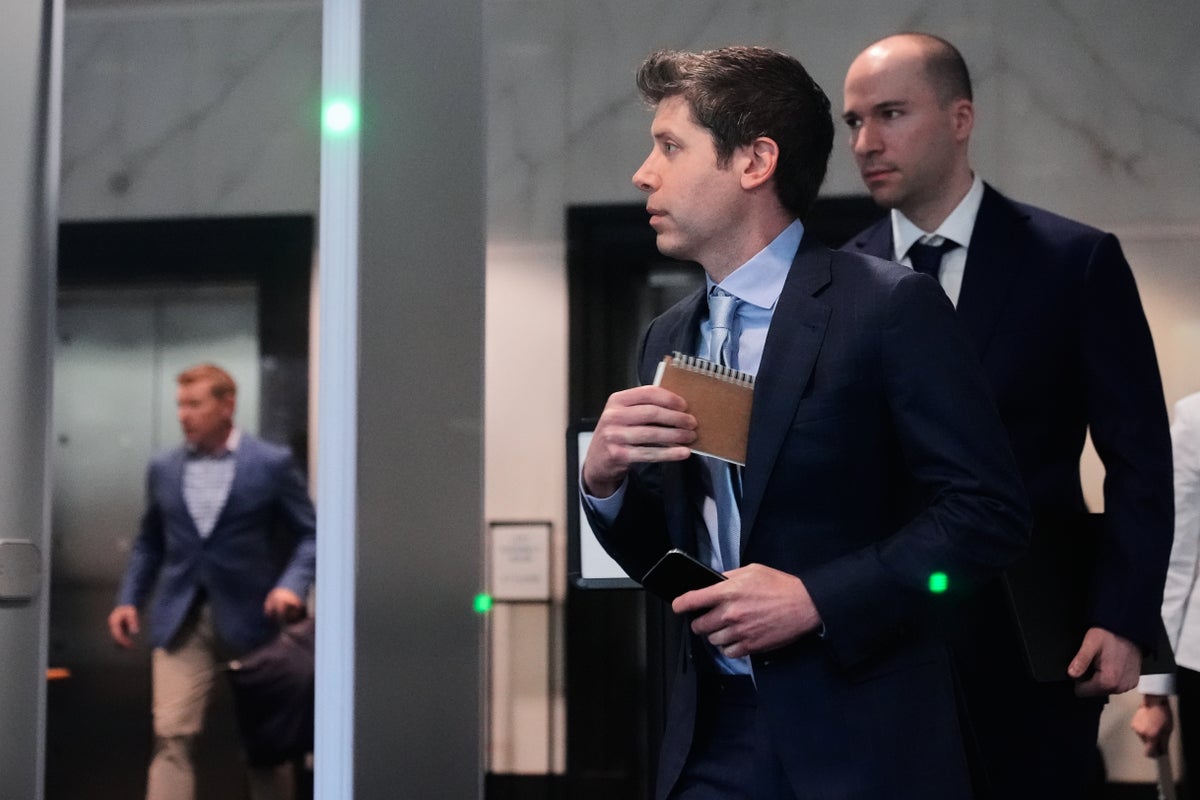
- Elon Musk is suing OpenAI and its leaders in federal court, alongside Microsoft, over OpenAI’s history and alleged breach of founding commitments.
- Musk accuses Sam Altman and others of steering OpenAI’s nonprofit into a structure that enabled a for-profit subsidiary and enriched insiders.
- Testimony discussed in reporting centers on early governance disputes, including claims that Musk sought greater control of OpenAI.
- OpenAI leaders dispute Musk’s allegations, including arguments that the nonprofit model could not provide sufficient funding for the mission and that Musk’s lawsuit was filed too late.
- The trial is presented as a high-stakes dispute involving OpenAI’s mission, control, and how the organization evolves from nonprofit origins to its current structure.
The trial pitting Elon Musk against OpenAI CEO Sam Altman made clear the two billionaires agreed on one thing: building artificial intelligence would require significant resources — and enormous amounts of money
4 months agoAfter Sam Altman and OpenAI's recent victory in a drawn-out legal battle with billionaire Elon Musk, the bitter rivalry between the former friends is now set to move from the courtroom to Wall Street.
4 months agoOpenAI was founded as a nonprofit aiming to build ethical, open-source artificial general intelligence. Years later, Elon Musk filed a lawsuit accusing CEO Sam Altman, OpenAI president Greg Brockman, and Microsoft of manipulating him into donating to a public-interest organisation which later created a for-profit subsidiary.
4 months agoListen to the session or watch below Elon Musk lost his suit against OpenAI, in which he alleged CEO Sam Altman and President Greg Brockman had deceived him over the company’s non-profit status. Watch as AI reporter and attorney Michelle Kim, who covered the trial for MIT Technology Review, joins in conversation with editor in…
4 months agoA long and bitter legal battle between tech billionaires Elon Musk and Sam Altman has culminated in victory for the OpenAI boss. Musk has vowed to appeal the verdict. But what did the trial reveal about big tech and the global AI race? Lucy Hough speaks to Guardian US tech and power reporter Nick Robins-Early Continue reading...
4 months agoA long and bitter legal battle between tech billionaires Elon Musk and Sam Altman has culminated in victory for the OpenAI boss. Musk has vowed to appeal the verdict. But what did the trial reveal about big tech and the global AI race?Lucy Hough speaks to Guardian US tech and power reporter Nick Robins-Early Continue reading...
4 months agoElon Musk’s planned appeal suggests the legal battle is far from over.
4 months agoAfter prevailing in its court fight with Elon Musk, OpenAI - the ChatGPT maker valued at $852 billion - remains on track for what could be one of the largest initial public offerings in history. Musk had been seeking the ouster of his fellow OpenAI co-founder, CEO Sam Altman, among other changes to the company. But with testimony from witnesses who called Altman dishonest, he's hardly emerged unscathed. At a time of growing concern about artificial intelligence's impacts, the landmark trial also shed new light on the flaws and outsize ambitions of the small number of billionaires steering the development of the breakthrough technology. The trial was a reminder, said Sarah Kreps, director of Cornell University's Tech Policy Institute, "of how much the future of AI still depends on a remarkably small group of powerful tech figures and their personal rivalries". "The trial highlighted not just a dispute between Musk and Altman, but a broader disconnect between the people building thes
4 months agoThe blockbuster legal battle between the two tech titans has exposed tensions over mission versus money and the future of artificial intelligence.
4 months agoOpenAI’s plans now seem all but guaranteed, given that the world’s richest man couldn’t put a stop to themOn Monday morning, a jury in Oakland, California, handed a resounding victory to Sam Altman and OpenAI in their long, bitter courtroom battle with Elon Musk.The federal jury found Altman, OpenAI and its president, Greg Brockman, not liable for Elon Musk’s claims that they unjustly enriched themselves and broke a founding contract made with Musk when founding the startup. The unanimous verdict, delivered after less than two hours of deliberation, is a stark rebuke of Musk and his lawyer’s claims that Altman “stole a charity” through his leadership of OpenAI.Nick Robins-Early contributed reporting Continue reading...
4 months ago“There is no question to anyone following the case in detail that Altman & Brockman did in fact enrich themselves by stealing a charity,” a big bucks court losing Elon Musk stamped his feet and proclaimed today of his now estranged OpenAI co-founders Sam Altman and Greg Brockman. Tossing in a Trump caps, the world’s […]
4 months agoMusk's suit alleged multiple defendants colluded to steal a charity, corrupting a technological nonprofit from within.
4 months agoA jury in Oakland, Calif., reached a decision after a three-week-long trial seen as pivotal for the future of OpenAI and the artificial intelligence race.
4 months agoThe tech trial of the year, Musk v. Altman, was ultimately a fight for control. Elon Musk argued that Sam Altman, with whom he helped found the now-massive company OpenAI, shouldn't direct the future of AI. Altman's lawyers, in turn, poked at Musk's own credibility. A jury came to a verdict on Monday after just […]
4 months agoAfter three weeks of testimony, which was covered extensively here on Slashdot, a U.S. jury on Monday ruled against Elon Musk in his lawsuit against OpenAI, finding that he waited too long to bring his claims that the company betrayed its nonprofit mission. Reuters reports: The trial had widely been seen as a critical moment for the future of OpenAI and artificial intelligence generally, both in how it should be used and who should benefit from it. Following the verdict, Musk's lawyer said he reserved the right to appeal, but the judge suggested he may have an uphill battle because whether the statute of limitations ran out before Musk sued was a factual issue. "There's a substantial amount of evidence to support the jury's finding, which is why I was prepared to dismiss on the spot," U.S. District Judge Yvonne Gonzalez Rogers said. In his 2024 lawsuit, Musk accused OpenAI, its Chief Executive Sam Altman and its President Greg Brockman of manipulating him into giving $38 million, then going behind his back by attaching a for-profit business to its original nonprofit and accepting tens of billions of dollars from Microsoft and other investors. Musk called the OpenAI defendants' conduct "stealing a charity." OpenAI was founded by Altman, Musk and several others in 2015. Musk left its board in 2018, and OpenAI set up a for-profit business the next year. OpenAI countered that it was Musk who saw dollar signs, and that he waited too long to claim OpenAI breached its founding agreement to build safe artificial intelligence to benefit humanity. "Mr. Musk may have the Midas touch in some areas, but not in AI," William Savitt, a lawyer for OpenAI, said in his closing argument. The verdict followed 11 days of testimony and arguments where Musk's and Altman's credibility came under repeated attack. Lawyers for OpenAI embraced each other after the verdict was announced. Microsoft faced an aiding and abetting claim. In a statement, a Microsoft spokesperson said, "The facts and the timeline in this case have long been clear and we welcome the jury's decision to dismiss these claims as untimely." Recap: Musk Accused of 'Selective Amnesia', Altman of Lying As OpenAI Trial Nears End (Day Twelve) OpenAI Trial Wraps Up With 'Jackass' Trophy For Challenging Musk (Day Eleven) Sam Altman Testifies That Elon Musk Wanted Control of OpenAI (Day Ten) Microsoft CEO Satya Nadella Testifies In OpenAI Trial (Day Nine) Sam Altman Had a Bad Day In Court (Day Eight) Sam Altman's Management Style Comes Under the Microscope At OpenAI Trial (Day Seven) Brockman Rebuts Musk's Take On Startup's History, Recounts Secret Work For Tesla (Day Six) OpenAI President Discloses His Stake In the Company Is Worth $30 Billion (Day Five) Musk Concludes Testimony At OpenAI Trial (Day Four) Elon Musk Says OpenAI Betrayed Him, Clashes With Company's Attorney (Day Three) Musk Testifies OpenAI Was Created As Nonprofit To Counter Google (Day Two) Elon Musk and OpenAI CEO Sam Altman Head To Court (Day One) Read more of this story at Slashdot.
4 months agoThe three-week trial featured testimony from tech billionaire Elon Musk and OpenAI CEO Sam Altman.
4 months agoA US jury on Monday ruled against Elon Musk in his lawsuit against OpenAI, finding the artificial intelligence company not liable to the world's richest person for having allegedly strayed from its original mission to benefit humanity.In a unanimous verdict, the jury in Oakland, California federal court said Musk had brought his case too late.The trial began on April 28. It has widely been seen as a critical moment for the future of OpenAI and artificial intelligence generally, both in how it should be used and who should benefit from it, including financially.People use AI for myriad purposes such as education, facial recognition, financial advice, journalism, legal research, medical diagnoses, and harmful deep-fakes.Many people express distrust of the technology and worry it could displace people from their jobs.The verdict followed 11 days of testimony and arguments where Musk's and Altman's credibility came under repeated attack.Each side accused the other of being more interested in money than serving the public.In his closing argument, Musk's lawyer Steven Molo reminded jurors that several witnesses questioned Altman's candor or branded him a liar, and that Musk did not give an unqualified yes when asked during the trial if he was completely trustworthy."Sam Altman's credibility is directly at issue," Molo said. "If you don't believe him, they cannot win."Musk accused OpenAI of wrongfully trying to enrich investors and insiders at the nonprofit's expense, and failing to prioritize AI's safety. He also contended that Microsoft knew all along that OpenAI cared more about money than being altruistic.OpenAI countered that it was Musk who saw dollar signs, and that he waited too long to claim OpenAI breached its founding agreement to build safe artificial intelligence to benefit humanity."Mr. Musk may have the Midas touch in some areas, but not in AI," William Savitt, a lawyer for OpenAI, said in his closing argument.OpenAI competes with AI companies such as Anthropic and xAI, and is preparing for a possible initial public offering that could value the business at $1 trillion.Microsoft has spent more than $100 billion on its partnership with OpenAI, a Microsoft executive testified.Musk's xAI is now part of his space and rocket company SpaceX, which is preparing a IPO that could exceed OpenAI's in size.
4 months agoOpenAI CEO and president found not liable for breaking contracts made with Musk when founding the startupA jury ruled in favor of Sam Altman in the culmination of a long and bitter legal battle that pitted the richest person in the world against a leader of the AI boom.The federal jury in Oakland, California, found Altman and Greg Brockman, OpenAI’s president, not liable for unjustly enriching themselves and breaking contracts made with Musk when founding the startup. Continue reading...
4 months agoA nine-person jury will begin deliberations Monday in Elon Musk's $150 billion civil lawsuit against OpenAI CEO Sam Altman. Rachel Metz, artificial intelligence reporter for Bloomberg, joins with more.
4 months agoWe sifted through evidence and testimony to figure out how billionaires Elon Musk, Sam Altman and Greg Brockman ended up in a courtroom.
4 months agoAt the opening of the trial on April 28, Musk portrayed himself as a selfless benefactor and Good Samaritan concerned with protecting humanity from an AI that, if left in the wrong hands, could "kill us all."
4 months agoThe three-week trial has seen a parade of Silicon Valley titans, with Elon Musk arguing that OpenAI’s profit-driven pivot betrayed its original nonprofit mandate.
4 months agoA jury is set to deliberate Monday on Silicon Valley's first major AI trial, pitting billionaire Elon Musk against AI giant OpenAI and its CEO Sam Altman. In his lawsuit, Musk argued that OpenAI's pivot to an $850 billion juggernaut betrayed its original nonprofit mandate and that it improperly used a $38 million donation.
4 months agoA big theme in the trial’s final days was whether OpenAI CEO Sam Altman is trustworthy.
4 months agoTwo of the world’s richest people faced an airing of their dirty laundry amid their messy, bitter feud over OpenAIA nine-person jury is set to decide whether Elon Musk’s allegations of “stealing a charity” against Sam Altman and OpenAI are legitimate, with deliberations to begin in earnest on Monday. Whatever its outcome, the case has been an illuminating, at times exhausting, look behind the scenes at the history of OpenAI and how some of the most powerful figures in the tech industry operate.Attorneys for both sides have introduced reams of private text messages, emails and even diary entries to support their arguments. A who’s who of Silicon Valley testified in the trial, including Microsoft CEO Satya Nadella and the mother of some of Musk’s children, Shivon Zilis. Both Altman and Musk also took the stand for hours, facing combative cross-examinations that painted them each as untrustworthy. Continue reading...
4 months agoIn the final week of the Musk v. Altman trial, lawyers traded blows over Elon Musk’s and OpenAI CEO Sam Altman’s credibility. Altman was grilled on his alleged history of lying and self-dealing involving companies that do business with OpenAI. But he fired back, painting Musk as a power-seeker who wanted to control the development…
4 months agoClosing Arguments In High-Stakes OpenAI Trial Focus On Reputation, Character Authored by Beige Luciano-Adams via The Epoch Times (emphasis ours), OAKLAND, Calif.—After nearly three weeks of presented evidence, an Oakland jury on May 14 heard final arguments in a high-stakes legal battle that could have profound impacts on the race for artificial intelligence. In a courtroom sketch, Sam Altman listens as OpenAI President Greg Brockman testifies during Elon Musk's lawsuit trial over OpenAI's for-profit conversion, at a federal courthouse in Oakland, Calif., on May 4, 2026. Vicki Behringer/Reuters Tech moguls Elon Musk and Sam Altman, once friends and partners in a fledgling AI startup with big dreams and a noble mission, are nearing the climax of a bitter feud over the future of an $852 billion company. Despite a judicial ban on testimony related to AI-induced “extinction” scenarios, references to speculative risks still surfaced during the Oakland courtroom proceedings, appeared in discussions around “risk” and “safety.” Vague promises about the future benefits of an unrealized technology were also touched upon. On the stand, Tesla CEO Musk told the court, “We don’t want to have a Terminator outcome,” suggesting humanity would be better off with a “Star Trek” future written by Gene Roddenberry, rather than something from the mind of James Cameron. Musk cofounded OpenAI in 2015 with Altman, President Greg Brockman, and former chief scientist Ilya Sutskever. At the time, both Musk and Altman expressed grave concerns about the unregulated advancement of Artificial General Intelligence (AGI)—a hypothetical point at which the machines “outsmart” humans and operate autonomously. Those concerns, Musk testified, were the express motivation for founding OpenAI: open-source to prevent consolidation of power, and philanthropic to offset the profit-driven AI race. He sued Altman and Brockman in 2024, alleging they bilked him out of $38 million in donations, then restructured as a for-profit corporation by exclusively licensing their flagship product, ChatGPT, to Microsoft—and in doing so, betrayed their founding mission. OpenAI and Microsoft deny the allegations, arguing Musk abandoned the company in 2018 to start his own for-profit competitor, xAI, when other founders rejected his bid to take full control of the operation. Alongside the “preponderance” of evidence that both sides say supports their claims, the trial was just as focused on the two men’s reputations and characters. “Sam Altman’s credibility is directly at issue in this case,” Steven Molo, an attorney for Musk, said in his closing statement. “The defendants absolutely need you to believe Sam Altman. If you cannot trust him ... they do not win.” Molo questioned Altman earlier this week over a list of employees and colleagues who, both on and off the record, have characterized him as dishonest and opportunistic. OpenAI attorneys dismissed the tactic as “character assassination.” Sarah Eddy, an attorney for OpenAI, countered, “Mr. Molo says Sam Altman can’t be trusted, but Mr. Musk is the one whose testimony is contradicted by every other witness and all the documents.” Altman, Brockman, and others cast Musk as a detached outsider who contributed little if any sweat equity, had fraught relationships with colleagues, and attempted to poach OpenAI’s employees for his other companies. “The claim is that the Midas touch of Elon Musk made OpenAI what it is today,” William Savitt, an attorney for OpenAI, said in closing arguments. “Elon, Elon, Elon. ‘It was all me.’ Mr. Musk wants all that credit, but he hasn’t earned [it]. “This requires a touch that he doesn’t have. This is not a bulldozer. ... To succeed in AI, as it turns out, all Mr. Musk can do is come to court.” Savitt pointed out Musk wasn’t present for closing arguments, having jetted off to China earlier in the week with President Donald Trump. Gesturing at Altman and Brockman, he said: “My clients are here because they care a lot about it. Mr. Musk came to this court for exactly one witness—Mr. Musk. Now he’s in parts unknown.” Musk, according to the Forbes Billionaire Index, is the wealthiest person in the world, with a net worth of around $826 billion. Brockman received equity in the OpenAI corporation worth around $30 billion, and Altman’s net worth is around $3.5 billion. When Brockman took the stand last week, Molo accused him of plotting to use OpenAI to become a billionaire. “You had a fiduciary duty [to the nonprofit],” the attorney said. “You took the assets from the nonprofit, you moved them into the for-profit to create this money-making machine that resulted in you having $30 billion.” Brockman said such was a “deep mischaracterization.” Personal diary entries from late 2017 in which he muses about profits, and about how it would be “morally bankrupt” to “steal the nonprofit” from Musk, he said, were expressions of frustration. Jurors heard from a parade of Silicon Valley insiders, including all four founders, and from dueling experts on AI safety, nonprofits, business law, and forensic accounting. They watched lawyers pick through reams of internal documents, analyzing complex corporate and financial histories, while private diaries, email, and text threads offered insight on the parties’ underlying motivations and shifting alliances. “Everyone here has rights, even really rich guys like Elon Musk,” Molo said. “His is a claim that comes from a very deep place inside him, from his passion for this issue.” During his own testimony, Musk often told the court, “You can’t just steal a charity.” When his time on the stand came, Altman clapped back, “No, you can’t steal it, but Mr. Musk did try to kill it.” Altman said on Tuesday that Musk contributed only 28 percent of the nonprofit’s funding from 2015 to 2020, and failed to come through on a $1 billion pledge, leaving the startup with few options. OpenAI argues its nonprofit foundation is now one of the “best-resourced” in the world, with an equity stake in the company’s for-profit corporation approaching $200 billion—a direct result of $13 billion worth of investments from Microsoft and a 2025 restructure sanctioned by California and Delaware attorneys general. The details of OpenAI’s journey from a scrappy, underfunded nonprofit to one of the most powerful and valuable AI companies are highly contested. In addition to the power struggle with Musk in 2017 and 2018, it involves a messy 2023 governance shakeup in which Altman and Brockman were briefly ousted and Microsoft was deeply entangled. By 2017, all parties had agreed they would need vastly more capital and computing power to compete with AI giants such as Google. Various ideas were floated, debated, and discarded—including rolling OpenAI into Tesla and even turning to cryptocurrency. Ultimately, under Altman’s leadership, the company created a for-profit subsidiary in 2018 and, in 2019, partnered with Microsoft. In 2025, OpenAI restructured as a public benefit corporation, which its leaders say remains under the control of the foundation and loyal to the original mission. The foundation holds an approximately 27 percent equity stake in the corporation; Microsoft owns a 26 percent stake. Molo argued on Thursday that Microsoft’s investment breached the charitable trust Musk created by enriching its investors and “insiders” at the expense of the nonprofit, and failing to open-source the technology, prioritize AI safety, or follow nonprofit custom and practice. The $13 billion Microsoft has invested since 2019 dwarfed charitable contributions and weakened OpenAI in its negotiating position with Microsoft, Molo said, resulting in a company focused on commercializing AI, with a gutted charity that does little more than sanitize its reputation. As for Microsoft, Molo said the company was aware of what OpenAI was doing “every step of the way, they helped them violate their nonprofit mission, that’s aiding and abetting pure and simple.” OpenAI and Microsoft argued there was never any charitable trust to breach. Eddy, the OpenAI attorney, argued there were never any strings attached to Musk’s donations to OpenAI, and that he failed to demonstrate that he “properly manifested a specific intent” to devote the trust to a specific purpose, his $38 million in donations going instead to generally further the mission of the nonprofit. “The specific purposes cannot just be in his head,” Eddy said. Absent evidence proving this intent and specificity, she said, the plaintiff had resorted to implication and inference. “It’s all made up,” she said. As Musk told it, OpenAI’s mission was clear. “I specifically came up with the idea, the name, recruited key people, taught [them] everything I know, provided the original funding. ... It was specifically for a charity that did not benefit any individual person. I could’ve started it as a for-profit, and I chose not to,” Musk said. He is asking that Altman and Brockman be removed from their leadership positions at OpenAI, and that more than $100 billion be returned to the nonprofit foundation. In addition to Musk’s three claims—breach of charitable trust, restitution based on unjust enrichment, and, against Microsoft, aiding and abetting a breach of a charitable trust—jurors will decide whether those claims are barred by a statute of limitations. The jury will begin deliberations on Monday at 8:30 am. Tyler Durden Fri, 05/15/2026 - 18:25
4 months agoThe Musk v. Altman trial came to a close this week, and the final arguments kept circling back to one question: can we trust the people in charge of AI? All of this is playing out as SpaceX charges toward what could be one of the largest IPOs in American history, with a whole generation of founders already spinning out […]
4 months agoElon Musk was an early investor in OpenAI and is suing its CEO, Sam Altman, and his top deputy, accusing them of betraying plans to keep the artificial intelligence company as a nonprofit.
4 months agoIt's the jury's turn to deliberate in the showdown over OpenAI that has pitted two of the biggest names in tech against each other.
4 months agoElon Musk and the OpenAI boss have spent the last three weeks battling in court over Sam Altman's company, in a trial that could mould the future of artificial intelligence.
4 months agoSam Altman is a liar Musk and OpenAI clash in explosive final courtroom showdown
4 months agoAn anonymous reader quotes a report from Reuters: A lawyer for Elon Musk hammered at the credibility of OpenAI CEO Sam Altman on Thursday, near the end of a trial over whether to hold the ChatGPT maker and its leaders responsible for allegedly transforming the nonprofit into a vehicle to enrich themselves. OpenAI's lawyers fought back, claiming the world's richest person waited too long to claim OpenAI breached its founding agreement to build safe artificial intelligence to benefit humanity, and couldn't claim he was essential to its success. "Mr. Musk may have the Midas touch in some areas, but not in AI," said William Savitt, a lawyer for OpenAI. "To succeed in AI, as it turns out, all Mr. Musk can do is come to court." The claims were made during closing arguments of a trial in the Oakland, California, federal court. [...] In his closing argument, Musk's lawyer Steven Molo told jurors that five witnesses, including Musk, former OpenAI board members and former OpenAI Chief ScientistIlya Sutskever, testified that Altman was a liar. Molo also noted that during cross-examination on Tuesday, Altman did not say yes unequivocally when asked if he was completely trustworthy and did not mislead people in business. "Sam Altman's credibility is directly at issue in this case," Molo said. "If you don't believe him, they cannot win." Molo accused OpenAI of wrongfully trying to enrich investors and insiders at the nonprofit's expense, and failing to prioritize AI's safety. He also challenged Brockman's goals for the business, citing Brockman'sstatementthat his own OpenAI stake was worth nearly $30 billion. "The arrogance, the lack of sensitivity, the failure to account for just common decency is really, really abhorrent." Musk also accused Microsoft, which invested $1 billion in OpenAI in 2019 and $10 billion in 2023, of aiding and abetting OpenAI's wrongful conduct. "Microsoft was aware of what OpenAI was doing every step of the way," Molo said. Sarah Eddy, another lawyer for the OpenAI defendants, accused Musk and his legal team in her closing argument of resorting to "sound bites and irrelevant false accusations." Eddy said by 2017, everyone associated with OpenAI -- including Musk, then still on its board -- knew it needed more money to fulfill its mission than it could raise as a nonprofit. "Mr. Musk wanted to turn OpenAI into a for-profit company that he could control," she said. "But the other founders refused to turn the keys of AGI (artificial general intelligence) over to one person, let alone Elon Musk."She also said if Musk truly believed AI should serve humanity, he would not have pushed to fold OpenAI into his electric car company Tesla, or made his rival xAI a for-profit company. Musk had a three-year statute of limitations to sue, and OpenAI's lawyers said his August 2024 lawsuit came too late because he knew several years earlier about OpenAI's growth plans. Eddy expressed disbelief that Musk claimed he did not read a four-page term sheet in 2018 discussing OpenAI's plan to seek outside investments. "One of the most sophisticated businessmen in the history of the world" wouldn't have "stuck his head in the sand," Eddy said. Savitt accused Musk of having "selective amnesia." Microsoft's lawyer Russell Cohen said in his closing statement that Microsoft wasn't involved in the key events of the case, and was "a responsible partner at every step." On Monday, the nine-person jury is expected to begin deliberating. The judge and lawyers will also return to court to discuss possible remedies if Musk wins, including how OpenAI should be restructured and what damages might be awarded. If Musk loses, there will be no remedies to consider. Recap: OpenAI Trial Wraps Up With 'Jackass' Trophy For Challenging Musk (Day Eleven) Sam Altman Testifies That Elon Musk Wanted Control of OpenAI (Day Ten) Microsoft CEO Satya Nadella Testifies In OpenAI Trial (Day Nine) Sam Altman Had a Bad Day In Court (Day Eight) Sam Altman's Management Style Comes Under the Microscope At OpenAI Trial (Day Seven) Brockman Rebuts Musk's Take On Startup's History, Recounts Secret Work For Tesla (Day Six) OpenAI President Discloses His Stake In the Company Is Worth $30 Billion (Day Five) Musk Concludes Testimony At OpenAI Trial (Day Four) Elon Musk Says OpenAI Betrayed Him, Clashes With Company's Attorney (Day Three) Musk Testifies OpenAI Was Created As Nonprofit To Counter Google (Day Two) Elon Musk and OpenAI CEO Sam Altman Head To Court (Day One) Read more of this story at Slashdot.
4 months agoThe trial comes amid public concerns over AI as it penetrates society.
4 months agoLawyers for Elon Musk and OpenAI made their closing arguments in the blockbuster federal trial on Thursday. Nine jurors are set to begin deliberations next week.
4 months agoA jury will soon cast a vote and a judge will ultimately decide the outcome of a high-stakes showdown between Elon Musk and Sam Altman over OpenAI, the artificial intelligence startup they founded together more than a decade ago.
4 months agoElon Musk accuses OpenAI of breaching charitable trust and prioritising profit over AI safety and nonprofit values.
4 months agoCan you trust Sam Altman? That was one of the central themes at the high-profile trial between the OpenAI CEO and Elon Musk in California this week, as Musk’s lawyers peppered Altman with questions on his work relationships, including his temporary ouster from OpenAI three years ago by a mistrustful board of directors. Steven Molo, […]
4 months agoLawyers presented closing arguments Thursday in the OpenAI trial pitting Elon Musk against its CEO, Sam Altman. CBS News legal contributor Jessica Levinson has more.
4 months agoOAKLAND, Calif. (AP) — Lawyers for Elon Musk and OpenAI began closing arguments Thursday in the landmark trial whose outcome could shape the future of artificial intelligence.
4 months agoScrutiny of Sam Altman’s leadership comes at a crucial time for OpenAI, Anthropic and Musk’s own xAI
4 months agoJury set to deliberate and return a verdict on whether they believe AI firm and Altman are liable in caseClosing arguments began on Thursday in Elon Musk’s lawsuit against Sam Altman and OpenAI, bringing the weeks-long courtroom battle between the two tech moguls nearer to a decision. A nine-person jury is set to deliberate and return a verdict on whether they believe the AI firm and Altman are liable in the case.The trial, which began last month in an Oakland, California, federal courthouse, has gripped Silicon Valley and featured some of the tech industry’s biggest names as witnesses. Attorneys for both sides have presented testimony and documents that have exposed Musk and Altman’s private dealings, as well as provided a window into the contentious history of OpenAI. Continue reading...
4 months agoLawyers for Elon Musk and OpenAI began closing arguments Thursday in the landmark trial whose outcome could shape the future of artificial intelligence
4 months agoOpenAI has said the organization is stronger as a for-profit entity, including the nonprofit that is now a shareholder of the corporation, and that Musk simply wanted control
4 months agoLawyers for Elon Musk and OpenAI have begun closing arguments in the landmark trial whose outcome could shape the future of artificial intelligence.
4 months agoLawyers for Elon Musk and OpenAI have begun closing arguments in the landmark trial whose outcome could shape the future of artificial intelligence.
4 months agoOAKLAND, Calif. (AP) — Lawyers for Elon Musk and OpenAI began closing arguments Thursday in the landmark trial whose outcome could shape the future of artificial intelligence. Musk, the world's richest man, was a co-founder of OpenAI, which started as a nonprofit in 2015 and went on to create ChatGPT. After Musk invested $38 million...
4 months agoLawyers for world’s richest man try to paint AI founder as untrustworthy in closing arguments in court case
4 months agoThe world’s richest man testified that OpenAI allegedly “stole a charity” in its for-profit conversion, while Sam Altman defended the change as essential for raising funds for AI.
4 months agoOakland, Calif. — Elon Musk’s lawyer began his cross examination of OpenAI CEO Sam Altman in court on Tuesday with a brief question: “Are you completely trustworthy?” Musk is suing the company and its leaders over allegations that OpenAI, Altman and president Greg Brockman breached their charitable trust when OpenAI shifted from its nonprofit mission to … The post ‘Are you completely trustworthy?’: Musk’s attorney presses OpenAI CEO in trial appeared first on Egypt Independent.
4 months agoFixating on questions of whether Altman is untrustworthy, or whether Musk is even less so distracts from a far deeper problem with AIIf it wasn’t already clear, Elon Musk and Sam Altman hate each other.While the two men were once cofounders of OpenAI, they’re now locked in a vicious feud, playing out in all its theatrics in front of a judge and jury in a California courtroom. Musk is suing, alleging that Altman and OpenAI president Greg Brockman tricked him into forming and funding the organization as a non-profit before they subsequently restructured it to have a for-profit entity. OpenAI says Musk was well aware of those plans and frames the lawsuit as an attempt to derail a competitor. Continue reading...
4 months agoAfter three weeks of testimony, the Musk v. Altman trial is nearing its end. OpenAI has rested its case, closing arguments are set for Thursday, and jury deliberations are expected to begin afterward. An anonymous reader quotes a report from Business Insider: Joshua Achiam, OpenAI's chief futurist, was probably the most memorable witness of the day. He told jurors about a companywide meeting where Musk answered questions about his planned departure from OpenAI in 2018. Musk told the crowd of 50 or 60 people that he was leaving OpenAI to start his own competing AI. He said he wanted to "build it very fast, because he was very worried that someone else, if they got it, would do the wrong thing with it," Achiam said. Achaim said he challenged Musk on the safety of this approach, which he called "unsafe and reckless." "How did Musk respond," OpenAI's lawyer Randall Jackson asked. "Defensively," Achiam said. "We had a pretty tense exchange, and he snapped and called me a jackass." In an effort to prove Achiam's story, OpenAI's lawyers brought a trophy to court that the futurist said he received after his heated exchange with Musk. On the witness stand, Achiam described the trophy as "a small golden jackass, inscribed with: 'never stop being a jackass for safety.'" He said his then-colleagues, Dario Amodei and David Luan, gave it to him as a thank-you for standing up to the Tesla CEO. Lead OpenAI attorney William Savitt told reporters after the day's session that Wednesday had been the first time he'd touched the statue. The futurist had to do without the visual aid, however. Judge Yvonne Gonzalez Rogers did not accept the trophy as evidence, so it did not appear before the jury. Musk and Altman have presented dueling experts on a question at the core of the trial -- was the nonprofit that runs OpenAI hurt or helped by its $13 billion partnership with Microsoft? Musk's expert testified last week that the partnership was indeed hurt, supporting the Tesla CEO's contention that in partnering with Microsoft, OpenAI betrayed the company's nonprofit origins and mission. But on Thursday, OpenAI's expert, John Coates, used Musk's expert's own pie chart and testimony against him. The partnership has "generated value for the nonprofit that I believe he himself accepted was in the $200 billion range in his own testimony," Coates said, referencing Musk expert Daniel Schizer. "If that's not faring well, I don't know what faring well is." In a scored point for Musk, the jury learned Thursday that Microsoft's own CTO once raised concerns about how OpenAI's early nonprofit donors, including LinkedIn cofounder Reid Hoffman, would react to a partnership. "I wonder if the big OpenAI donors are aware of these plans," Chief Technology Officer Kevin Scott said in a 2018 email he was asked to read aloud to jurors. In it, Scott said he doubted donors would appreciate OpenAI using their seed money to "go build a for-profit thing." Scott was being questioned by an OpenAI lawyer, who may have wanted jurors to quickly hear Scott's explanation: that he only had a "vague awareness" of what was happening at OpenAI at the time. Scott also told the jury he wasn't thinking about Musk when he made the remark. "Primarily, I was thinking about Reid Hoffman. He was the OpenAI donor I knew," Scott said, adding, "I wasn't thinking about anyone besides him." Recap: Sam Altman Testifies That Elon Musk Wanted Control of OpenAI (Day Ten) Microsoft CEO Satya Nadella Testifies In OpenAI Trial (Day Nine) Sam Altman Had a Bad Day In Court (Day Eight) Sam Altman's Management Style Comes Under the Microscope At OpenAI Trial (Day Seven) Brockman Rebuts Musk's Take On Startup's History, Recounts Secret Work For Tesla (Day Six) OpenAI President Discloses His Stake In the Company Is Worth $30 Billion (Day Five) Musk Concludes Testimony At OpenAI Trial (Day Four) Elon Musk Says OpenAI Betrayed Him, Clashes With Company's Attorney (Day Three) Musk Testifies OpenAI Was Created As Nonprofit To Counter Google (Day Two) Elon Musk and OpenAI CEO Sam Altman Head To Court (Day One) Read more of this story at Slashdot.
4 months agoWednesday marked the conclusion of testimony in a landmark case between two co-founders of an artificial intelligence nonprofit that became a worldwide phenomenon.
4 months agoThe courtroom has become the new battlefield of artificial intelligence. In a federal courthouse in Oakland, California, Elon Musk and Sam Altman, two of the most powerful figures...
4 months agoOpenAI CEO Sam Altman completed roughly four hours of testimony in federal court yesterday, denying he ever committed to keeping the AI company structured as a nonprofit. The post Sam Altman Takes the Stand to Defend His Management of OpenAI Against Elon Musk appeared first on Breitbart.
4 months agoIn federal court on Tuesday, OpenAI CEO Sam Altman testified about his leadership and pushed back against claims made by co-founder Elon Musk. Musk, who has since launched his own AI company, is suing Altman and OpenAI, claiming it flipped its original structure as a neutral nonprofit in favor of a for-profit business.
4 months agoAltman Fires Back At Musk During OpenAI Trial Testimony OpenAI CEO Sam Altman spent roughly four hours on the witness stand Tuesday defending the company’s shift from a nonprofit to a for-profit model, directly rebutting Elon Musk’s claims that he and co-founder Greg Brockman “stole a charity” when they restructured the artificial intelligence lab. "I think it’s wonderful that through the hard work of thousands of people … we’ve been able to create one of largest nonprofits in the world, [and] that it has this role to protect the technology and the impact on the world," Altman told the court. The testimony came during the third week of Musk’s federal lawsuit against Altman, Brockman, and OpenAI in U.S. District Court in Oakland, California. Musk, who helped found OpenAI in 2015 but left its board in 2018, accuses the pair of betraying the original mission to develop safe AI for humanity after he provided tens of millions in early funding. He is seeking Altman’s and Brockman’s removal from leadership, more than $150 billion in damages, and the unwinding of OpenAI’s 2019 conversion to a for-profit structure now backed heavily by Microsoft. Musk has accused the pair of bilking him out of $38 million in donations, then restructuring the nonprofit lab they coufounded by exclusively licensing their flagship product to Microsoft. This, Musk's team argues, betrayed OpenAI's founding mission to operate an open-source charity that would counter the existential risks of profit-driven AI. Altman told the jury that Musk had pushed for significant personal control from the outset, including an early proposal that he receive 90 percent equity in the company - an idea Altman said made him “extremely uncomfortable.” He also rejected Musk’s suggestion of a merger with Tesla, saying it would have compromised OpenAI’s independence because “Tesla needs to serve its customers and sell cars.” On the central issue of the for-profit conversion, Altman testified that Musk either supported the move or did not oppose it. “Quite the opposite,” he said when asked whether Musk had resisted the change. Altman portrayed Musk’s current lawsuit as driven by “sour grapes” after Musk launched the rival xAI lab, attempted to poach OpenAI researchers, and engaged in what Altman described as “business interference.” Musk, meanwhile, told the court "You can’t just steal a charity." Altman shot back when his turn came: "No, you can’t steal it, but Mr. Musk did try to kill it." As the Epoch Times notes further, Altman said Musk abandoned the company in 2018 to start his own for-profit competitor, xAI, when other founders rejected his bid to take full control of the operation. “I thought incredibly highly of Elon, and felt like he had abandoned us, not come through on his promises,” Altman said, suggesting Elon’s withdrawal of support jeopardized the mission. “We were left for dead.” He acknowledged Musk was a critical contributor but added, “I also wish he would stop doing what he is doing here, which in my opinion is jealousy as we get more and more successful.” In the bitter feud between the former friends and cofounders, which in recent years has unfurled on social media, both volley accusations of betrayal, double-dealing and hypocrisy. Altman on Tuesday described his tumultuous tenure at OpenAI’s helm as painful and difficult, its successes unimaginable just a decade prior. The once-embattled and underfunded nonprofit startup, founded in 2015, was recently valued at $852 billion following a 2025 restructuring as a public benefit corporation, in which the nonprofit arm received a 26 percent stake in the for-profit, based on a transfer of intellectual property. Microsoft, following $13 billion in investments since 2019, currently owns a 27 percent stake in the company. ‘Hurt and Angry’ Of the circumstances surrounding his chaotic 2023 ouster by former nonprofit board members, who at the time cited his “consistent pattern of lying” and concerns over safety protocol issues, Altman said it was one of the most painful moments in his life. “I had poured the last years of my life into this. I was watching it about to be destroyed. … I was very angry and hurt and upset. It felt like an incredible betrayal,” he said, noting he could have made a lot of money and had a “much easier life” if he had gone to work for Microsoft. Microsoft CEO Satya Nadella testified Monday that at the time, he offered to create an AI project for Altman, Brockman and any potentially departing employees, in an effort to prevent the wholesale implosion of OpenAI—and along with it his company’s formidable investments. Musk alleges Microsoft “methodically entrenched itself” into OpenAI, helping to engineer the 2023 “coup” and seize the company’s board of directors. Altman returned to OpenAI just days later, at the board’s invitation, he said, because he “cared about the mission and the people,” and thought it would be the last chance to create an AI lab with OpenAI’s unique mission and structure. “I was not trying to deceive the board,” Altman said. “I was certainly not trying to do anything other than make safe AI and distribute it to humanity. I feel badly for the misunderstandings … but that was never my intent.” In court Tuesday, Steven Molo, an attorney for Musk, pressed Altman about his conditions for return, which included firing the original board—and vetting a new one with Nadella’s approval. Musk is suing Microsoft for aiding and abetting OpenAI’s breach of a charitable trust, allegations Nadella disputed when he testified May 11 about his involvement in the messy 2023 shakeup and a landmark financial agreement between the two companies the same year. Power Struggle Following a 2017 milestone demonstration of OpenAI technology at a gaming event, the founders realized they had a chance at becoming competitive but would need significantly more capital and computing power to take on Google, at the time an undisputed leader in the field. Each floated various ideas for profit and nonprofit configurations; Musk at one point suggested rolling OpenAI into Tesla. Throughout late 2017 and early 2018, discussions became more contentious as the power struggle between Musk and Altman intensified. At one point, Altman said, Musk suggested giving himself a 90 percent equity stake in a for-profit entity; Musk meanwhile, pointed out that he proposed taking an initial majority stake that would be diluted with additional investment over time. Altman said Tuesday that Musk contributed only 28 percent of the nonprofit’s funding from 2015 to 2020, and failed to come through on a $1 billion pledge, leaving the startup with few options. Molo pressed Altman, suggesting he had a “fixation” with being CEO. The attorney referenced an email from Brockman and fellow cofounder Ilya Sutskever during the period of intense negotiations over the future funding and structure of OpenAI. “We don’t understand why the CEO title is so important to you. Your stated reasons have changed, and it’s hard to really understand what’s driving it,” the two wrote. “Is AGI your primary motivation? How does it connect to your political goals?” Artificial General Intelligence refers (AGI) generally refers to the theoretical point at which machine “intelligence” meets or surpasses human cognitive abilities and can operate autonomously, which many experts view as an existential threat to humanity. Musk cites the risks of runaway AGI as the express motivation for founding OpenAI. Altman on Tuesday said, by way of explanation, “I was thinking about running for governor at the time.” Molo challenged OpenAI’s contention that its nonprofit board has control of OpenAI’s for-profit ventures and governance. In a poignant moment, the plaintiff’s attorney played a brief clip of Altman’s 2024 appearance on a popular podcast, in which he appears to acknowledge former board members’ contentions that he maintained de-facto control over the nonprofit’s board of directors, and impeded their ability to carry out their duties. Asked on the podcast if he trusted himself with the kind of power that will come with being first to develop AGI, Altman paused and said he was going to offer a standard response about how no one person should have total control over AGI. “I think you want a robust governance system,” he said, noting a number of issues related to “our board drama.” “But as many people have observed, although the board had the legal ability to fire me, in practice it didn’t quite work. And that is its own kind of governance failure,” he said. Under re-direct by OpenAI attorney William Savitt, Altman clarified the outgoing board technically fired him, rehired him, and appointed a new board. Toxic Management Style Altman said he was “annoyed” when Musk resigned from the OpenAI board in 2018 to pursue his own AI venture. “He really had lost confidence in the organization and did not believe we were going to be successful. … And he didn’t want to be associated with something he couldn’t control,” Altman said. That left questions about funding gaps, competition and, Altman said, whether Musk would “take revenge” on his former cofounders. “I don’t think Mr. Musk understood how to fund a good research lab,” Altman said, noting he had “demoralized” some of the company’s most key researchers, including by suggesting they be ranked by accomplishments. Musk’s management style, he said, may work in other industries, but upset the culture in a fledgling, frontier lab where people needed “psychological safety” and long periods of time to develop their work. Reaction to his departure, Altman said, was mixed. It introduced instability but also provided a “morale boost.” Challenging Altman's Credibility Musk’s lawyer, Steven Molo, hammered Altman - citing prior testimony that described a “toxic culture of lying” at OpenAI and statements from former executives who questioned Altman’s trustworthiness. He repeatedly asked whether Altman had misled people in business dealings. Altman responded that he believed he was “an honest and trustworthy business person,” while acknowledging there had been times he had not told the full truth and that he had heard others describe him as a liar. Molo also highlighted Altman’s personal financial interests, including a roughly $1.7 billion stake in Helion Energy, suggesting potential conflicts during OpenAI’s negotiations. Altman’s own lawyer, William Savitt, focused on Altman’s commitment to the company, including his decision during the 2023 board crisis to return rather than leave for Microsoft. Altman described that choice as being willing to “run back into a burning building to save it.” Musk did not remain in the courtroom for Altman’s testimony - while closing arguments are expected on Thursday. An advisory jury may begin deliberations shortly afterward, though the judge will ultimately decide any remedies. The case centers on whether OpenAI’s leaders violated a charitable trust when they created a for-profit subsidiary in 2019 to attract talent and capital. OpenAI maintains that Musk was aware of and supported the restructuring at the time. Musk argues the conversion enriched Altman and Brockman at the expense of the original nonprofit mission. Brockman’s private journal - awkward... One bit of awkwardness; During Brockman’s testimony last week, hundreds of pages from his personal journal - kept since 2010 - were introduced as evidence. The entries, written in 2017, captured Brockman’s internal debate over balancing financial pressures with OpenAI’s founding mission and his uncertainty about Musk’s role and intentions. One entry from November 2017, labeled Exhibit 161, was written before and after a key meeting with Musk and has been frequently cited by both sides. The journal first surfaced in January during the discovery phase of the case. Musk’s legal team obtained the full document and began questioning Brockman about specific passages during his deposition. OpenAI tried to keep large portions sealed, arguing they were cherry-picked and taken out of context, but the judge allowed several entries to be entered as exhibits and even quoted from them in her ruling that let the trial proceed. The entries that have drawn the most attention were written in 2017, during a particularly turbulent period as OpenAI was wrestling with its future direction and Musk’s role in the company. One August 2017 entry showed Brockman grappling with the tension between financial realities and the original mission to benefit humanity. A September entry captured his stream-of-consciousness reasoning about the complicated Musk situation - written in the same “chain of thought” style that would later become famous in AI models. The most cited entry, labeled Exhibit 161, was written in November 2017, both before and after a pivotal meeting with Musk. It revealed a founder full of uncertainty, ambition, self-doubt, and a clear desire to do the right thing for the company’s long-term mission. Brockman testified that he used the journal to process important decisions and that he wrote only for himself. He described the public disclosure as “very painful” but said there was “nothing in there that I’m ashamed of.” He stopped documenting OpenAI matters in the journal in 2023. Musk’s attorneys have referred to the document as a “diary,” while OpenAI’s lawyers have called it a “journal.” Tyler Durden Tue, 05/12/2026 - 23:53
4 months ago"It does not fit with my conception of the words 'stealing a charity' to look at what has actually happened here," Sam Altman said
4 months agoOpenAI CEO Sam Altman took the stand Tuesday in Elon Musk's trial against the company, testifying that Musk repeatedly sought control of OpenAI before leaving in 2018. Altman said he opposed putting AI "under the control of any one person," while Musk's lawyer used a pointed cross-examination to attack Altman's trustworthiness. An anonymous reader shares updates from the testimony via the New York Times: Before Elon Musk left OpenAI in a power struggle in 2018, he wanted to merge the nonprofit artificial intelligence lab with Tesla, his electric car company. Mr. Musk and other OpenAI co-founders met several times to discuss the merger. OpenAI's chief executive, Sam Altman, was even offered a seat on Tesla's board of directors, according to a court document. But folding OpenAI into Tesla would have eliminated the lab's nonprofit status, and that, Mr. Altman said on the witness stand on Tuesday, was something he wanted to avoid. [...] "I believed that A.I. should not be under the control of any one person," Mr. Altman said. [...] Mr. Altman testified about his feud with Mr. Musk. He said he had become worried that Mr. Musk, who provided the early investment money for OpenAI, wanted to take control of the lab. He described what he called a "particularly harrowing moment" when his OpenAI co-founders asked Mr. Musk what would happen to his control of a potential for-profit when he died. Mr. Altman said Mr. Musk had replied that the control would pass to his children. "I was not comfortable with that," Mr. Altman said. When Mr. Musk lost a power struggle for control of the lab, he left, forcing Mr. Altman to find another big financial backer in Microsoft. But Mr. Altman ran into trouble in 2023 when OpenAI's board fired him because, as several of its members have testified in the trial, it didn't trust him. Steven Molo, Mr. Musk's lead lawyer, homed in on Mr. Altman's trustworthiness during an aggressive cross-examination. "Are you completely trustworthy?" Mr. Molo asked. "I believe so," Mr. Altman answered. After questioning Mr. Altman's trustworthiness for nearly 20 minutes, Mr. Molo turned to Mr. Altman's relationship with Mr. Musk. Mr. Altman said that after he met Mr. Musk in the mid-2010s, Mr. Musk had occasionally expressed concern about the dangers of A.I. But Mr. Musk spent far more time saying he was worried that companies like Google would get ahead in A.I. development, Mr. Altman said. (Mr. Musk testified in the trial that he had wanted to create OpenAI to prevent Google from controlling the technology.) Mr. Altman, the lawyer intimated, took advantage of Mr. Musk's concerns and was never sincere about his own A.I. fears. "Are you a person who just tells people things they want to hear whether those things are true or not?" Mr. Molo asked. The lawyer also questioned whether Mr. Atman, who became a billionaire through years of tech investments, was self-dealing through OpenAI. Mr. Molo showed a list of Mr. Altman's personal investments across a number of companies that stand to benefit from their association with OpenAI. They included Helion Energy, a start-up that has deals with Microsoft and OpenAI, and Cerebras, a chip maker in business with OpenAI. Mr. Molo asked if Mr. Altman, who is on OpenAI's board as well as its chief executive, would ever fire himself. "I have no plans to do that," Mr. Altman said. OpenAI's odd journey from nonprofit lab to what it is today -- a well-funded, for-profit company that is still connected to a nonprofit called the OpenAI Foundation with an endowment that could be worth more than $130 billion -- provided grist for Mr. Molo's questions about Mr. Altman's motivations. He implied that Mr. Altman could have continued to build OpenAI as a pure nonprofit. But the only way to build such a valuable charity was to raise billions through a for-profit venture, Mr. Altman responded. Still, the giant sums being raised appeared to upset Mr. Musk. In late 2022, according to court documents, Mr. Musk sent a text to Mr. Altman complaining that Microsoft was preparing to invest $10 billion in OpenAI. "This is a bait and switch," Mr. Musk said at the time. But Mr. Altman, under questioning from his own lawyers, said: "Every step of the way, I have done my best to maximize the value of the nonprofit. I would point out that there are not a lot of historical examples of a nonprofit at this scale." Before Altman took the stand, OpenAI board chair Bret Taylor continued his testimony that began on Monday. He said Elon Musk's 2024 bid to buy the company's assets appeared to conflict with his lawsuit and was rejected because the board did not believe OpenAI's mission should be controlled by one person. "We did not feel like it was appropriate for one person to control our mission," he said. Recap: Microsoft CEO Satya Nadella Testifies In OpenAI Trial (Day Nine) Sam Altman Had a Bad Day In Court (Day Eight) Sam Altman's Management Style Comes Under the Microscope At OpenAI Trial (Day Seven) Brockman Rebuts Musk's Take On Startup's History, Recounts Secret Work For Tesla (Day Six) OpenAI President Discloses His Stake In the Company Is Worth $30 Billion (Day Five) Musk Concludes Testimony At OpenAI Trial (Day Four) Elon Musk Says OpenAI Betrayed Him, Clashes With Company's Attorney (Day Three) Musk Testifies OpenAI Was Created As Nonprofit To Counter Google (Day Two) Elon Musk and OpenAI CEO Sam Altman Head To Court (Day One) Read more of this story at Slashdot.
4 months agoIn a trial involving big tech's most powerful titans, Elon Musk is suing OpenAI executives, alleging they "stole a charity" by shifting its purpose.
4 months agoMusk’s lawsuit accusing Altman and OpenAI of abandoning their mission as a non-profit has shed light on their workings at the artificial intelligence giant.
4 months agoAs the proceedings enter their third week, observers note that neither tech titan has emerged as a particularly sympathetic figure
4 months agoOpenAI CEO Sam Altman took the stand on Tuesday to defend himself against a lawsuit brought by his former business partner, Elon Musk. Paresh Dave, senior writer for Wired, joins to unpack the case so far.
4 months agoLandmark trial could shape future and leadership of OpenAI as company prepares for possible initial public offering.
4 months agoThe trial pits two of tech's most famous personalities against each other and could lead to seismic changes for the maker of ChatGPT.
4 months agoOpenAI CEO Sam Altman took the stand Tuesday in Elon Musk's high-profile lawsuit against Altman's company. Altman defended the company against Musk's allegations that OpenAI betrayed its founding mission by becoming a for-profit entity. New York Times tech reporter Natallie Rocha joins CBS News to discuss.
4 months agoThe OpenAI chief rejects claims he deceived Elon Musk as high-stakes AI trial nears its endSign up for the Breaking News US newsletter emailThe OpenAI CEO, Sam Altman, took the stand on Tuesday to defend himself and his company against a lawsuit by Elon Musk. Altman is set to be one of the final witnesses in the trial, which has pitted two of the tech industry’s most powerful men against each other in a dramatic courtroom showdown.Musk has accused Altman and OpenAI of breaking the AI firm’s founding agreement by restructuring it into a for-profit enterprise, alleging that Altman essentially swindled him into co-founding the company and providing tens of millions in financial backing. Musk also claims Altman unjustly enriched himself in the process and is seeking the CEO’s removal from OpenAI, the redistribution of $134bn to the firm’s non-profit and the undoing of its for-profit conversion. Continue reading...
4 months agoElon Musk pushed to take majority control of OpenAI, the artificial intelligence giant’s CEO Sam Altman said Tuesday at a high-stakes trial pitting some of the world’s wealthiest t...
4 months agoNobody has more to lose in the high-profile trial than OpenAI chief Sam Altman, and he has finally taken to the stand.
4 months agoNobody has more to lose in the high-profile trial than OpenAI chief Sam Altman, and he has finally taken to the stand.
4 months agoNobody may have more to lose in the high-profile trial than OpenAI chief Sam Altman.
4 months agoMusk, the world’s richest man, is seeking Altman’s ouster from the company leadership as part of a civil lawsuit accusing him of betraying their shared vision for OpenAI.
4 months agoStart-up’s CEO takes the stand in legal battle with billionaire
4 months agoOpenAI CEO Sam Altman says Elon Musk did "huge damage" to the culture of the AI startup. During testimony as part of Musk's lawsuit against OpenAI, Altman said Musk required OpenAI president Greg Brockman and former chief scientist Ilya Sutskever to rank researchers by their accomplishments and "take a chainsaw through a bunch." Altman conceded […]
4 months agoMusk sued OpenAI and its leadership in August 2024, alleging that Altman and OpenAI President Greg Brockman convinced him to contribute $38 million to a nonprofit AI initiative meant to benefit humanity, only for the organisation to later pursue a profit-driven model.
4 months agoSam Altman took the stand to defend against Elon Musk's claims that OpenAI's for-profit transition involved "looting" the charity Musk cofounded.
5 months agoThe trial centers around Musk’s donations to the AI lab when it was a nonprofit and its conversion to a for-profit company.
5 months agoAltman is defending himself against Musk’s claims that he’s trying to enrich himself at the expense of OpenAI’s original nonprofit mission.
5 months agoOpenAI CEO Sam Altman has begun his testimony against Elon Musk in a high-profile jury trial in a California federal courtroom. Altman, alongside OpenAI president Greg Brockman, is a primary defendant in the trial brought by Musk. Altman, Brockman, and Musk were all part of the initial founding team at OpenAI, with Musk investing up […]
5 months agoAltman is slated to take the stand Wednesday in Elon Musk’s lawsuit against him and OpenAI.
5 months agoIn a trial featuring a clash between Elon Musk and OpenAI CEO Sam Altman, neither of the tech titans has emerged as an overly sympathetic character. But nobody has more to lose than Altman, who is expected to take the stand Tuesday to defend himself.
5 months agoIn a trial featuring a clash between Elon Musk and OpenAI CEO Sam Altman, neither of the tech titans has emerged as an overly sympathetic character. But nobody has more to lose than Altman, who is expected to take the stand this week to defend himself.Already, testimony about Altman’s turbulent tenure at the ChatGPT maker has become prime fodder for internet jokes. One piece of evidence that has inspired countless memes was a text exchange between Altman and a company officer, Mira Murati, in 2023 during his short-lived ouster as CEO, when Altman asked if things were moving “directionally good or bad” and she wrote back: “Sam this is very bad.”Musk, the world’s richest man, is seeking Altman’s second ouster from the company leadership as part of a civil lawsuit accusing him of betraying their shared vision for OpenAI. Since its start as a nonprofit funded primarily by Musk, Open AI has evolved into a capitalistic venture now valued at $852 billion.Even if Musk loses, the trial has invited further scrutiny of Altman’s leadership at a pivotal time for the company and its competition with Musk’s own AI firm and another rival, Anthropic, formed by a group of seven ex-OpenAI leaders. All three firms are moving toward planned initial public offerings that are expected to be some of the largest ever.A jury that’s already heard about Altman’s character from a parade of his former allies and adversaries will ultimately decide the verdict. But the repercussions could reverberate widely.“This is not looking good for any of them and I think that that’s a little bit unfortunate for the AI industry at a time when the public perception of AI is quite negative and seems to be getting worse,” said Sarah Kreps, director of Cornell University’s Tech Policy Institute. Musk warned Altman would be one of America’s ‘most hated’ men The lawsuit accuses Altman and his top lieutenant, Greg Brockman, of double-crossing Musk by straying from the San Francisco company’s founding mission to be an altruistic steward of a revolutionary technology. The lawsuit alleges they shifted into a moneymaking mode behind his back.Shortly before the trial began, Musk abandoned a bid for damages for himself and instead is seeking an unspecified amount of money to be paid to fund the altruistic efforts of OpenAI’s charitable arm. In a text exchange with Brockman proposing a possible settlement, Musk warned that Brockman and Altman “will be the most hated men in America” as a result of the trial.While Musk, the head of SpaceX, Tesla and a slew of other companies, was well known by the San Francisco Bay Area jury pool, fewer knew who Altman was before the start of the trial, even if they were familiar with ChatGPT.As the trial has played out in a federal courtroom in Oakland, California over the last two weeks, jurors have heard from witnesses including OpenAI ex-board members Helen Toner and Tasha McCauley, who spoke about the decision to fire Altman in 2023 before they were themselves ousted from the board of directors when Altman returned to his role.In video testimony last week, Toner said a starting point for the decision to oust Altman was when OpenAI co-founder Ilya Sutskever, a respected AI scientist, reached out to confide some of his own concerns.“A phrase we used was ‘a pattern of behavior,’ so no one single cause,” Toner said. “The pattern of behavior related to his honesty and candor, his resistance of board oversight.”Sutskever was instrumental in the unsuccessful attempt to oust Altman but later said he regretted his role in the shakeup. In his own testimony Monday, Sutskever confirmed that he wrote a 2023 memo to OpenAI’s board that characterized Altman as pitting his executives against one another and exhibiting a “consistent pattern of lying” that was causing a loss of trust and productivity.Sutskever said Altman’s behavior contributed to an environment that was “not conducive” to the company’s goals, including its mission to safely build artificial general intelligence. He said he later backtracked and supported Altman’s reinstatement because he was concerned about what would happen to a company he worked hard to create and “cared very much about.”“I felt that, had I not done this, the company would have been destroyed, and I felt that this was a Hail Mary,” he testified. OpenAI begins presenting its side The trial has carried risks also for Musk, who is pursuing an initial public offering this summer for his rocket ship maker, SpaceX, which could make him the world’s first trillionaire. Among the witnesses has been Shivon Zilis, a former OpenAI board member who served as a conduit between Musk and OpenAI’s leaders and also didn’t disclose that Musk was the father of her two young twins, according to trial testimony.Not until midday Monday, on the third week of the trial, did OpenAI begin calling its own witnesses, starting with Bret Taylor, the current chair of OpenAI’s board who painted a more positive portrait of Altman’s leadership.“I think Sam has done a great job as CEO,” Taylor said. “He’s been forthright with me and the other board members.”Syracuse University professor Shubha Ghosh, an expert in business and technology law, said regardless of the outcome of the case, he has doubts about Altman staying on as CEO of OpenAI in the long run.“A lot this of might depend upon a testimony,” he said. “And I don’t know what he’s going to say or how he’s gonna say it. But even like the best case, movie theater type performance, with all the music playing and the angels descending or whatnot, I don’t see him coming off as a fairly strong leader, especially (since) this case has gone this far.” —Barbara Ortutay and Matt O’Brien, AP Technology Writers
5 months agoEven if Musk loses his bid to oust the CEO, the trial has invited further scrutiny of Altman’s leadership at a pivotal time for the company
5 months agoIn a trial largely perceived as a direct clash between Elon Musk and OpenAI boss Sam Altman, neither of the tech leaders has emerged as an overly sympathetic character. But nobody...
5 months agoThe Musk v. Altman trial entered its third week Monday, with Microsoft CEO Satya Nadella and former OpenAI co-founder and renowned AI researcher Ilya Sutskever taking the stand. Nadella testified that Elon Musk never raised concerns to him that Microsoft's investments in OpenAI violated any special commitments, and said he viewed the partnership as clearly commercial from the start. He also described OpenAI's 2023 board crisis as "amateur city." Meanwhile, Sutskever testified that he had raised concerns about Sam Altman because he feared OpenAI could be "destroyed." He expressed concerns about Altman's behavior to the board, in part because he said he felt "a great deal of ownership" over the startup. "I simply cared for it, and I didn't want it to be destroyed," Sutskever said. CNBC reports: Nadella said he was "very proud" that Microsoft took the risk to invest in OpenAI when "no one else was willing" to bet on the fledgling lab. Musk, who testified late last month, said Microsoft's $10 billion investment was the key tipping point that made him believe OpenAI was violating its nonprofit mission. He testified that the scale of the investment bothered him, and it prompted him to open a legal investigation into OpenAI. "I was concerned they were really trying to steal the charity," Musk said from the stand. Nadella said he did not believe Microsoft's investments in OpenAI were donations, and that there was a clear commercial element to their partnership from the outset. He said during the partnership's early years, Microsoft gave OpenAI sharp discounts on computing resources, and Microsoft believed it would reap marketing benefits from doing so. During a separate video deposition that was played on Monday morning, Michael Wetter, a corporate development executive at Microsoft, said the company has recognized approximately $9.5 billion in revenue to date through its partnership with OpenAI as of March 2025. [...] Nadella said he was "pretty surprised" by the board's decision [to fire Altman in November 2023], and that his priority was to try and figure out how to maintain continuity for Microsoft customers. Immediately after Altman was removed, Nadella said he made an effort to learn more about what happened, adding that he suspected jealousy and poor communication was at play. During conversations with OpenAI board members after the firing, Nadella said he was simply trying to understand the language in the OpenAI's statement about Altman being "not consistently candid" while communicating with the board. That language, Nadella said, "just didn't sort of suffice, because this is the CEO of a company that we are invested in and we're deeply partnered with, and so I felt that they could have explained to me what are the incidents or what is the detail behind it." There must have been instances of jealousy or miscommunication that could have justified pushing out Altman, Nadella said. He wanted more depth from the board members after the remark about candor, but no such information was available, he said. "It was sort of amateur city, as far as I'm concerned," Nadella testified. [...] Musk testified that he is not entirely against OpenAI having a for-profit unit, but he said it became "the tail wagging the dog." He repeatedly accused Altman and Brockman of enriching themselves from a charity while also reaping the positive associations that come from running a nonprofit. "Microsoft has their own motivations, and that would be different from the motivations of the charity," Musk said from the stand. "All due respect to Microsoft, do you really want Microsoft controlling digital superintelligence?" During a videotaped deposition shown in court last week, former OpenAI director Tasha McCauley recalled a discussion with Nadella and her fellow board members after the 2023 decision to dismiss Altman as OpenAI's CEO. "To the best of my recollection, Satya wanted to restore things to as they had been," McCauley said. The board members didn't think that was the right move, she said. But as a court witness on Monday, Nadella said he never demanded that the board reinstate Altman as OpenAI CEO. Recap: Sam Altman Had a Bad Day In Court (Day Eight) Sam Altman's Management Style Comes Under the Microscope At OpenAI Trial (Day Seven) Brockman Rebuts Musk's Take On Startup's History, Recounts Secret Work For Tesla (Day Six) OpenAI President Discloses His Stake In the Company Is Worth $30 Billion (Day Five) Musk Concludes Testimony At OpenAI Trial (Day Four) Elon Musk Says OpenAI Betrayed Him, Clashes With Company's Attorney (Day Three) Musk Testifies OpenAI Was Created As Nonprofit To Counter Google (Day Two) Elon Musk and OpenAI CEO Sam Altman Head To Court (Day One) Read more of this story at Slashdot.
5 months agoIn a trial featuring a clash between Elon Musk and OpenAI CEO Sam Altman, neither of the tech titans has emerged as an overly sympathetic character
5 months agoThe trial has exposed even more details about OpenAI’s fractious corporate past than previously documentedOpenAI, despite its name, is usually extremely secretive about its operations. It promotes a carefully crafted image to the world. Over the course of Elon Musk’s case against the startup and its CEO Sam Altman, however, the artificial intelligence firm has been forced to publicly contend with some of the messiest parts of its rise to power in public.The Musk v OpenAI trial, which on Monday entered its third week, has featured a who’s who of Silicon Valley testifying about OpenAI’s past and its CEO’s contentious leadership. Musk’s attorneys have used former executives, private text messages, diary entries and internal email exchanges to portray Altman as untrustworthy. Altman, who denies Musk’s allegations, will take the stand in the coming days. OpenAI has likewise issued denials. Continue reading...
5 months agoAs the Musk-OpenAI trial nears its end, major questions remain about Sam Altman, Ilya Sutskever, and what comes next.
5 months agoLawsuit brought by Elon Musk heads into final week in court, with Sam Altman due to testify
5 months agoShowdown between Musk and Altman has rendered the world’s most wealthy comical under egalitarian eye of courtFor the past couple of weeks, on the fourth floor of a courthouse on a quiet street in downtown Oakland, the world’s richest man and one of the world’s most valuable startups have been at war over the future of artificial intelligence.Being one of the reporters in the room has felt like watching an updated, opposite-coast version of Tom Wolfe’s The Bonfire of the Vanities – ambition, ego, greed and the spectrum of social class on full display. The supporting cast has included Elon Musk fanboys, a stern judge and a who’s-who of Silicon Valley’s most influential people. Continue reading...
5 months agoThe trial, which just finished its second week, is revisiting OpenAI's arc from scrappy startup founded in 2015 to benefit humanity to behemoth now valued at almost $1 trillion
5 months agoIn the second week of the landmark trial between Elon Musk and OpenAI, Musk’s motivations for bringing the suit were under scrutiny. Last week, Musk took the stand, alleging that OpenAI CEO Sam Altman and president Greg Brockman had deceived him into donating $38 million to the company. He claimed that they’d promised to maintain…
5 months agoElon Musk and Sam Altman both took a beating over their leadership styles in court testimony this week as a jury waded further into their OpenAI feud.
5 months agoAn anonymous reader quotes a report from Business Insider: As the trial between Elon Musk and OpenAI ended its second week, the Tesla CEO started scoring points against Sam Altman. His witnesses landed three solid punches in testimony about how Altman runs OpenAI as CEO, raising concerns about his dedication to AI safety, the nonprofit's mission, and his honesty as a leader of the organization. [...] This week, Musk's legal team called a parade of witnesses who questioned whether Altman was acting in the interest of the nonprofit. On Thursday, that included a former OpenAI safety researcher, who described a slow erosion of the company's safety teams, which prompted her to leave the company. Witnesses also shared stories about the company launching products without the proper safety reviews -- or the knowledge of the board. Rosie Campbell, a former AI safety researcher at OpenAI, testified that the company became more product-focused during her time there and moved away from the long-term safety work that had initially drawn her in. She said both long-term AI safety teams were eventually eliminated, and that she supported Altman's reinstatement only because she feared OpenAI might otherwise collapse into Microsoft: "It was my understanding at the time that the best way for OpenAI to not disintegrate and fall about would be for Sam to return." Still, Campbell's testimony wasn't entirely favorable to Musk. She also said xAI, Musk's AI company, likely had an inferior approach to safety than OpenAI. Helen Toner, another former OpenAI board member, also testified about the board's concerns leading up to Altman's removal. She said the board was not primarily worried about ChatGPT's safety, but about Altman's leadership and investor relationships, saying, "The issues that we were concerned about in our decision to fire Sam were exacerbated by relationships with investors." Toner also described concerns that Altman was misrepresenting what others had said, telling the court, "We were concerned that Sam was inserting words into other people's mouths in order to get people to do what he wanted." Meanwhile, Tasha McCauley, a former OpenAI board member, described a deep loss of trust in Altman and accused him of creating "chaos" and "crisis" inside the company. She said Altman fostered a "culture of lying and culture of deceit," including allegedly misleading others about whether GPT-4 Turbo needed internal safety review before launch. Musk's lawyers then called to the stand David Schizer, a Columbia Law professor and nonprofit-governance expert, who framed Altman's alleged behavior as a serious governance problem for an organization that was supposed to be mission-driven. Asked about claims that products were launched without full board awareness or safety review, he said, "The board and CEO need to be partnering, working together, to make sure the mission is being followed," adding that "if the CEO is withholding that information, it's a big problem." The day ended with the start of a Microsoft executive's deposition. Microsoft VP Michael Wetter said Azure had integrated OpenAI technology, that Microsoft saw strategic value in having AI developers build on Azure, and that a 2016 agreement allowed OpenAI to use Microsoft tools for free even though it could mean a loss of up to $15 million for Microsoft. Testimony ended early, with no court on Friday and the trial set to resume Monday. Recap: Sam Altman's Management Style Comes Under the Microscope At OpenAI Trial (Day Seven) Brockman Rebuts Musk's Take On Startup's History, Recounts Secret Work For Tesla (Day Six) OpenAI President Discloses His Stake In the Company Is Worth $30 Billion (Day Five) Musk Concludes Testimony At OpenAI Trial (Day Four) Elon Musk Says OpenAI Betrayed Him, Clashes With Company's Attorney (Day Three) Musk Testifies OpenAI Was Created As Nonprofit To Counter Google (Day Two) Elon Musk and OpenAI CEO Sam Altman Head To Court (Day One) Read more of this story at Slashdot.
5 months agoFrom claims of safety taking a back seat to the "toxic culture" he created, OpenAI CEO Sam Altman faced a tough day in court.
5 months agoMusk said that he could have founded OpenAI as a for-profit company, just like the other companies he started or took over. “I deliberately chose this,” he said, “for the public good.” The post Worries About AI’s Risks to Humanity Loom Over the Trial Pitting Musk Against OpenAI’s Leaders appeared first on SecurityWeek.
5 months agoArtificial intelligence companies were already unpopular before the billionaires started fighting in court.
5 months agoAt the center of the trial pitting Elon Musk against once-leading artificial intelligence lab OpenAI and its CEO Sam Altman lies a moment when they found common cause on an increas...
5 months agoOAKLAND, Calif. — At the heart of the trial pitting Elon Musk against OpenAI CEO Sam Altman is a moment when they found common cause on an ever more pressing question: how to protect humanity from the risks of artificial intelligence . It turned sour, and the jury is charged with settling the ensuing legal dispute between the two Silicon Valley titans. But the unresolved questions about the dangers of AI have been looming over the federal courthouse in Oakland, California, since the trial began last week. The technology itself is not on trial – the judge has warned lawyers not to get “sidetracked” by questions about its dangers – but witness testimony has touched on concerns around workforce disruptions and the prospect raised by Musk that superhuman AI might one day kill us all. Musk, the world's richest person, filed the case accusing his fellow OpenAI co-founder of betraying promises to keep the company as a nonprofit. Altman , in turn, accuses Musk of trying to hobble the ChatGPT maker for the benefit of his own AI company. One witness, AI pioneer Stuart Russell, said that
5 months agoHow A Musk Victory Vs. Altman Would Reset America's AI Roadmap A courtroom victory for Elon Musk in his high-stakes federal trial against Sam Altman and OpenAI would deliver one of the most disruptive blows to the artificial intelligence sector in its brief but explosive history - potentially forcing the $850-billion-plus company to unwind its for-profit empire, ousting its top leaders, and handing Musk a symbolic and financial hammer to reshape the global race for AGI while weakening one of its fiercest competitors. The case is now being argued in a federal courtroom in Oakland, before Judge Yvonne Gonzalez Rogers. The trial opened on April 28 and entered its second week on Monday, when OpenAI president Greg Brockman took the stand and confirmed his personal stake in the company is worth roughly $30 billion. Musk's counsel returned to the figure more than a dozen times in two hours of questioning. The Case Musk co-founded OpenAI in late 2015 as a nonprofit and contributed roughly $38 million in its early years. He left the board in 2018. The following year, OpenAI created a capped-profit subsidiary to attract the capital that frontier AI now requires; Microsoft has since invested more than $13 billion. ChatGPT launched in November 2022. By 2025, OpenAI was preparing for what would have been one of the largest initial public offerings in history. Musk sued in 2024. The original complaint contained twenty-six claims; only two survive - breach of charitable trust and unjust enrichment - while the fraud claims were dismissed before trial. Microsoft is named as a co-defendant for allegedly aiding and abetting the breach, a detail often elided in summary coverage. The remedies sought are unusually sweeping. Musk wants OpenAI's for-profit structure unwound and its assets returned to the nonprofit foundation. He wants Sam Altman and Brockman removed from leadership. And he is seeking up to $150 billion in damages from OpenAI and Microsoft combined, with any award flowing directly to OpenAI's charitable arm rather than to Musk personally. Structure of the Trial Judge Gonzalez Rogers has bifurcated the proceedings into a liability phase, expected to conclude around May 21, and a separate remedies phase that would follow only if the defendants are found at fault. A nine-person jury sits during liability alone, and its verdict is advisory. Structural remedies - including any order to dissolve the for-profit subsidiary - fall solely to the judge. This procedural detail matters more than it may appear. Coverage that casts the jury as the decisive actor misreads the case. The jury can shape narrative momentum and offer a finding the judge may weigh, but it cannot order OpenAI to unwind anything. Whatever the verdict, Gonzalez Rogers writes the remedy. What a Musk Win Would Actually Mean Setting aside the $150 billion headline - which is a ceiling, not a floor, and is divided across defendants - three concrete consequences would follow a substantive ruling against OpenAI. The first is restructuring. A finding that the 2019 capped-profit conversion and its 2025 successor breached a charitable trust would, at minimum, force a reorganization placing the nonprofit foundation back in unambiguous control. The IPO would be delayed indefinitely, if not foreclosed. Investor returns would be capped or rewritten. Microsoft's roughly $13 billion stake, and the larger commitments that followed from Amazon, SoftBank, and Nvidia, would all face revaluation. The second is leadership. Musk's complaint seeks the removal of Altman and Brockman. Whether the court orders that remedy in full is uncertain; partial governance reform is the likelier outcome. Either way, the result would be destabilizing for an organization whose competitive position rests substantially on the people at the top of it. The third is precedent, and it may prove the most durable. A ruling for Musk would establish that nonprofit-to-commercial transitions in American technology can be reversed years after the fact, once the entity has grown large enough to be worth reversing. Founders, donors, and investors in mission-driven labs would have to reckon with a previously hypothetical risk: that the structure they signed up for is the structure they will be held to, indefinitely. The Defense OpenAI's response, articulated by lead counsel William Savitt, is that Musk himself supported a for-profit restructuring as early as 2017 - as long as he was placed in charge of it. When the other founders declined, he left, predicted the company's failure, and later launched a competitor. The obvious angle here is that the lawsuit is a delayed instrument of competitive harm rather than a vindication of charitable principle. The defense will lean on contemporaneous evidence: Musk's own emails proposing for-profit structures; his instruction to associates to register a for-profit corporation in OpenAI's name; and Brockman's private journal, which Musk's team has used to suggest financial motive but which also records the founders' resistance to handing OpenAI to Musk. What Remains Several witnesses are still to come. Altman has not yet testified. Microsoft chief executive Satya Nadella is expected. Stuart Russell, the Berkeley computer scientist, will appear as Musk's expert on AI risk; the judge has already declined a request from Musk's counsel that Russell be permitted to range beyond his written report into extinction scenarios. Two days before the trial began, Musk texted Brockman to gauge interest in settlement. When Brockman proposed mutual dismissal, Musk replied that he and Altman would be the most hated men in America by week's end. The judge declined to admit the exchange. No settlement has materialized. The trial is expected to run another two to three weeks. The remedies phase, if it comes, will follow. Tyler Durden Tue, 05/05/2026 - 18:00
5 months agoThis story originally appeared in The Algorithm, our weekly newsletter on AI. To get stories like this in your inbox first, sign up here. Two of the most powerful people in AI—Sam Altman and Elon Musk—began their face-off in court in Oakland, California, last week. Musk is suing OpenAI, alleging that the millions he spent to…
5 months agoSam Altman and Elon Musk are facing off in a high-stakes trial that could alter the future of OpenAI and its most well-known product, ChatGPT. In 2024, Musk filed a lawsuit accusing OpenAI of abandoning its founding mission of developing AI to benefit humanity and shifting focus to boosting profits instead. The trial began with […]
5 months agoIn a landmark trial between Elon Musk and OpenAI’s Sam Altman, the origins of OpenAI are being examined. The Times’s technology reporter Cade Metz explains what’s behind it all.
5 months agoIn the first week of the landmark trial between Elon Musk and OpenAI, Musk took the stand in a crisp black suit and tie and argued that OpenAI CEO Sam Altman and president Greg Brockman had deceived him into bankrolling the company. Along the way, he warned that AI could destroy us all and sat through…
5 months agoBattling over the origins and future of OpenAI
5 months agoElon Musk spent the better part of three days on the witness stand this week in his lawsuit against OpenAI, and it’s already getting messy. Emails, texts, and his own tweets are surfacing in court, and there are plenty more witnesses to come. Musk’s argument against OpenAI? By converting the company to a for-profit model, Sam Altman betrayed the “nonprofit for the […]
5 months agoElon Musk on Thursday sparred with an attorney for OpenAI during his third day of testimony in the contentious trial over the company's pivot from nonprofit status to a for-pr...
5 months agoThe documents filed by both sides on the opening day of trial tell two completely different stories — and only one can be true
5 months agoElon Musk has accused his rival Sam Altman of trying to "steal" a charity as he fights his $150bn (£111bn) court claim over OpenAI.
5 months agoThe case over OpenAI's history and public commitments could have major implications for the future of AI.
5 months agoTesla CEO Elon Musk took the stand Tuesday in a closely watched trial tied to his bitter feud with former friends and OpenAI executives Sam Altman and Greg Brockman, a case that co...
5 months agoThe bitter legal fight between the world's richest individual, Elon Musk, and artificial intelligence giant OpenAI, led by Sam Altman, that is just unfolding, may come down t...
5 months agoThe clash in a courtroom across the bay from San Francisco pits the world's richest man against a startup that Musk once backed
5 months agoJury selection is set to begin Monday in a closely watched legal dispute between Elon Musk and artificial intelligence startup OpenAI, which he accuses of betraying its non-profit...
5 months ago
Google’s new Fitbit Edge fitness tracker launches with bright screen and week-long battery
Google has unveiled the Fitbit Edge, a new fitness tracker designed to work alongside Google Health. Multiple outlets de...

Cyberattack disrupts refrigeration at French supermarket chains Intermarché and Cooperative U
Major French supermarket chains Intermarché and Cooperative U report a cyberattack that disrupts store refrigeration sys...

DeepSeek backs ex-Tencent scientist’s robotics startup Winverse AI with $400 million round
DeepSeek is backing Winverse AI, a robotics startup founded by a former Tencent AI scientist, according to reports inclu...